
Why is NU Returning to the Pesantren?
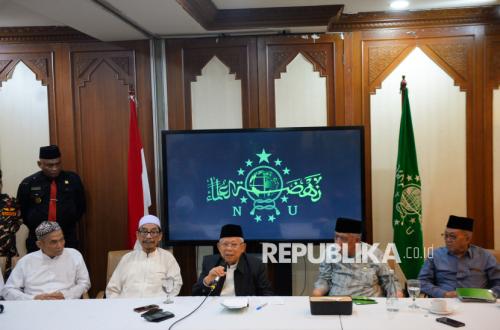
The choice of Tambakberas as the location for NU’s highest forum deserves to be read as more than a technical decision. Tambakberas has a long history and close connection with KH Abdul Wahab Chasbullah, one of NU’s founders. This pesantren is also an important part of the historical chain of ulama and pesantren that helped shape Nahdlatul Ulama’s journey.
The choice can be read as a politics of memory. Memory in the life of a community has the ability to connect the past, present, and future. As Jan Assmann (2011) explains, cultural memory works through symbols, texts, rituals, and spaces that enable a community to maintain its identity across generations. In the NU context, Tambakberas can be seen as a memory space that brings back the traces of ulama, scholarly traditions, sanad, struggle, nationalism, and service.
From this perspective, the Congress location carries political-cultural meaning. An organisation chooses a particular space to remember who it is and what values it wishes to carry into the future. Tambakberas is a pesantren with a long history in the development of Islamic education in Java. Its connection to KH Abdul Wahab Chasbullah gives an important dimension to the holding of the Congress at this site. Several major pesantren in Jombang also have intertwined historical relationships within networks of ulama and Islamic education.
The Congress’s presence in Tambakberas becomes even more meaningful because NU is entering its second century with far more complex problems. Digital transformation, demographic change, the community economy, educational development, shifting patterns of religious authority, national politics, and globalisation have all changed the social environment in which NU serves. Amid these changes, the pesantren appears as a space for reflection. The pesantren is one of the important sources for shaping NU’s character. Within it takes place the transmission of knowledge, adab, sanad, leadership, and service. From the pesantren environment have emerged ulama, intellectuals, social activists, and national leaders who bring Islamic values into public life.
Therefore, returning to the pesantren can be read as an effort to rediscover a source of legitimacy. The question of legitimacy becomes important as NU enters its second century. An organisation as large as NU requires a foundation capable of connecting history with the evolving needs of society. The pesantren is one such foundation.