
Why Is Indonesia Not on the Hormuz List?
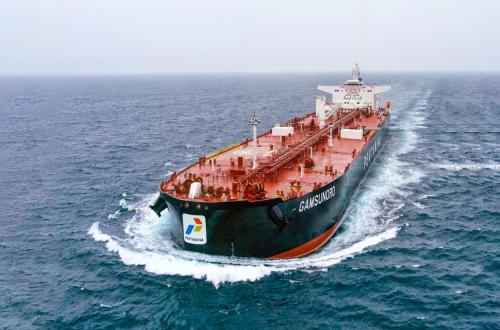
Iran’s decision to exempt ships from India, China, Qatar and Iraq from restrictions in the Strait of Hormuz shows that international trade routes do not always operate on the basis of freedom of navigation. In conflict, access to strategic waterways can become a bargaining tool, a source of economic pressure and even a means of exchanging political interests. Yet one country is absent from the list, prompting a question: Indonesia.
On 3 November 2026, Amir Hayat Moqaddam, Deputy Chairman of the Iranian Parliament’s Committee on National Security and Foreign Policy, said vessels from the four countries would be exempt from the restrictions. The exemptions were not based solely on diplomatic closeness.
Tehran has concrete calculations. It needs India for supplies of medicines, expects political support from China, sees Qatar as a mediator, and regards Iraq as a neighbour with close economic and political ties. In other words, the exemptions list comprises countries considered useful, not simply friendly.
Hormuz, then, is no longer just a matter of maritime security. It has become an instrument of transactional diplomacy: shipping access is exchanged for economic and political support, and strategic interests.
So where does that leave Indonesia?
The question is pertinent because Indonesia is not distant from Iran. Jakarta and Tehran have maintained bilateral ties for a long time, while Indonesia has consistently pursued an independent and active foreign policy, and advocated resolving conflicts through diplomacy and international law. The Hormuz issue is not new for Indonesia either. In March 2026, the government said Iran had responded positively to a request to ensure safe passage for two Pertamina tankers, Pertamina Pride and Gamsunoro.
In June 2026, Deputy Foreign Minister Arif Havas Oegroseno said communications with Iran were continuing to resolve the matter involving the two vessels. A positive response, however, was not the same as a solution. The two state-owned energy company vessels were still under discussion months later, while other countries received public exemptions.
At this point, criticism needs to be precise. The issue is not simply the independent and active foreign policy doctrine, but what Indonesia brings to the negotiating table under that doctrine. The approach is often understood as the ability to keep a distance from great-power rivalries, avoid alignment with blocs and maintain ties with all sides. That is valuable for preserving room for manoeuvre.
But Hormuz shows that non-alignment and good relations do not automatically bring benefits when national interests are at stake. In a transactional mindset, Tehran does not ask who is the friendliest, but who is the most useful.
Of course, the comparison is not entirely like for like. Qatar and Iraq have geographical positions and diplomatic roles that Indonesia does not. Recognising those differences matters, so that criticism does not rely on comparing unlike cases.
But that is precisely the point: each country brings something Tehran considers valuable. Indonesia has different assets: Southeast Asia’s largest economy, G20 membership, an archipelagic geography that gives it a stake in maritime stability, and the world’s largest Muslim population. Those assets have not yet been turned into a concrete offer.
What could Indonesia offer? First, trade certainty: clear trade commitments, including humanitarian goods such as food and medicines. Second, a political role: Indonesia could help guarantee de-escalation through the Organisation of Islamic Cooperation (OIC), ASEAN and the United Nations, drawing on its credibility as a country with no military agenda in the region. Third, measurable reciprocity: safe passage for Indonesian vessels could be matched by a consistent diplomatic position in multilateral forums. Without such offers, friendship remains limited to formal dinners and statements.
The quiet approach pursued so far is common in crisis diplomacy. But silence without deadlines or reciprocal commitments can easily turn into waiting. There is also a risk of setting a precedent: if securing safe passage for one vessel requires months of negotiations, other countries may conclude that Indonesia’s interests can be put off without consequence. The government needs to define what it is asking for, what it is offering and when it expects a result.
The urgency is not theoretical. Indonesia’s dependence on international energy routes is a structural vulnerability. Disruptions in Hormuz affect oil supplies, freight costs, energy prices and domestic economic stability. As a net oil importer, Indonesia cannot afford to wait.
Each day of uncertainty over shipping means higher insurance premiums and freight costs, which are ultimately borne by consumers and the state budget. Maritime diplomacy must not be activated only during crises; it should form part of the national resilience strategy.
Ultimately, being friends with many countries is an asset, not a guarantee. Hormuz offers an expensive lesson: national interests are not protected by goodwill, but by the value other parties see in the exchange. Friendship needs to be accompanied by reciprocal interests, negotiating capacity and the ability to build influence.
An independent and active foreign policy means more than taking sides or not taking sides; it means advancing national interests without sacrificing independence. In international politics, it is not enough for a country to be known as everyone’s friend. It must have bargaining power, so that its interests do not become a mere footnote in other countries’ negotiations.
Source: jawawa.id (https://jawawa.id/newsitem/why-is-indonesia-not-on-the-hormuz-list-1794279078)
Originally published by Republika (https://opini.republika.co.id/berita/to9jr2393/mengapa-indonesia-tak-masuk-daftar-hormuz), translated from Indonesian