
Why Is Indonesia at Risk of Being Downgraded by MSCI, and What Would the Impact Be?
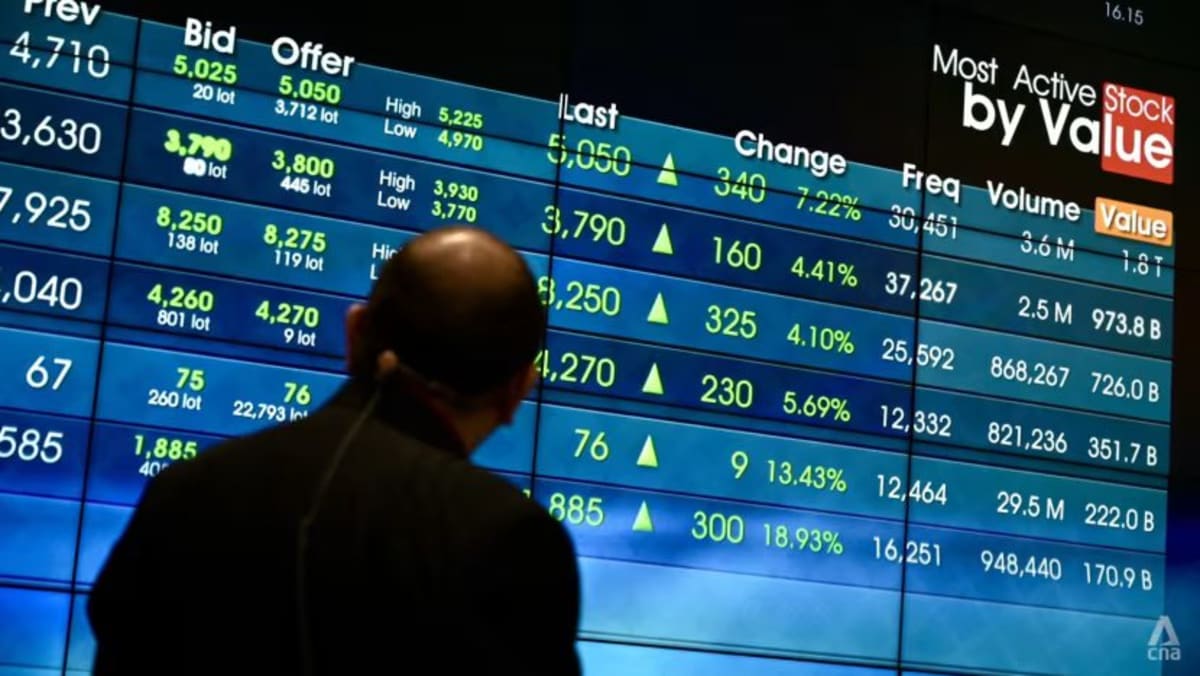
Indonesia’s stock market lost about US$65 billion in value on 16 October after global index provider MSCI proposed downgrading it from emerging-market to standalone-market status.
The Jakarta Composite Index (JCI) fell 11.6 per cent following the announcement, its steepest daily decline since the 1998 Asian financial crisis.
The proposal surprised investors because it was more drastic than MSCI’s initial warning in January, when it said Indonesia risked being downgraded to frontier-market status.
If implemented, the change could trigger billions of dollars in foreign outflows from Indonesia. The threat comes as Indonesian authorities are undertaking reforms to address concerns about market transparency and stock-trading practices.
However, a downgrade is not yet final. MSCI has given Indonesia the opportunity to demonstrate meaningful and lasting improvements before making a final decision next year.
What does standalone-market status mean, why is MSCI considering such a steep downgrade, and what would it mean for Indonesia’s stock market?
How influential is MSCI?
MSCI, formerly known as Morgan Stanley Capital International, is one of the world’s largest equity-index providers, alongside FTSE Russell and S&P Dow Jones Indices.
Its influence is considerable because global investment managers widely use its indices to guide investment allocations and measure portfolio performance.
About US$10 trillion in assets use the MSCI Emerging Markets Index as a benchmark. At that scale, MSCI’s decisions about which countries and companies to include can have a significant effect on capital flows.
When a country is added to or removed from an MSCI index, the amount of foreign investment flowing into or out of its stock market can change accordingly.
What would it mean if Indonesia were downgraded to standalone status?
MSCI classifies global equity markets into four categories: developed, emerging, frontier and standalone.
Frontier markets are generally smaller, less developed or less accessible to investors than emerging markets.
To qualify for frontier status, a market must have at least one company that meets MSCI’s minimum requirements for company size and share liquidity, as well as other criteria, including access for foreign investors. Asian countries in this category include Vietnam, Pakistan, Sri Lanka and Bangladesh.
Standalone markets, by contrast, are not included in MSCI’s main developed-, emerging- or frontier-market indices.
The category generally comprises two groups: markets that have only recently become eligible for MSCI coverage, and markets previously classified as developed, emerging or frontier. MSCI can move a market into the standalone category if it suffers a serious deterioration in investor accessibility, market size or liquidity.
Argentina, Lebanon, Nigeria and Ukraine are among the countries in this category. There are currently no standalone markets in the Asia-Pacific region.
For Indonesia, a downgrade from emerging to standalone status would mean its shares were removed from the main emerging-market indices followed by global investment funds.
Passive funds that track those indices, or use them as performance benchmarks, would have to sell their Indonesian holdings. Active managers using similar indices as a reference could also reduce their investments in the country.
If MSCI’s proposal is implemented, Indonesia would become the largest economy in the standalone category, at more than twice the size of Argentina, the second-largest.
Why does MSCI have concerns about Indonesia’s stock market?
Analysts told CNA that MSCI’s concerns are not limited to the size and liquidity of Indonesia’s stock market, but also relate to fundamental issues in how shares are traded.
Gary Tan, a portfolio manager at Allspring Global Investments, said MSCI’s main concerns were market transparency, fair price formation and the credibility of regulatory enforcement.
Eastspring Investments also said the proposed downgrade reflected doubts about the integrity and credibility of Indonesia’s stock-trading mechanisms.
In January, MSCI first warned that Indonesia risked losing its emerging-market status. It cited opaque share-ownership structures, suspected coordinated share transactions and weak enforcement.
MSCI said its clients had questioned the reliability of market data, particularly information on the number of shares genuinely available for public trading, or free float, and the classification of shareholders.
These conditions make it difficult for investors to establish how many shares are actually available to trade.
There are also concerns that the prices of some shares may have been artificially maintained at particular levels through irregular trading practices. This raises questions about the reliability of share prices and the effectiveness of regulatory oversight.
The Indonesian government, however, has questioned the basis of MSCI’s assessment and called for greater transparency in its methodology.
President Prabowo Subianto accused MSCI of trying to “intimidate” Indonesia at a cabinet meeting last week.
Hanif Dhakiri, a member of the House of Representatives from the National Awakening Party (PKB) who oversees financial affairs, also urged MSCI to apply a transparent, objective methodology consistently across countries.
“We should not be defensive in responding to criticism, but neither should we accept an assessment without examining its basis and objectivity,” Hanif told Reuters.
In response to Reuters’ questions by email, MSCI said all its decisions were made using a transparent methodology and established rules.
Why is MSCI considering a more severe downgrade for Indonesia?
Last week, MSCI went further, saying that a downgrade to frontier status might not adequately reflect the seriousness of the problems it had identified.
MSCI said Indonesian authorities had not made “sufficient progress” in demonstrating that market reforms had been implemented consistently and produced lasting results. Weak enforcement also remains a concern.
Tan said MSCI may be concerned that downgrading Indonesia only to frontier status would shift unresolved underlying problems into other MSCI indices.
“This would have a greater impact because Indonesia would leave the emerging-market indices without any offsetting inflows from investors tracking frontier indices,” he said.
Angus Mackintosh, an ASEAN specialist at Aletheia Capital, suggested that MSCI’s earlier decision to remove several Indonesian companies from its indices may also have contributed to its tougher stance.
“That may also have influenced the tougher approach this time,” he told CNA. “MSCI has made clear that Indonesia will be downgraded unless it makes progress in meeting its demands to address market abuse, although MSCI has not specified exactly what it wants.”
After MSCI’s latest announcement, the Financial Services Authority (OJK) said it had imposed fines worth millions of US dollars on a number of market participants for breaching stock-trading rules. Three of the sanctioned companies had previously been removed from MSCI indices.
How much foreign capital could leave?
A downgrade could trigger billions of dollars in outflows as international fund managers sell Indonesian shares to bring their portfolios into line with MSCI’s revised classification.
Indonesia has been classified as an emerging market in MSCI indices since 1989. Losing that status would be a major change for a stock market that, until recently, was a favoured destination for foreign investors.
Mackintosh expects a substantial impact on both passive and actively managed investment funds.
Several banks estimate that US$3 billion to US$6 billion could leave passive funds tracking emerging-market indices. UBS has also warned that active investors could withdraw up to a further US$15 billion.
Beyond selling pressure on shares, a downgrade could affect how international investors value Indonesian assets. Mackintosh said it could weaken the rupiah and increase financing costs for companies and other borrowers in Indonesia.
Eastspring Investments cautioned, however, that the eventual impact would depend on the index provider’s final decision, how the change was implemented and how investors responded to capital-market reforms.
The projected outflows do not mean that all the money will necessarily be withdrawn. The amount of selling will depend on investors’ portfolio composition and the timing of any index changes.
In the short term, uncertainty over Indonesia’s status could keep share prices volatile, particularly given the limited positive domestic drivers for the market and continuing external pressures.
Eastspring expects Indonesia’s stock market to face uncertainty for six to nine months, until MSCI reaches a final decision before June next year.
Can Indonesia still avoid a downgrade?
Analysts say Indonesia still has a chance to retain its emerging-market status, but it must show that its reforms are producing tangible and lasting improvements in transparency and trading practices.
MSCI has given Indonesia time to address investors’ concerns, including by demonstrating results in market governance, trading conduct and enforcement.
MSCI’s consultation with institutional investors will continue until April next year, while a final decision is expected by June at the latest.
Jayden Vantarakis, Macquarie Group’s head of ASEAN equity research, told CNA that Indonesian regulators needed to take sufficiently decisive action to tackle problematic stock-trading practices. The steps must also persuade institutional investors to reject the proposed downgrade.
Tan added that Indonesia needed to provide concrete evidence of improvements in transparency, share-trading practices and law enforcement.
“Ultimately, MSCI needs to be confident that these measures will remain effective once the current index freeze is lifted,” he said.
Since MSCI first raised its concerns in January, Indonesian authorities have introduced various policies to improve the capital market. Several senior officials have been replaced by figures widely known and trusted by market participants.
Financial regulators and the Indonesia Stock Exchange (IDX) have also tightened rules and introduced reforms to reduce the risk of market manipulation.
Within hours of MSCI’s latest announcement, Indonesian financial regulators imposed fines totalling Rp2.1 trillion on parties linked to market manipulation. Authorities also asked the police to investigate “suspected violations or criminal offences in the capital market”.
Mackintosh acknowledged that Indonesia had introduced many new policies, but said the priority now was to ensure they were strictly enforced.
“Those responsible for coordinated trading and share manipulation must be punished with fines or prison sentences,” he said.
A rare downgrade
A direct move from emerging-market to standalone status is a very rare decision for MSCI.
Over the past decade, five markets have been moved to the standalone category. Since 1997, eight markets have been downgraded to that status, and only three of them moved directly from emerging-market to standalone status.
One prominent example is Argentina, which was downgraded in 2021 after imposing capital controls. Russia was moved to standalone status in 2022 after Western sanctions following its invasion of Ukraine effectively cut it off from global financial markets.
Tan said Indonesia’s case was different because its problems involved stock-trading practices, market governance and enforcement.
Mackintosh also noted that there had been no previous case of a market being downgraded to standalone because of the actions of a small number of market participants or transparency issues.
“On most indicators, Indonesia compares favourably with other emerging markets. That is what makes this latest move confusing,” he told CNA.
Even so, the potential financial impact remains substantial. JPMorgan estimates Indonesia’s weighting in the MSCI Emerging Markets Index at 0.46 per cent.
That means that for every US$100 billion invested through products tracking the index, about US$460 million is allocated to Indonesian shares. By comparison, Argentina had a weighting of 0.12 per cent when it was removed from the index.
Can major investors influence MSCI’s decision?
The proposed downgrade has also stirred controversy over the extent to which institutional investors can influence decisions by global index providers.
After MSCI’s announcement, former Trade Minister Muhammad Lutfi on Tuesday accused Singaporean investment companies Temasek and GIC of being involved in efforts to pressure MSCI into issuing a warning about Indonesia. Both GIC and Temasek denied the allegations.
GIC said its investment decisions were not based on index classifications or general views of a market. Instead, it assesses the fundamentals of individual companies or assets before investing.
So how much influence do sovereign wealth funds have over MSCI? Tan said large institutional investors, including sovereign wealth funds, can submit evidence and feedback during MSCI’s consultation process.
However, he stressed that index providers must preserve the independence and credibility of their methodologies.
Tan explained that sovereign wealth funds generally do not automatically follow index changes in the way passive investment funds do. Their investment decisions are based more on the fundamentals of assets than on the weighting of a share or country in a benchmark index.
The final decision on market classification rests with MSCI.
Source: jawawa.id (https://jawawa.id/newsitem/why-is-indonesia-at-risk-of-being-downgraded-by-msci-and-what-would-the-impact-be-1793004676)
Originally published by cna.id (https://www.cna.id/indonesia/msci-indonesia-standalone-market-ihsg-52191), translated from Indonesian