
Why Is Canada Preparing for a Possible US Military Invasion?
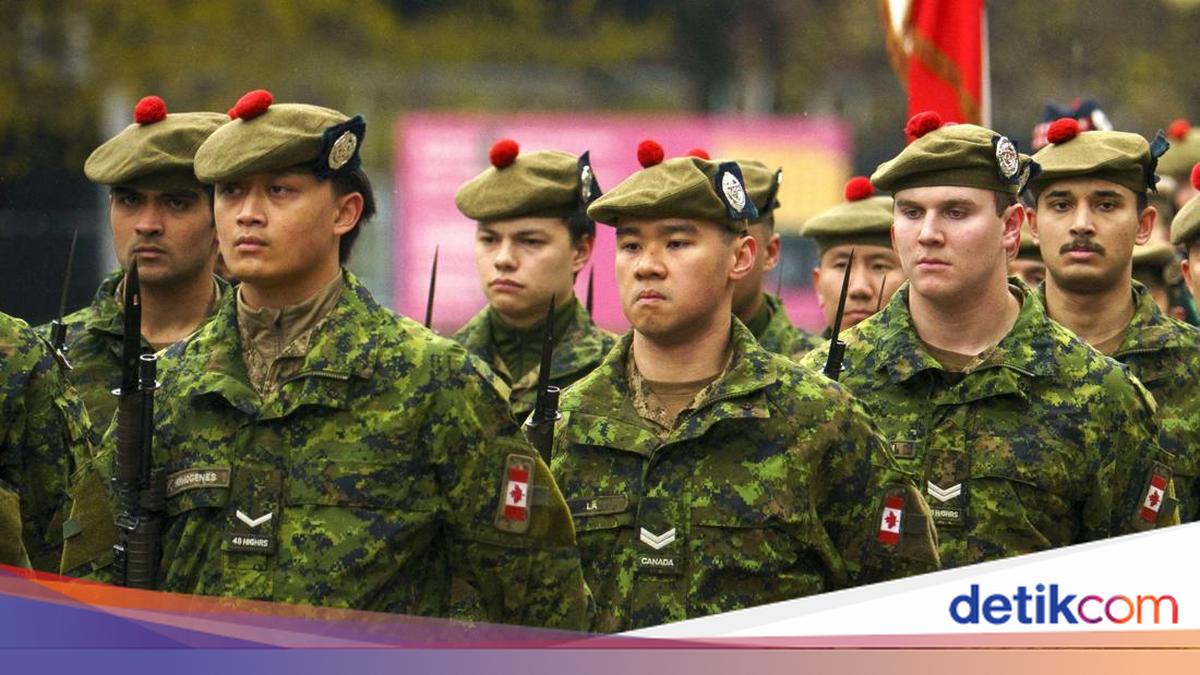
Canadian Prime Minister Mark Carney says he is preparing for a scenario that was once barely conceivable: an invasion by the United States.
While stressing that the likelihood of a US invasion is very small, he told The New York Times that he has a responsibility to consider every possibility as relations between the US and Canada are redefined under Donald Trump’s presidency.
“[The preparation] is just risk management,” Carney said.
Trump’s global tariffs and his stated desire to make Canada the 51st US state have prompted Canada to conduct war simulations of an attack from the US.
In 2025, Trump said there was a “very small chance” that the US would use military force against Canada. He said he would continue to apply economic pressure to achieve his political goals.
“President Trump has done more than anyone to protect the great people of Canada,” the White House told the BBC in a statement this week.
Military experts who spoke to the BBC also said the prospect of a military invasion was very small, citing the many ways the two countries co-operate on defence.
The subject is nevertheless clearly weighing on Canadians’ minds.
In January, after the US captured Nicolás Maduro in Venezuela, a Leger poll found that more than 30 per cent of Canadians believed a US invasion was possible.
Why is an invasion so unlikely?
A war between Canada and the US would be complicated and almost unimaginable, said Lieutenant-General Christopher Coates, a former Royal Canadian Air Force officer who served for 34 years.
“I was involved in military operations throughout my career, and we never considered the possibility of a military attack coming from US territory,” he told the BBC.
Both countries are members of NATO, which requires its members to defend one another if attacked.
They also conduct joint Arctic defence operations through the North American Aerospace Defence Command (NORAD) and frequently share intelligence.
Coates therefore believes that a US attack on Canada would not begin with an armed assault, but with more covert methods such as cyber warfare.
Not always the best of friends
After the Second World War, Canada and the US became natural allies in the second half of the 20th century. The two countries became deeply integrated economically, militarily and culturally.
But their relationship has not always been good.
In fact, one of the central principles of Canadian identity is resistance to US expansionism in the 18th and 19th centuries, said Tim Foran, a researcher at the Canadian War Museum.
“Fear of the United States is foundational to the political project that is Canada,” he said.
Before Canada was formed, the US attempted to invade British colonies in North America, seizing control of Montreal in 1775 and nearly capturing Quebec City.
During the War of 1812, the US repeatedly invaded territories then known as Upper Canada, Lower Canada and the Maritime colonies. Those attempts ultimately failed.
During the war, British forces famously burned the White House in retaliation.
Foran said the colonies that would later become Canada relied on Britain and the Royal Navy for defence at the time, as well as on Indigenous people who acted as generals in major battles.
Canada again considered the possibility of war with the US after the First World War, in response to the country’s growing power and influence.
Canada drew up a plan based on a series of secret trips by Canadian Army generals to border cities. Disguised as tourists, they photographed bridges and roads for intelligence purposes.
They also spoke to local residents to gain a better understanding of their potential adversary.
War was an unlikely scenario at the time, said Andrew Burtch, a Canadian War Museum researcher specialising in 20th-century Canada.
Even so, the Canadian military wanted to be prepared.
“That’s part of what the military does,” he said. “They imagine all sorts of different scenarios.”
What if a US invasion really happened?
Although a US invasion is very unlikely, Matthew Schmidt, an associate professor of national security at the University of New Haven in Connecticut, said the fact that Canadians are preparing for one shows how drastically the global order has changed.
He added that Canadian leaders face difficult questions about whether they can continue to co-operate with the US military—a partnership that gives them valuable information if the US were to seek to harm Canada in any way.
“It really damages the relationship with the United States, and there is a legitimate level of fear,” he said.
Americans may not take Trump’s comments about making Canada the 51st state seriously, Schmidt said, but Canadians clearly do and are ready to defend themselves if necessary.
What, then, might happen if an invasion took place?
The first phase of a war could be very short.
According to a model used by the Canadian military, as reported by The Globe and Mail earlier this year, a US attack would overwhelm Canada’s strategic positions within a week.
Its military would quickly be outnumbered, forcing Canadian troops to switch to guerrilla tactics in an effort to put pressure on the enemy.
Allies such as France and the UK would be asked to provide support and defence for Canada, the newspaper reported in January, citing senior government officials.
The theoretical model is believed to mark the first time in a century that Canada has planned for a possible US attack.
The modelling is at the lower end of military combat planning, Coates said.
He said that Canada, unlike its NATO allies, was behind in preparing for a land invasion. It is now trying to catch up in an unpredictable geopolitical era.
Part of that effort, he said, is reflected in the Canadian defence chief’s recent call for a drastic expansion of the military, including the addition of up to 300,000 lightly trained civilian personnel.
An invasion of Canada might not be straightforward for the US either.
Even with its much larger military, the US would struggle to secure support for a war against Canada, Schmidt said.
“I think there would be a lot of American officers who would resign if ordered to invade Canada,” he said. “They would see it as an illegal and immoral order.”
Schmidt said Canadian and American soldiers train together regularly and respect one another.
But in the unlikely event that relations deteriorated into armed conflict, the US would probably focus on taking control of valuable Canadian resources such as oil and minerals, as well as removing the country’s political leadership.
“You would see some kind of operation that might reflect what you saw in Venezuela,” he said, referring to the US military action earlier this year to capture former Venezuelan President Maduro.
Although he acknowledged that the US has greater military capacity, he said that “on a level playing field” the Canadian military would be able to put up a fight.