
Why Investment Will Determine the Future of the Insurance Industry
At the Indonesia Insurance Summit 2026 in Yogyakarta, held on 11–13 June 2026, most of the discussion focused on risks emerging from outside the insurance industry. Geopolitical conflict, climate change, cyber threats, artificial intelligence and rising healthcare costs were among the themes most talked about.
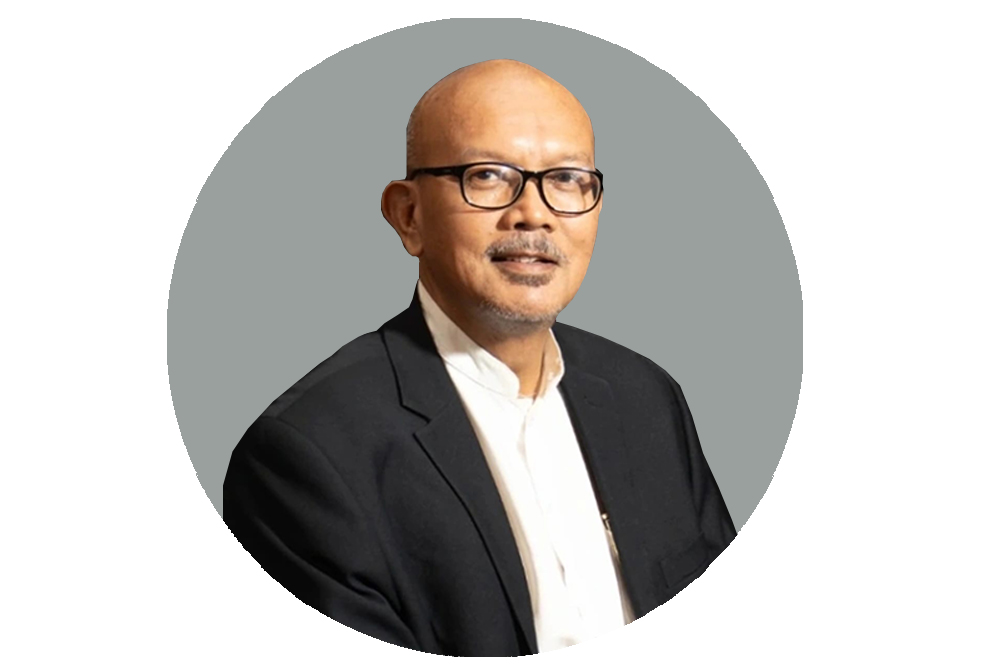
However, there was one session that the author considers very important, even though it has not been widely discussed by the public. The session was delivered by the Chief Investment Officer (CIO) of Danantara Indonesia, Budi Hikmat, who addressed the challenges of investment and asset management in the face of an increasingly uncertain world.
At first glance, the topic of investment may seem far removed from the day-to-day activities of insurance brokers or policyholders. Yet, after attending the presentation, the author became increasingly convinced that the future of the insurance industry is determined not only by the ability to sell policies or pay claims. The industry’s future is also heavily determined by insurers’ ability to manage their investments.
Because ultimately, insurance is a business of long-term promises. Every long-term promise requires a strong financial foundation.
The Insurance Industry Sells the Future
Unlike many other businesses, the insurance industry has unique characteristics. Premiums are received today, but the obligation to pay claims may arise years later. For certain products such as life insurance, that obligation can even emerge decades after the policy is issued.
This means insurers must be able to preserve and grow the funds entrusted to them by customers over a long period. This is where investment plays a crucial role.
If investments are managed well, the company has a greater capacity to meet its obligations. Conversely, poor investment decisions can undermine the company’s financial health and even threaten its ability to pay claims.
This is why Budi Hikmat’s presentation was so relevant to the insurance industry.
The Investment World Is Changing
In his presentation, Budi Hikmat explained that the investment world today faces far more complex challenges than a decade ago. Global interest rates are changing rapidly. Geopolitical uncertainty is rising. Capital markets have become more volatile.
Technological change is transforming business models across industries. Meanwhile, the energy transition and sustainability issues have begun to influence investment decisions worldwide.
In conditions like these, investors can no longer rely on old approaches. More flexible, more disciplined and more long-term-oriented strategies are required.
This message is highly relevant to the insurance industry, because insurers are essentially among the largest institutional investors in the financial system.
Lessons from the Past
The Indonesian insurance industry has learnt much from various events in recent years. Most of the cases that shook public confidence were not caused by a failure to sell products.
Nor were they due to a shortage of premiums. The main problem has often been rooted in asset and investment management.
When investments are not managed carefully, the resulting risks can erode a company’s ability to meet its obligations to policyholders.
For this reason, the discussion of investment is no longer merely an internal corporate issue. It is an issue directly related to consumer protection and industry stability.
What Does This Mean for Brokers?
As an insurance broker, the author sees that the discussion of investment has major implications for the broking profession.
For years, many risk placement decisions have been based mostly on:
– Policy guarantees
– Capacity
– Premium rates
– Quality of claims service
These factors are indeed important. But the world is changing. Customers increasingly ask: “How strong is this insurance company?” “Is its financial condition healthy?” “Can it pay claims over the long term?”
These questions show that brokers are no longer sufficiently equipped by understanding policies alone. Brokers must also understand the quality of the insurers they recommend.
The Policy Guarantee Programme Does Not Remove Brokers’ Responsibility
In a previous article, the author discussed the Policy Guarantee Programme presented by Ferdinan Purba of the LPS.
The programme is certainly a very positive step. However, the existence of the Policy Guarantee Programme does not mean brokers can ignore the quality of insurance companies. On the contrary, brokers must raise the quality of their analysis.
The selection of an insurance company must still be based on:
– Financial health
– Governance
– Reinsurance quality
– Risk management
– Investment strategy
Because the broker’s primary goal is to protect the client’s interests.
The Future of Brokers: Insurance Security Advisor
In the author’s view, one of the major changes coming to the broking industry is the development of the broker’s function as an Insurance Security Advisor.
Brokers will not only help clients choose the right policy. They will also help choose the right insurance company. This requires new competencies.
Brokers must begin to understand:
– Financial statements
– Risk-Based Capital
– Solvency
– Asset quality
– Investment structure
– Corporate governance
In this way, brokers can provide more comprehensive recommendations to clients.
A Message for the OJK and the Industry
Budi Hikmat’s presentation also served as a reminder that public trust in the insurance industry depends heavily on the quality of asset management. Therefore, supervision of investments must remain a priority.
The OJK has an important role in ensuring that insurance companies apply the principles of prudence and good governance. Meanwhile, insurers need to keep strengthening their investment and risk management capabilities.
Going forward, transparency will become increasingly important. The public wants to know that the funds they entrust are managed safely and professionally.
A Note for APPARINDO
From the perspective of APPARINDO’s DPKRI, the session delivered by Budi Hikmat offered a very important lesson. The broking industry must not focus solely on distribution. Brokers must also understand the industry’s financial foundations.
The greater brokers’ competence in assessing the health of insurance companies, the greater the added value they can provide to clients. For this reason, developing members’ competencies in finance, investment, solvency and insurance company analysis should become one of APPARINDO’s strategic agendas in the years ahead.
Closing
The Indonesia Insurance Summit 2026 offered many lessons about the future of the insurance industry. Of all the sessions the author attended, Budi Hikmat’s presentation was a reminder that behind every policy lies a promise. Behind every promise lies a financial foundation that must be well maintained.
Insurance companies sell peace of mind for the future. But that peace of mind can only be delivered if the company has the ability to fulfil its promise when the time comes. That is why investment is not merely a financial activity. Investment is the foundation of trust. In the insurance industry, trust has always been the most valuable asset.
Source: jawawa.id (https://jawawa.id/newsitem/why-investment-will-determine-the-future-of-the-insurance-industry-1783957824)
Originally published by mediaasuransinews.co.id (https://mediaasuransinews.co.id/opini/mengapa-investasi-menjadi-penentu-masa-depan-industri-asuransi/), translated from Indonesian