
Why Indonesia's Top Retail Magnates Are Tearing Down Security Fences to Defend Market Optimism
Why Indonesia’s Top Retail Magnates Are Tearing Down Security Fences to Defend Market Optimism
Meta Keywords
JAKARTA, Investortrust.id — Indonesia’s most powerful commercial real estate tycoons are moving decisively to dismantle physical barriers at their flagship properties, shutting down days of viral social media speculation over potential security risks in Southeast Asia’s largest economy.
Panic spread across online platforms earlier this week after shoppers noticed heavy-duty perimeter fences suddenly appearing around premier retail hubs in Jakarta and Surabaya—spaces that had maintained open, integration-focused layouts for decades. The unexpected barriers triggered intense market rumors that major corporate insiders were bracing for widespread civil unrest or heightened security and public order threats.
However, business leaders and government authorities have stepped in to set the record straight: the country’s security environment remains fully stable, and the economic fundamentals driving consumer retail are stronger than ever.
The rapid public response by top corporate figures underscores how sensitive retail sentiment remains in Southeast Asia’s anchor market. Shopping malls in Indonesia are not merely retail centers; they serve as critical barometer ecosystems for urban consumer health, private investment confidence, and real estate liquidity.
By forcefully rejecting the need for security barricades, property heavyweights are signaling to global investors that consumer activity is expanding rather than retreating. The immediate removal of these physical barriers removes a potential drag on retail foot traffic and reassures international brand tenants that expansion plans in Jakarta and secondary hubs remain on track.
Lippo Group currently manages a vast commercial footprint of 106 retail facilities comprising 71 flagship malls and 35 shopping centers spread across more than 29 cities, effectively commanding roughly 25% of Indonesia’s total modern retail space with key properties like Lippo Mall Puri, Lippo Mall Kemang, and Senayan Park. Meanwhile, Pakuwon Group stands as the dominant property titan in Jakarta and Surabaya, managing premier urban hubs including Kota Kasablanka, Gandaria City, Blok M Plaza, and Tunjungan Plaza.
Tycoons Intervene to Dispel Fearmongering
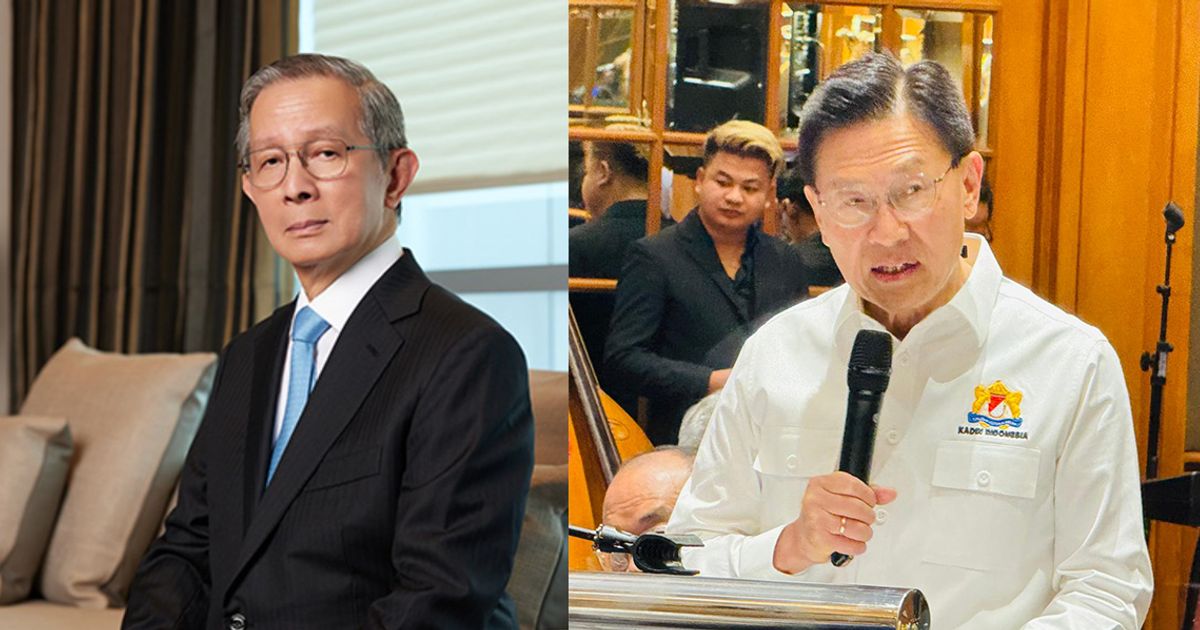
James Riady, Chairman of Lippo Group and Deputy General Chair of International Relations at the Indonesian Chamber of Commerce and Industry (Kadin Indonesia), clarified that Lippo’s strategic policy has favored open architectural integration for over a decade.
Speaking to Investortrust on Friday, July 31, 2026, following a high-level conference between President Prabowo Subianto and 150 business leaders at the Presidential Palace in Jakarta, Riady emphasized that legacy security measures belong to the past.
“In the past, all malls put up fences when riots occurred. Now it is no longer necessary because the situation is calm,” Riady said. Addressing concerns after attending the presidential briefing, he reassured market observers by stating, “So let’s all stay enthusiastic. Let’s all stay enthusiastic.”
Concurrently, Alexander Tedja, the founder of Pakuwon Group—the powerhouse developer behind major commercial destinations such as Kota Kasablanka (Kokas), Gandaria City, and Surabaya’s Tunjungan Plaza—confirmed that barricades installed at Kokas were localized operational choices implemented without executive board approval.
“That is a local management policy and will be dismantled immediately,” Tedja told Investortrust directly.
Government and Law Enforcement Steps In
The central government took direct action to resolve the public confusion. Minister of Housing and Residential Areas (PKP) Maruarar Sirait held direct consultations with both enterprise owners following public discussions over the high-profile enclosures.
Sirait praised the real estate executives for publicizing their confidence in national stability. “I have also spoken directly with Mr. Alex Tedja. He said it was only a local management initiative and will be resolved immediately,” Sirait told Investortrust. Sirait added, “They are the owners of malls and hotels in Indonesia. The attitude of these two mall owners deserves appreciation because our security situation is indeed good.”
High-ranking law enforcement commanders corroborated the government’s message. General Fadil Imran, Head of the National Police Operational Division (Astamaops), addressed reporters in Jakarta on Saturday, August 1, 2026, reassuring the public that daily operational monitoring shows standard baseline activities across all urban sectors without elevated threat indicators.
“As of today, based on daily operating reporting system data, there is nothing prominent, nothing at all,” Imran said. “I think people fencing their houses is normal. Do not then build a narrative as if building a fence means something will happen. I do not think that is the right interpretation.”
Addressing public concern, Special Presidential Advisor for Communication Hasan Nasbi urged market participants and online commentators to exercise caution when encountering sensationalized security claims. Speaking at the Presidential Palace complex on Friday, July 31, 2026, Nasbi urged media organizations and citizens to verify field conditions directly before amplifying unverified reports of civil instability.
“News that spreads fear should also be clarified. Journalist friends can check for themselves. You can do a fact check whether the fearmongering currently circulating is true or not. Is it real or not? You can check on the ground,” Nasbi said.
Surging Retail Demand Signals Broad Recovery
Far from preparing for a downturn, Indonesia’s top real estate developers report that commercial space demand is currently outpacing available capacity.
Riady highlighted that retail space across Lippo Group’s 106 properties is seeing robust occupancy rates. “Right now, there is actually a shortage of space. Demand t