
Why Indonesians Are Reluctant to Buy Homes Right Now
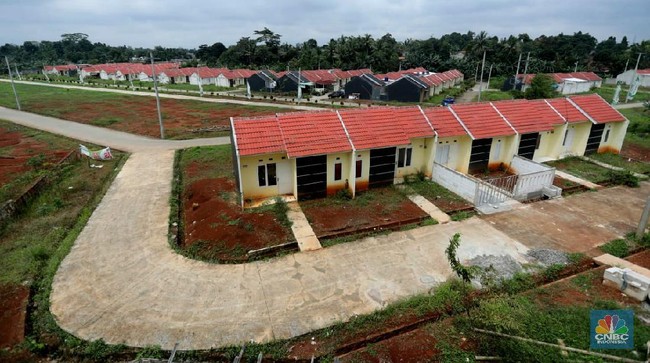
The decline in subsidised house sales in the first half of 2026 cannot be explained solely by weakening public purchasing power or financing issues, according to Martin D. Siyaranamual, Chief Economist of PT Sarana Multigriya Finansial (Persero). He assessed that several structural factors are also influencing people’s decisions to buy homes.
“If you ask whether the decline in housing demand is a result of the public’s condition, the shrinking of the middle class? There is a possibility of that. Or another possibility is due to uncertainty,” Martin said during an SMF press conference on Wednesday (22/7/2026).
The housing sector is one of the most sensitive to economic conditions. When uncertainty rises, people tend to postpone purchasing large-value, long-term assets, including homes, to keep their financial situation secure.
“The housing sector is the sector most sensitive to uncertainty. It is often the first to be abandoned, but the last to experience recovery. A house is a long-term investment. When conditions are uncertain, housing is the first thing people abandon. People choose to save money for daily needs rather than buy a house,” he stated.
This situation means the property market slowdown cannot be solely linked to the shrinking middle class. Economic uncertainty is also a factor driving people to delay home-buying decisions. “The more uncertain the conditions, the more long-term sectors will be pulled first. People will think, ‘I don’t need to buy a house yet’,” he said.
Beyond economic factors, Martin observed that changing behaviour among the younger generation is also beginning to reshape the national housing market. This shift in preferences means home ownership is no longer the primary choice for some people of productive age.
“The change in consumption patterns among young people today is also important. They tend to choose to rent a house rather than buy one. So, it is not necessarily that people are not buying houses because the housing sector is problematic; it could be because they are postponing or the consumption patterns of young people have changed,” he remarked.
Martin added that this changing trend has not yet been matched by an adequate rental housing ecosystem. According to him, Indonesia still lacks comprehensive regulations governing the relationship between homeowners and tenants, as has been implemented in several developed countries.
“We do not yet have adequate rules regarding rental housing. Whereas in countries like the United States, rental housing rules are standardised and have legal certainty. So, do not just look at the shrinking middle class as the cause of declining housing demand. There are other factors that also need attention,” Martin noted.
Previously, Deddy Indrasetiawan, the newly appointed Chairman of the Indonesian Housing and Settlement Developers Association (APERSI), revealed that the realisation of subsidised house sales during the first half of 2026 was recorded at 91,531 units. This figure fell compared to the first half of 2025, which reached 120,976 units, a drop of 24.3% year-on-year (yoy). “Based on comparative realisation data for the first semester of 2025 and the first semester of 2026, it fell from 120,976 to 91,531. A decline of 24.3% yoy,” Deddy told CNBC Indonesia on Tuesday (21/7/2026).
Source: jawawa.id (https://jawawa.id/newsitem/why-indonesians-are-reluctant-to-buy-homes-right-now-1784704815)
Originally published by CNBC Indonesia (https://www.cnbcindonesia.com/news/20260722121943-4-752866/warga-ri-lagi-ogah-ogahan-beli-rumah-ternyata-ini-penyebabnya), translated from Indonesian