
Why Human Ears Get Bigger with Age
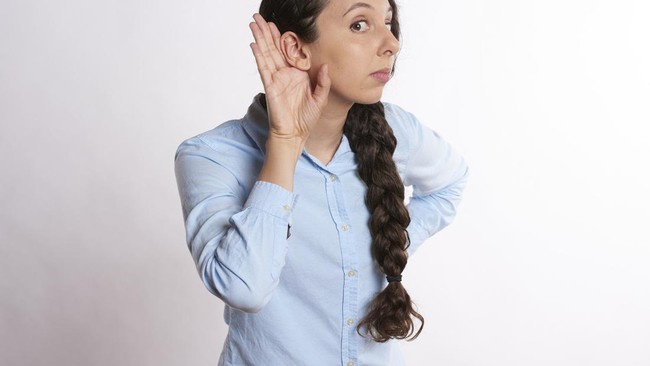
Jakarta, CNBC Indonesia — If you have ever looked at photographs of your parents or grandparents when they were young and compared them with how they look now, you may have noticed something interesting: older people’s ears appear larger and more drooping than they did decades ago.
This is not merely an optical illusion. The phenomenon is real and has been studied by scientists for decades, and the reason is surprisingly simple, though not widely known.
Our ears do not actually “grow” in the same way they did when we were children. Our bones stop getting longer after puberty, and the same is true of most facial structures.
The ear is different, however. The outer ear is made of elastic cartilage, which does not actively produce new cells in the way some other tissues do. Its shape simply changes over time.
A 1997 study by a medical team at Texas Tech University found that ear circumference increases by an average of about 0.51 millimetres a year. Over 50 years, that would amount to an increase of about 2.5 centimetres in circumference alone.
A well-known study published in the British Medical Journal in 1995 found that the ear’s vertical length increases by about 0.22 millimetres a year. Although the annual change is very small, it becomes clearly visible after accumulating over several decades.
Why does this happen? Two main factors work gradually but steadily throughout our lives. The first, and most influential, is gravity. The outer ear is not rigidly attached to the skull; it hangs from relatively soft skin and connective tissue. Over decades, gravity continuously pulls this tissue downwards. With no hard structure to hold it in place, the ear gradually becomes longer and wider.
The second factor is the natural ageing of the skin and tissue. As we get older, our bodies produce less collagen and elastin, two proteins that help keep skin supple and strong.
The connective tissue inside the ear undergoes similar changes: it becomes thinner and weaker, and loses its ability to return to its original shape after being stretched. The combination of gravity pulling downwards and increasingly weakened tissue makes the ears appear more drooping and larger with age.
Researchers in Italy also found in 1999 that changes in ear size and shape are much more noticeable in men than in women. There are several possible explanations. Men’s skin is naturally slightly thicker and heavier, so gravity exerts a greater force on it. In addition, hormonal changes in older men may accelerate the deterioration of collagen in the ear’s connective tissue. Hormonal changes after menopause also affect women, but their tissue structure means the changes in shape are less pronounced.
The ears are not the only part of the face whose size and shape change over time. The tip of the nose also widens and droops for the same reasons: gravity and declining skin elasticity. The pupils also become slightly smaller, and the distance between the eyebrows may appear to widen slightly. All of these are natural parts of the ageing process and are nothing to worry about.
Source: jawawa.id (https://jawawa.id/newsitem/why-human-ears-get-bigger-with-age-1794491460)
Originally published by CNBC Indonesia (https://www.cnbcindonesia.com/tech/20261112135914-37-784649/alasan-telinga-manusia-makin-besar-seiring-bertambahnya-usia), translated from Indonesian