
Why Have Economic Policies Yet to Deliver Their Full Impact?
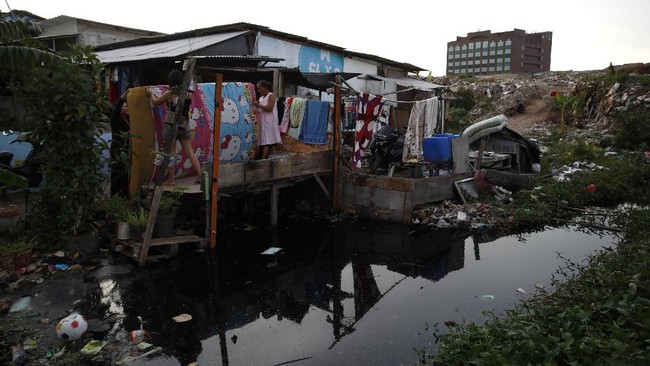
Amid optimistic claims that national economic growth has remained around 5%, a warning sign is flashing from the perspective of public policy analysis. Government economic policies are said to be failing at the implementation stage, and have yet to deliver a significant improvement in the welfare of the wider population, particularly through the creation of quality jobs and protection of the middle class’s purchasing power.
The Institute for Economic and Social Research of the Faculty of Economics and Business at the University of Indonesia (LPEM FEB UI), through its 2026 Survey of Economic Experts, has published recent findings that reveal high levels of scepticism among academics.
According to the LPEM FEB UI expert consensus survey, most economists believe the current direction of economic policy is ineffective in driving broad-based growth. Overall economic conditions also received a poor assessment: 52% of experts, or 33 of 63 respondents, said Indonesia’s economy had deteriorated from the previous quarter, while another 40% said it had not changed.
Employment warning and the ‘living off savings’ phenomenon
From a public policy evaluation perspective, the most critical policy leakage lies in the governance of the labour market. The LPEM FEB UI survey found that 73% of economists, or 46 of 63 experts, believe job creation has worsened over the past six months. A total of 31 of the 63 experts explicitly said current labour market policies had made almost no meaningful difference.
As Didik J. Rachbini (2024) has observed, the dominance of the informal sector reflects the failure of national fiscal and industrial policies to create an enabling environment for formal employment. Statistics Indonesia (BPS) data for 2026 confirm that informal workers continue to account for more than 59–60% of the national workforce.
The ineffectiveness of these policies stems from an implementation gap between regulation and the reality of a dual labour market. In the formal sector—factories, corporations and civil servants—employment absorption is lower, but workers have social security through BPJS. The sector is highly responsive to corporate income tax or Article 21 tax incentives for expansion, can effectively receive corporate credit stimulus, and is required to comply with the Job Creation Law and rigid minimum-wage rules.
As Faisal Basri (2023) warned in various reviews, regulatory uncertainty and inconsistent bureaucratic governance lead businesses to hold back capital rather than invest in productive expansion.
By contrast, the informal sector—micro, small and medium-sized enterprises, online motorcycle taxi drivers and street vendors—absorbs a very large share of workers, accounting for more than 60% of the labour force. However, workers in this sector are highly vulnerable to shocks, are largely outside the reach of direct taxation policy, depend more on People’s Business Credit (KUR), which faces administrative hurdles, and operate without stringent regulations, leaving them with virtually no labour protection. LPEM FEB UI’s conclusion is that government interventions have failed to expand the formal sector, trapping people in a low-productivity cycle.
From the perspective of the public’s cost burden, purchasing power continues to be eroded by structural inflation. In the LPEM FEB UI survey, 78% of respondents, or 49 of 63 experts, classified current inflationary pressures as high. BPS (2026) recorded annual inflation at a level that is putting pressure on staple goods.
The pressure is driven by two main factors. First, food inflation—particularly for rice and cooking oil—frequently surges above the national inflation average, directly squeezing household budgets. Second, inflation in administered prices, such as adjustments to electricity and fuel prices, alongside the proposed VAT increase, is putting pressure on the middle class.
According to Chatib Basri (2025), the middle class is often a vulnerable group overlooked by social safety-net schemes. This has contributed to the ‘Mantab’ phenomenon, or ‘living off savings’. Bank Indonesia data for 2026 show a decline in bank third-party funds (DPK) with balances below Rp100 million, as people are forced to withdraw savings to cover day-to-day living costs.
Five strategic remedies to improve policy direction
To reform public policy instruments and break out of economic stagnation, economists have set out five strategic solutions. First, reorient and revitalise manufacturing by shifting the focus to downstream, labour-intensive industries to create stable formal jobs. Second, stabilise food prices by strengthening domestic supply chains and using targeted market interventions to restore purchasing power.
Third, provide legal certainty and regulatory consistency to attract foreign direct investment. Fourth, improve workforce skills by aligning education curricula and vocational training with the needs of modern industry.
Fifth, make fiscal stimulus more efficient by directing state spending towards digital infrastructure and connectivity to reduce national logistics costs. Without a comprehensive overhaul of public policy, economic growth will remain a hollow statistic for much of the population.
Source: jawawa.id (https://jawawa.id/newsitem/why-have-economic-policies-yet-to-deliver-their-full-impact-1793674246)
Originally published by CNBC Indonesia (https://www.cnbcindonesia.com/opini/20261103083311-14-781768/mengapa-dampak-kebijakan-ekonomi-belum-optimal), translated from Indonesian