
Why Has Xi Jinping Suddenly Launched a 'Clean-Up' of Chinese Companies?
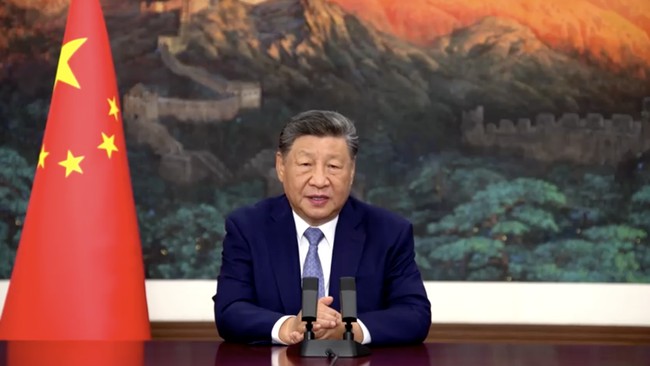
China is once again conducting a ‘clean-up’ of its business community, with President Xi Jinping’s government stepping up ‘corporate regulatory enforcement’ since the start of 2026. The country previously launched a severe crackdown on entrepreneurs in 2021, a move that wiped out more than US$1 trillion from Chinese technology stocks.
‘The concentration of actions and the number of companies involved inevitably reminds us of the regulatory crackdown on internet platform companies from more than five years ago,’ said Evercore’s Head of China Strategy, Neo Wang. Paul Triolo, partner and China technology policy lead at global advisory firm DGA-Albright Stonebridge Group, added that the state is reasserting political control over data, capital expansion, tutoring ideology, overseas stock listings, and platform power, alongside excessive financing.
In detail, Beijing launched an antitrust investigation into Trip.com in January over alleged ‘abuse of market dominance,’ forcing merchants into exclusive agreements before raising commission fees. The move caused the company’s Hong Kong-listed shares to plummet nearly 20% in a single day. Citibank analysts estimate the ongoing antitrust probe could result in a fine of up to 4.9 billion yuan.
In May, China’s market regulator also issued its harshest food safety sanctions, imposing combined fines of 3.6 billion yuan on several e-commerce and food delivery platforms for hosting unverified vendors competing on price. Ahead of the ‘618’ shopping festival, China’s biggest discount event, Beijing city regulators summoned online retailers, including Xiaohongshu—which had reportedly been preparing for a confidential initial public offering in Hong Kong—over misleading subsidy advertisements. Authorities also reported hidden fee mechanisms that shifted costs onto merchants.
During the same week, the State Administration for Market Regulation summoned senior management of Walmart China for a formal accountability meeting over repeated food safety failures at its membership warehouse chain, Sam’s Club, and urged improvements to its supply chain controls. Sam’s Club has since established a remediation task force to overhaul supply chain inspections and replaced its head with Liu Peng, a former Alibaba executive.
Despite the clean-up, several analysts view the current actions as highly measured. Triolo noted the situation has changed, with policymakers now more wary of an economy burdened by sluggish domestic demand, a slow job market, and a desire for private tech firms to boost investment in computing infrastructure supporting the country’s AI ambitions. ‘Beijing is seeking to act but without triggering another broad investor panic,’ he said, adding that regulators are far more restrained than in 2021.
Han Shen Lin, Director at The Asia Group for China, echoed this, stating that Beijing needs private sector confidence, employment, and technology investment far more than it did in 2021. This was evident in 2025 when President Xi Jinping told the country’s top entrepreneurs, including Alibaba’s Jack Ma, to ‘show their talents’ in a new era for the private economy. Rhodium Group research analyst Ciel Qi stressed that the measures are more of a measured signal than a sustained crackdown.