
Why Has Russia Not Yet Conquered Ukraine? An Explanation
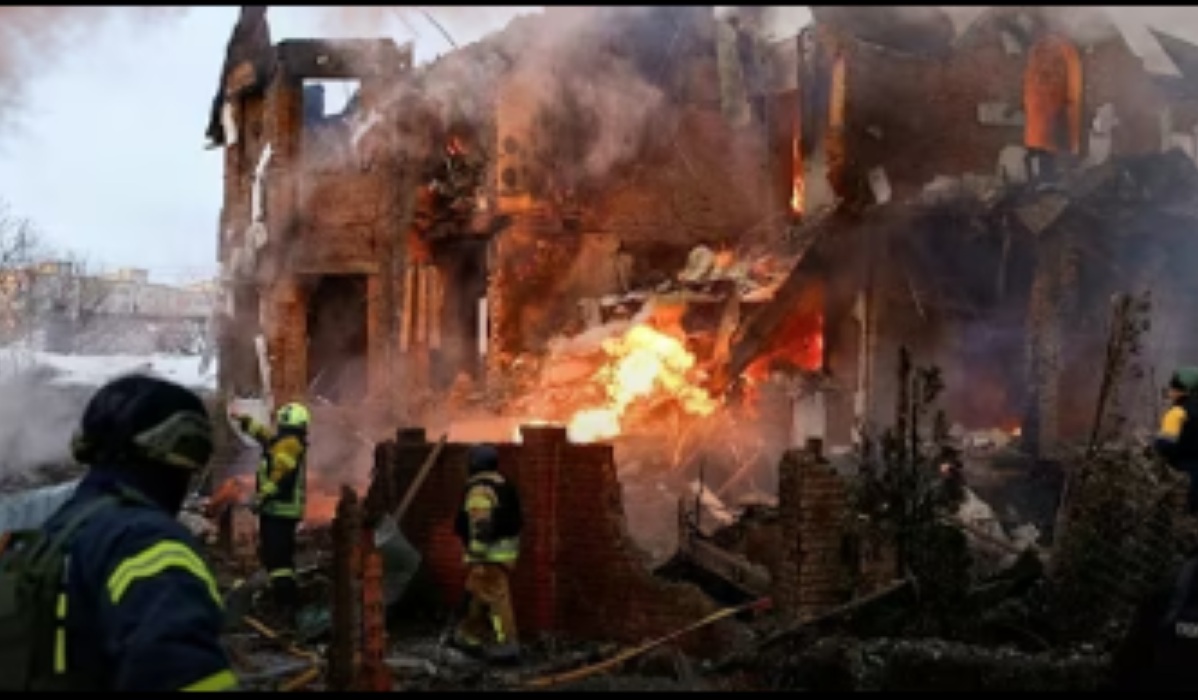
Russia’s invasion of Ukraine, which began in February 2022, has thus far failed to force Kyiv into submission. After more than four years of armed conflict, Ukraine has instead increased the intensity of its resistance, including launching counter-attacks against strategic infrastructure deep within Russian territory.
Repeated Ukrainian strikes on Russian energy facilities in recent years have been acknowledged to have a tangible impact on the country’s fuel supply. Russian President Vladimir Putin admitted that attacks on energy infrastructure have caused disruptions to fuel distribution, although he claimed the situation remains manageable.
“Regarding the attacks on important infrastructure in general, and energy infrastructure in particular, attacks on these facilities certainly cause problems, that is clear,” Putin said in an interview reported by AFP on Monday (29/6/2026).
Putin added that they are currently observing certain shortages in fuel supplies. However, he emphasised that the situation has not yet reached a critical stage. Conversely, the Ukrainian government maintains that attacks on Russian energy facilities are a form of retaliation for Moscow’s aggression, which has targeted Ukrainian civilians and energy infrastructure since the start of the war.
On the same occasion, Putin also expressed his hope that the United States delegation could return to Moscow to discuss opportunities to end the war, particularly as Washington’s attention towards the Middle East conflict appears to be waning.
The relationship between Russia and Ukraine underwent a fundamental shift following Ukraine’s independence from the Soviet Union. Kyiv gradually strengthened ties with Western nations and began seeking NATO membership, a move regarded by Moscow as a threat to its national security.
The situation culminated in 2014 when massive demonstrations in Ukraine toppled the pro-Moscow President Viktor Yanukovych. The trigger was Yanukovych’s decision to reject a cooperation agreement with the European Union. Following the change in government, Russia responded by sending troops to the Crimean Peninsula and annexed the strategic region, which remains under Moscow’s control despite a lack of international recognition.
Over the past four years, fierce battles have taken place across various fronts. Although Russia recorded progress in several frontline areas during 2023 and 2024 through the seizure of settlements, Ukraine has managed to mount significant resistance.
Kyiv’s forces have repeatedly succeeded in launching counter-attacks in the east and south, including a surprising military operation in the Kursk region, which is within Russian sovereign territory. The success of this resistance is inseparable from the political, economic, and modern weaponry support provided by NATO member states, including the United States.
Francois Heisbourg, a Senior European Advisor at the International Institute for Strategic Studies, assessed that Russia has failed to achieve the primary objective of its invasion, which was to take full political control over Ukraine. The military operation, originally predicted to be short-lived, has instead transformed into a prolonged war of attrition.
“Ukraine’s stated war aims are consistent with a war of liberation and national defence: territorial integrity, political sovereignty, and defence guarantees,” said Heisbourg.
He assessed that Ukraine has very limited options other than defending its national sovereignty. Kyiv’s strategy, which focuses on the existence of the nation as a sovereign state, combined with demands for post-war reparations and the prosecution of war crimes, ensures Ukraine’s position remains solid amidst massive Russian military pressure.