
Why Gulf Nations Stand to Lose the Most in a US-Iran War
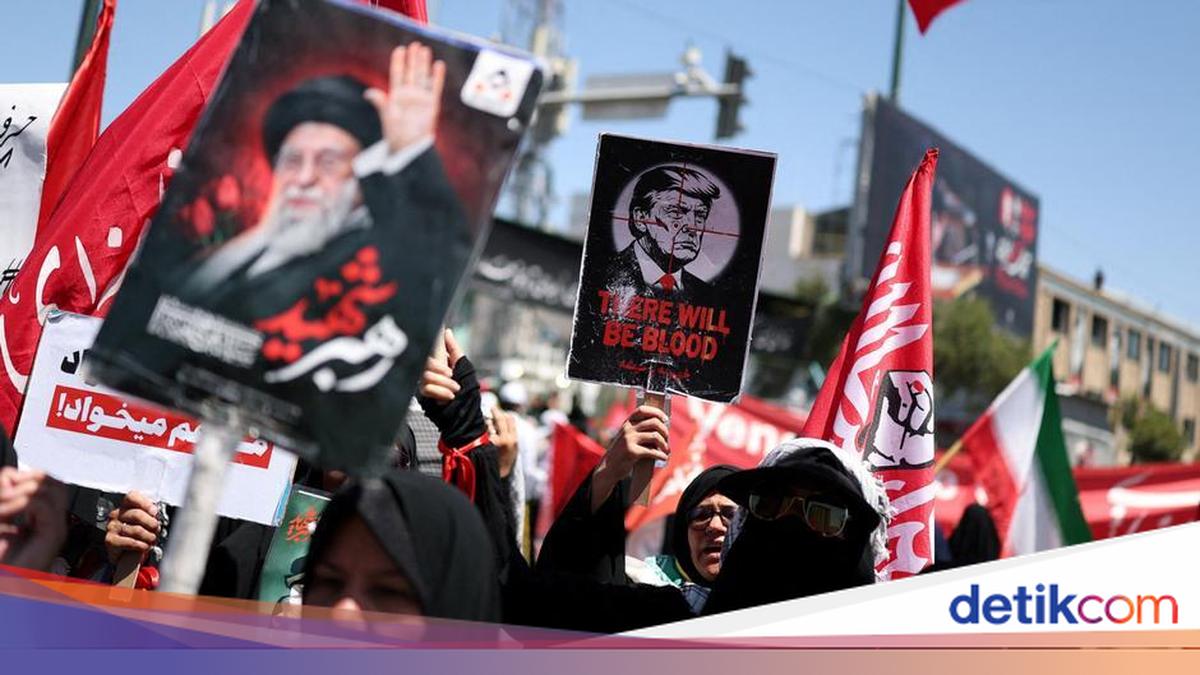
Once again, the countries of the Gulf region find themselves on the front line of tensions between the United States and Iran. At the NATO summit in Ankara on Wednesday (8/7), President Donald Trump stated that the temporary US agreement for a ceasefire had ‘expired’. Meanwhile, Iran’s chief negotiator, Mohammad Bagher Ghalibaf, declared that there had been a major violation of the agreement, a memorandum of understanding signed by both countries in mid-June. Shortly afterwards, the US bombed several sites in Iran. Iran retaliated by attacking 85 US military facilities in Bahrain and Kuwait. All countries in the Gulf region potentially stand to suffer losses if the conflict escalates further.
Bahrain
Bahrain hosts a major US Navy base. In the latest Iranian attack, the country was directly targeted. Because Bahrain is one of the smaller Gulf states, US military installations are located closer to residential areas and centres of economic activity compared to its neighbours. As a result, even a limited-scale conflict could disrupt civilian life. Politically, Bahrain’s position is also quite complex. Like other Gulf states, Bahrain is a monarchy that suppresses most forms of political dissent. However, unlike other Gulf states, Bahrain’s royal family is Sunni, while the majority of the population is estimated to be Shia. Iran itself is a Shia theocracy. A continuing conflict between the US and Iran has the potential to trigger internal tensions within Bahrain. The Bahraini government has arrested hundreds of people suspected of posting anti-war messages on social media, expressing sympathy for Iran, attending demonstrations, or accused of being Iranian spies.
Kuwait
Kuwait hosts the largest number of US military bases in the Middle East. The country houses two air bases and around 13,500 personnel, including civilian contractors. This situation makes Kuwait a target for Iranian attacks. Previously, Kuwait tended to be cautious in its foreign policy. The country often acted as a mediator and stressed that it did not wish to be involved in ongoing conflicts. The experience of the 1990 Iraqi invasion is one factor that has shaped Kuwait’s foreign policy to be far more cautious than its neighbours. However, the Iranian attack on Kuwait due to the presence of US military bases is expected to influence this approach. Some observers note that the Kuwaiti government’s protests against the Iranian attack are now being delivered in a firmer tone.
Saudi Arabia
Although Iranian officials have stated that no country hosting US troops is safe from attack, Iran has not yet attacked Saudi Arabia this week. This is despite Saudi Arabia also hosting a major US Air Force base. After years of competing with Iran for regional influence, Saudi Arabia is now emphasising that diplomacy is the only way for Gulf nations to coexist peacefully. Saudi Arabia also prefers to focus on its economic targets through the Vision 2030 programme rather than engage in a war it says it never wanted. According to experts, Saudi Arabia’s main priority is to prevent the conflict from spreading while protecting its oil infrastructure, a strategic national asset. The blockade of the Strait of Hormuz by Iran has forced Saudi Arabia to divert some of its oil exports, its main source of revenue, through pipelines to the Red Sea. Generally, Saudi officials are trying to maintain a balance in this conflict. They remain in direct communication with both Iran and the United States. At one stage, Saudi Arabia reportedly refused to grant the US access to its airspace to attack Iran. However, other reports later suggested that Saudi Arabia also conducted unpublished attacks against Iran.
United Arab Emirates
The United Arab Emirates also hosts important US air bases. Iran has previously attacked the country but has not done so again in this week’s conflict. Nevertheless, a prolonged conflict in the Middle East risks damaging the reputation of Abu Dhabi and Dubai as international financial and trade hubs. This reputation is crucial for the UAE’s economic strategy, which is increasingly seeking to reduce its dependence on oil exports. The UAE is also able to divert some of its oil exports from the Strait of Hormuz via overland pipelines. However, a protracted conflict still has the potential to disrupt this route.
Qatar
Qatar hosts Al Udeid Air Base, the largest US military installation in the Middle East. On the other hand, Qatar maintains relatively good relations with Iran, with whom it shares the largest natural gas field. Iran has not attacked Qatar directly this week. However, a previous Iranian attack on a Qatari vessel at sea was one of the incidents that triggered the latest wave of strikes. Some analysts describe Qatari diplomats as among the best in the world. They often act as mediators in the US-Iran conflict, including helping to formulate the memorandum of understanding that halted the fighting in June.
Oman
Oman does not host major US military bases. The country maintains good relations with both the United States and Iran and often facilitates backchannel diplomacy between the two sides. Like Qatar, Oman has the opportunity to once again provide space for negotiations between the parties involved in the conflict. This role is expected to remain important in the near future.