
Why fuel is scarce in some regions
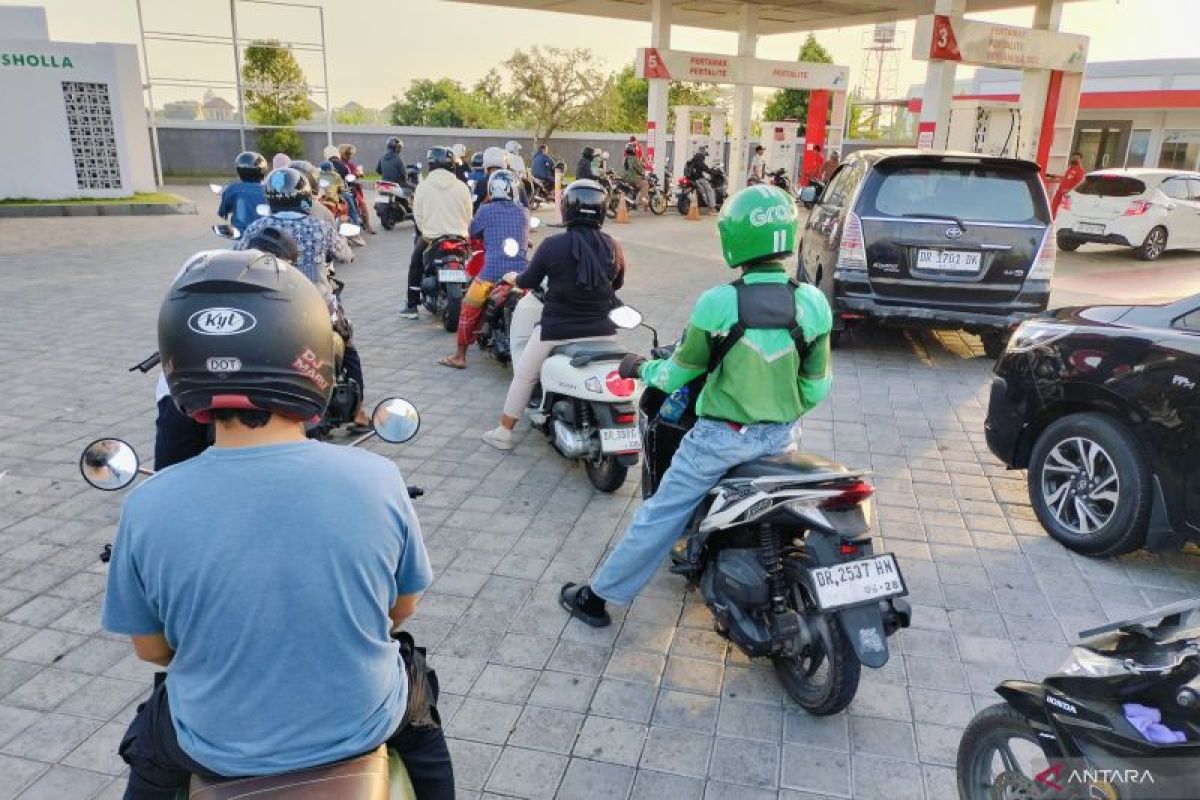
Jakarta (ANTARA) – Fuel shortages in several parts of Indonesia have once again attracted public attention after long queues formed at petrol stations, particularly in Bali. People have had to wait for hours to obtain fuel, raising concerns about its availability for everyday needs.
The situation in Bali drew attention after videos of queues and public complaints at petrol stations circulated widely on social media. As well as disrupting residents’ activities, the situation prompted reports that some individuals were selling fuel at prices far above normal to foreign tourists.
Why can fuel become scarce in some areas when the government says national supplies remain secure?
1. Disruption to fuel distribution
One of the main causes of local fuel shortages is disruption to distribution: fuel may be available but unable to reach petrol stations on schedule.
The Director General of Oil and Gas at the Ministry of Energy and Mineral Resources, Laode Sulaeman, said on 14 October 2026 that long queues in Bali had resulted from delays to fuel-carrying ships. This had held up deliveries to a number of petrol stations.
Laode said national fuel stocks at the time were sufficient for around 18 to 20 days. The disruption in Bali was therefore more closely linked to distribution than to a depletion of national supplies.
This shows that fuel being available at a depot or storage terminal does not necessarily mean it can be obtained immediately by the public. It still has to be transported, unloaded, stored and delivered to petrol stations.
If any stage of that process is delayed, supplies at a particular petrol station may run low or out, even when larger-scale reserves remain available.
2. Bad weather and technical problems with ships
Fuel deliveries to island areas such as Bali depend heavily on maritime transport running smoothly. Bad weather and technical problems with vessels can therefore affect delivery schedules.
Pertamina said the disruption to supplies in Bali in October 2026 was also caused by a technical problem with the anchor of a fuel-carrying ship. The issue delayed the vessel’s planned docking and unloading from 6.30am Central Indonesia Time on Monday (12 October) until around 10pm.
High waves and unfavourable sea conditions can also slow ships as they dock and unload fuel.
Even a delay of a few hours can affect availability at petrol stations when public demand continues every day. The impact may be greater if subsequent deliveries are also disrupted.
Transport difficulties are not confined to sea routes. In some areas that rely on river transport, for example, falling water levels can force deliveries to be rerouted by lorry, which has a more limited carrying capacity.
3. Rising consumption, particularly of subsidised fuel
Another factor is strong public demand for fuel, especially subsidised products such as Pertalite.
Pertamina Patra Niaga recorded average Pertalite consumption in Bali of around 2,200 kilolitres a day. This figure reflects the island’s substantial fuel needs, as economic activity there depends heavily on transport, including in the tourism sector.
Pertamina president director Simon Aloysius Mantiri has also acknowledged that increased use of subsidised fuel is one factor affecting availability at petrol stations.
The price difference between subsidised and non-subsidised fuel can encourage people to choose the more affordable product. When demand rises at the same time, particular petrol stations may run out more quickly, especially if deliveries are delayed.
However, high consumption does not mean the public is the only party to blame. Supply and distribution planning must also take daily requirements and possible surges in demand into account.
Fuel shortages can worsen when people fear that it will remain difficult to obtain for a long time.
After hearing that some petrol stations have run out, motorists may choose to fill their tanks early or look for fuel at several locations. This can increase demand all at once and make queues longer.
This is known as panic buying. When supply is already disrupted, a sudden surge in demand can rapidly exhaust the remaining stocks.
Queues had been seen at a number of petrol stations in Bali since Sunday (11 October). The situation was then widely discussed on social media, including in videos of residents complaining about long waits for fuel.
People should therefore distinguish official information about fuel availability from unverified reports. Buying only what is needed and avoiding stockpiling can help reduce pressure on supplies at petrol stations.
Why can shortages occur in one area even when national stocks are secure?
This is due to the difference between fuel reserves across the country and availability at a specific location.
National stocks represent fuel held across the wider storage and distribution system. Availability at a petrol station, meanwhile, depends on the volume delivered, storage capacity, delivery speed and the level of local consumption.
For example, a fuel terminal may have sufficient supplies. But if a tanker is delayed in docking or road tankers cannot deliver the fuel, some petrol stations may still temporarily run out.
Similar issues have also drawn attention elsewhere. On 14 October 2026, the Ministry of Energy and Mineral Resources said distribution problems had previously occurred in Makassar, South Sulawesi. In areas reliant on waterways, weather conditions and limited transport options can pose particular challenges.
Secure national stocks therefore do not guarantee that every petrol station in every region will have the same level of supply at the same time.
To speed up the restoration of supplies, Pertamina Patra Niaga brought additional fuel to Bali in stages from 14 to 17 October 2026, totalling around 57.9 million litres.
Pertamina had earlier reported the arrival of a ship carrying 18,000 kilolitres of Pertalite and 2,500 kilolitres of Pertamax. The additional deliveries were made through the Sanggaran Fuel Terminal in Denpasar and the Manggis Fuel Terminal in Karangasem Regency.
In addition to increasing supplies, Pertamina identified 52 petrol stations to operate around the clock to meet public needs and ease queues. More staff were also deployed to keep operations running while taking account of conditions for frontline workers.
The government has also urged the public not to panic, saying national fuel stocks remain secure. However, recovery at each petrol station still depends on the smooth delivery and distribution of fuel.
The public also needs clear information about which petrol stations still have fuel, their operating hours and the progress of deliveries. Such information can help motorists avoid travelling from one location to another in search of fuel.
The events in Bali show that fuel shortages can result from several factors combined, including technical transport problems, bad weather, high consumption and increased demand caused by public panic.
Addressing shortages therefore requires more than simply adding supplies. Smooth distribution from terminals to petrol stations, accurate demand planning and transparent communication are also essential to prevent similar problems from recurring.
The public can help by buying fuel according to need, following information from official sources and avoiding stockpiling. The government and Pertamina, meanwhile, need to ensure supplies reach the areas that need them on time, so that people’s daily activities are not continually disrupted.