
Why Foreign Investors Remain Cautious on Indonesia Despite Attractive Valuations
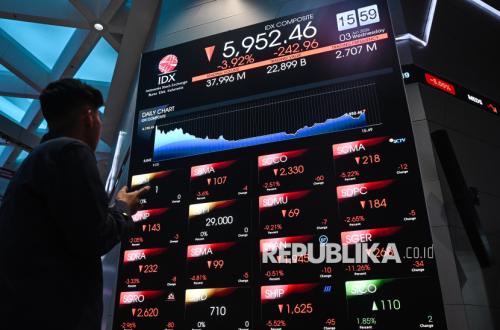
Senior Portfolio Manager Equity at PT Manulife Aset Manajemen Indonesia (MAMI) Caroline Rusli has assessed that foreign investors have not yet returned aggressively to the Indonesian stock market, even though current valuations are considered attractive. According to Caroline, cheap share prices are not enough to drive foreign capital inflows because investor confidence in policy direction and the visibility of short-term catalysts remain unconducive.
“Indonesia is currently in a selective value phase. A defensive strategy and identification of chosen stocks and sectors through a bottom-up approach are becoming very crucial,” Caroline said in a statement in Jakarta on Monday (15/6/2026).
She explained that current market conditions are showing increasingly clear differences between regions, currencies, and asset classes that are relatively more resilient to global turmoil. “When global liquidity is not as accommodative as before, the stock markets that can outperform are those with structural growth potential and more robust corporate earnings resilience, such as North Asia,” she said.
In this context, Caroline assessed that North Asia still holds greater appeal compared to other emerging markets. According to her, North Asia benefits from its direct links to the development of artificial intelligence (AI), the semiconductor industry, and continuously rising global technology capital expenditure. Additionally, capital expenditure by hyperscaler companies or large-scale digital infrastructure providers such as Amazon, Google, Meta, and Microsoft continues to be revised upwards.
The increased investment by these global technology companies is expected to first have a positive impact on supply chains in Asia, especially the semiconductor sector, electronic components, advanced materials, and energy support infrastructure. Therefore, Caroline believes the strength of Asian markets is not only supported by relatively cheap valuation factors, but also by earnings growth prospects that have strong structural catalysts. “This is also reflected in the performance of Asian stock markets throughout the year to date in 2026 amid the ongoing global volatility,” she said.