
Why Earthquakes Can Cause Tsunamis: An Explanation
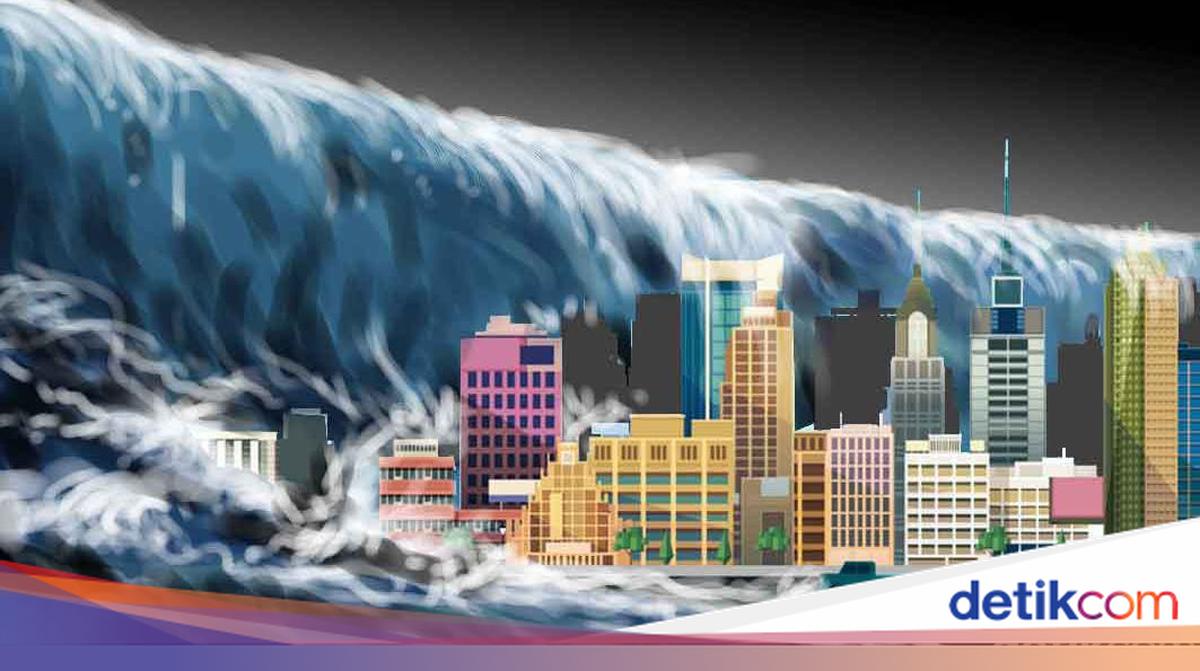
Earthquakes are events characterised by the vibration of the Earth caused by the sudden release of energy from within the planet. The Indonesian Agency for Meteorology, Climatology, and Geophysics (BMKG) has revealed that Indonesia is highly prone to earthquakes because it is situated along the convergence zone of three tectonic plates: the Indo-Australian Plate, the Eurasian Plate, and the Pacific Plate.
According to BMKG’s official website, because these plate boundaries are located at sea, large-scale earthquakes with shallow depths have the potential to trigger tsunamis, making Indonesia equally vulnerable to tsunami threats. A tsunami is a sea wave caused by impulsive disturbances in the ocean. These impulsive disturbances occur due to sudden changes in the shape of the seabed in either a vertical or horizontal direction.
Such changes are driven by three primary sources: tectonic earthquakes, volcanic eruptions, or underwater landslides. Of these three sources, earthquakes are the leading cause of tsunamis in Indonesia. Earthquakes that trigger tsunamis typically exhibit the following characteristics:
The epicentre is located at sea.
The earthquake depth is relatively shallow, less than 70 km.
The magnitude is large, exceeding 7.0 on the Richter scale.
The fault mechanism involves thrust faults or normal faults.
How do earthquakes cause tsunamis? According to the International Tsunami Information Centre (ITIC) of UNESCO, the most destructive tsunamis are generated by large, shallow earthquakes with an epicentre or fault line located near or on the seabed. These earthquakes typically occur in regions characterised by tectonic subduction along plate boundaries.
The high level of seismicity in these areas is caused by the collision of tectonic plates. As these plates move past one another, they trigger massive earthquakes that tilt, shift, or displace vast areas of the seabed, ranging from several kilometres to 1,000 km or more. This sudden vertical displacement over a large area disturbs the sea surface, displacing water and generating destructive tsunami waves. These waves can travel vast distances from their source, spreading devastation along their path. When a major earthquake occurs, the faulting can cause a vertical shift significant enough to disturb the ocean above, producing a tsunami that radiates in all directions.