
Why does the signal disappear in the middle of the sea? Here are seven causes
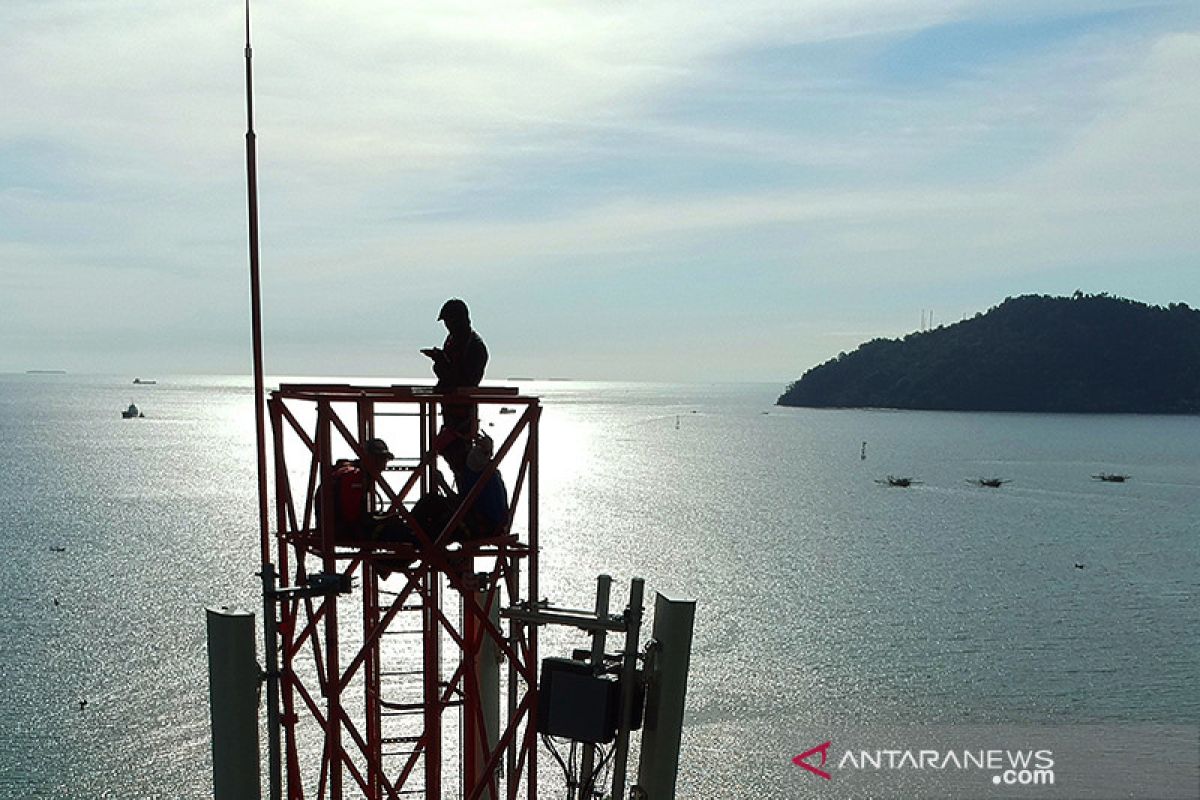
Jakarta (ANTARA) - The loss of communication signal when at sea is a problem that can affect both vessels and personal communication devices. Distance from land, antenna height, atmospheric conditions and the characteristics of radio waves can all influence a device’s ability to stay connected.
This situation differs from the assumption that being in the middle of the sea automatically causes all devices to lose signal. There are various technical factors that determine whether a device can still communicate or not.
- Distance from transmitter towers
One of the main causes of mobile phone signal loss at sea is the increasing distance between the device and transmitter towers on land.
Cellular networks are fundamentally designed to serve specific areas via transmitting stations. As a vessel moves further away from coverage areas, the signal strength received by a device may decline until it is no longer available.
This is felt more acutely because the sea surface has no network of cellular towers like on land. For this reason, devices relying on ordinary cellular networks cannot always be used for communication when a vessel is far from the coast.
- Antenna height affects range
For radio communication at sea, antenna height is one of the most important factors. VHF radio waves used in maritime communication generally propagate along a line of sight.
This means communication distance is heavily influenced by the position and height of the antenna on the vessel as well as on shore-based stations. The higher the antenna, the greater its potential range.
The International Telecommunication Union (ITU) explains that maritime VHF communication is affected by antenna height, the sea surface and radio wave propagation conditions.
The sea is not merely empty space through which radio waves travel. The water surface can reflect waves, meaning the signal received by a device is a combination of several propagation paths.
This phenomenon can cause multipath, which occurs when a signal from a single transmitter reaches the receiver via more than one path. Differences in signal arrival times can cause reinforcement or weakening of the signal at certain points.
The ITU notes that reflections of radio waves from the sea surface can have a significant impact on communication link quality.
- Weather and atmospheric conditions
Atmospheric conditions can also affect radio wave propagation. Temperature, humidity, air pressure and rain can alter the characteristics of how radio waves travel, particularly in communication systems using certain frequencies.
Research on radio propagation over water surfaces shows that weather conditions can be linked to weakening or disruption of communication paths. Rain and wet conditions, for instance, can cause fading or a decline in signal quality in certain radio systems.
However, the influence of weather is not the same across all types of networks. The scale of disruption depends on the frequency, distance, type of communication system and the atmospheric conditions occurring.
- Radio wave propagation disruption or change
Radio waves do not always behave in the same pattern. Changes in the atmospheric refraction index can cause waves to bend or refract.
Over the sea, there is also a phenomenon known as ducting, in which certain atmospheric conditions can cause radio waves to travel further than normal. Even so, this phenomenon does not always improve communication, because altered propagation can also cause signal variation or weakening.
Studies on maritime VHF communication note that temperature, humidity, sea surface conditions and antenna height can all affect the signal strength received.
Lost communication can also be caused by the device being used. Ordinary mobile phones rely heavily on cellular operator networks, whereas vessel communication may use VHF radio, HF radio or satellite communication systems.
Because they have different characteristics and ranges, one device may lose its connection while another can still be used in the same location.
For sea voyages far beyond cellular network coverage, maritime and satellite communication systems are more suitable alternatives. The choice of communication system should also be matched to the vessel type, voyage distance and communication needs.
- Vessel position and the shape of surrounding areas
Vessels located near islands, cliffs or areas with particular obstacles may also experience changes in signal quality. Obstacles in the propagation path can reduce the strength of radio waves received by a device.
In VHF-based communication, the line-of-sight principle makes antenna position and the presence of obstacles important factors. Consequently, communication quality can change as a vessel moves, even if its distance from the transmitter does not change significantly.
Ultimately, signal loss at sea results from a combination of factors, from the distance to the transmitter, antenna height, radio wave characteristics, the sea surface and atmospheric conditions, to the capabilities of the device being used.
Therefore, the absence of a mobile phone signal in the middle of the sea does not necessarily mean all forms of communication are cut off. Vessles equipped with maritime or satellite communication devices can still use those systems as long as the equipment, network and operational conditions support them.
Source: jawawa.id (https://jawawa.id/newsitem/why-does-the-signal-disappear-in-the-middle-of-the-sea-here-are-seven-causes-1789455445)
Originally published by Antara (Indonesian) (https://www.antaranews.com/berita/5741540/kenapa-sinyal-hilang-di-tengah-laut-ini-7-penyebabnya), translated from Indonesian