
Why does Islam teach its followers to avoid LGBT?
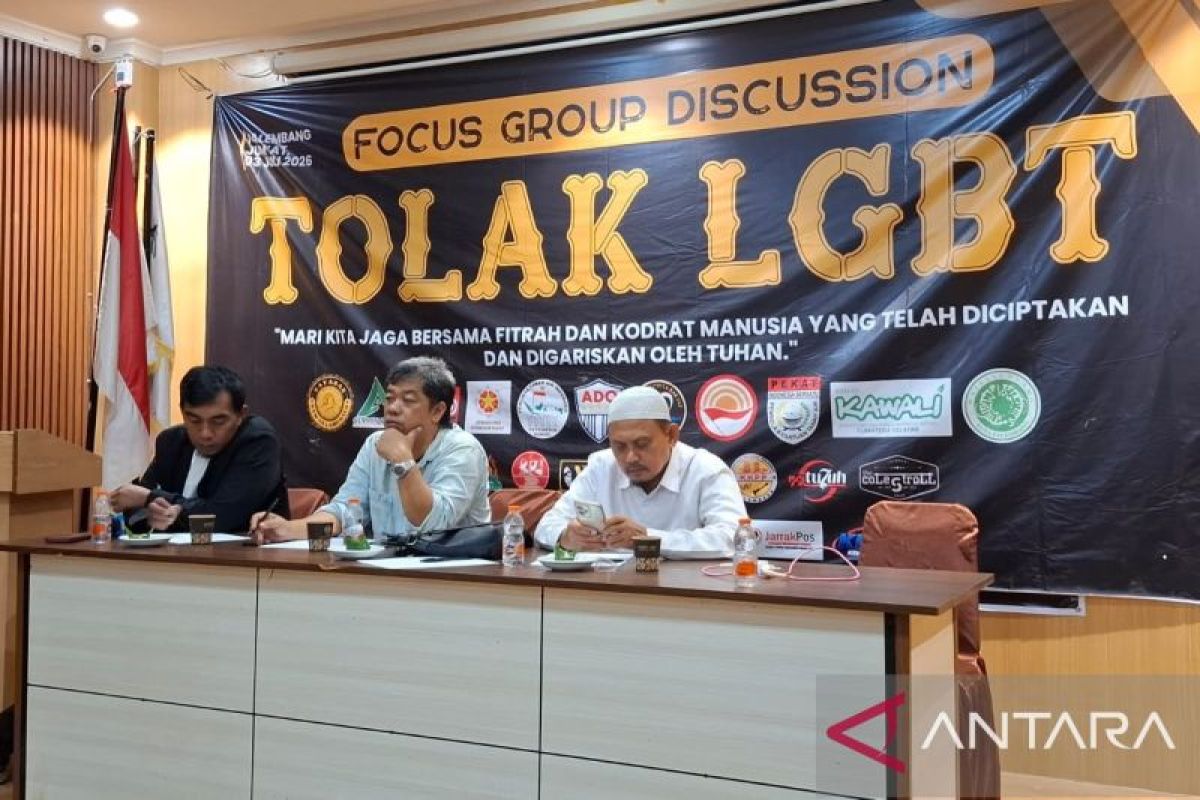
Jakarta (ANTARA) - Discussions regarding LGBT have recently resurfaced in Indonesia following reports of alleged same-sex parties and debates over LGBT campaigns on social media. The issue has once again captured public attention and elicited various responses. Amid these developments, Islam’s view on same-sex relations has returned to the forefront of discussion.
In Islamic teachings, such behaviour is considered contrary to sharia. Islam instructs its followers to avoid same-sex relations based on the teachings of the Quran and Hadith. This prohibition serves as a guideline for the majority of scholars in understanding Islamic law, while also stressing that all human beings must be treated justly and without violence.
In Islam, the relationship between a man and a woman within the bond of marriage is viewed as human nature (fitrah) and the only permissible way according to sharia to channel sexual desire. On this basis, the majority of scholars hold that same-sex sexual relations contradict religious provisions. This view is also affirmed in the Indonesian Ulema Council (MUI) Fatwa Number 57 of 2014 concerning Lesbian, Gay, Sodomy, and Sexual Abuse.
One of the primary scriptural foundations is the story of Prophet Lut (Lot) in Surah Al-A’raf, verses 80-81. The verses recount Prophet Lut’s rebuke of his people for engaging in homosexual acts, describing them as a people who have transgressed beyond bounds. In the interpretation of the majority of scholars, these verses are understood as a reprimand against same-sex relations and serve as a key legal basis in Islamic jurisprudence for declaring such acts forbidden.
In addition to the Quran, a hadith narrated by Al-Baihaqi is also used as a foundation by scholars. The hadith states that the Prophet Muhammad said that when a man has sexual relations with another man, both commit adultery, and when a woman has sexual relations with another woman, both commit adultery.
Based on the Quran, Hadith, and the consensus (ijma) of the majority of scholars, the MUI, in its Fatwa Number 57 of 2014, stipulates that the channelling of sexual desire is only justified through a lawful marriage between a man and a woman. The fatwa also declares homosexual acts, lesbianism, sodomy, and sexual abuse as forbidden (haram) according to Islamic law.
Nevertheless, Islamic teachings also emphasise noble character in treating fellow human beings. A Muslim is commanded to preach in a good manner and is prohibited from engaging in bullying, insults, or violence against anyone. The prohibition in sharia is directed at acts deemed contrary to religious teachings, while every human being retains their dignity, which must be respected.