
Why Does Ganymede, Jupiter's Largest Moon, Have Its Own Magnetic Field?
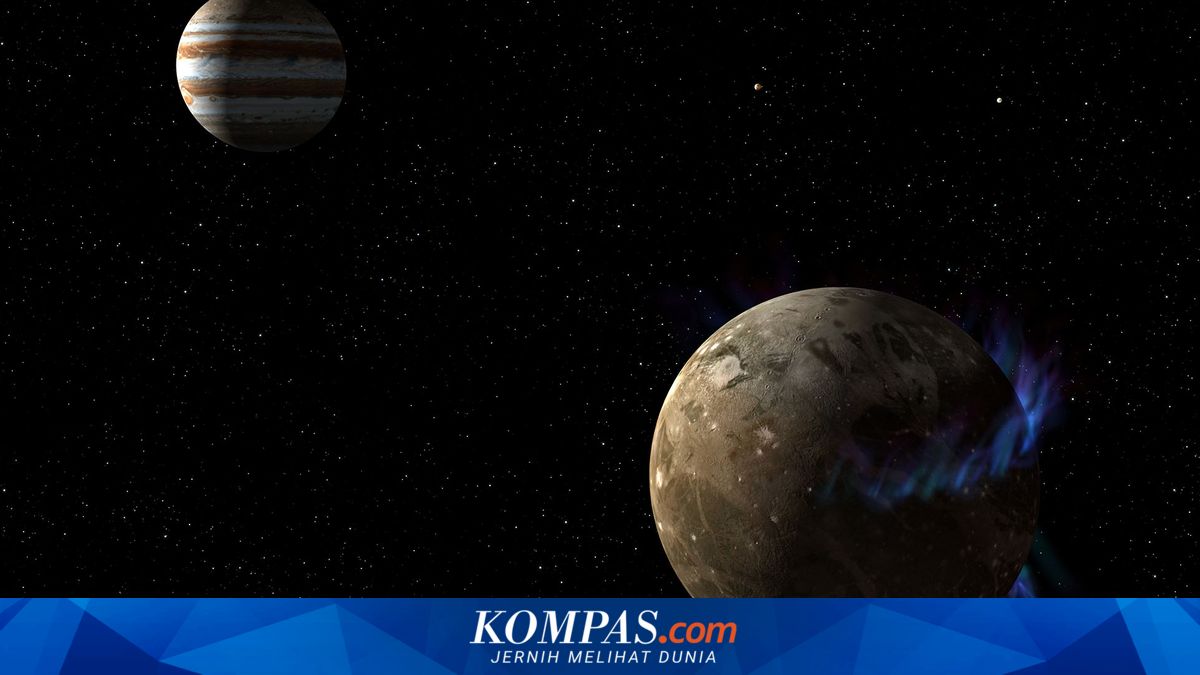
Ganymede, Jupiter’s largest moon, holds the record as the biggest moon in our Solar System. With a diameter of nearly 5,300 kilometres, it is significantly larger than Earth’s moon and even slightly bigger than the planet Mercury. However, it is not just its size that astonishes astronomers, but a rare feature: Ganymede is the only moon known to possess its own magnetic field.
Like Earth, Ganymede’s magnetic field is generated through a natural process called a dynamo, involving the constant movement of molten iron flowing and churning within its metallic core. Although the existence of this magnetic shield has been known for three decades, how such a process could arise and persist in a relatively small moon has long been a subject of intense debate among scientists.
Now, a recent study published in the journal Science Advances proposes a theory that overturns previous assumptions: Ganymede’s interior is undergoing a unique internal heating process never before observed elsewhere in the universe. This heating is believed to be the primary fuel powering its magnetic dynamo.
Scientists have long been confronted with two conflicting theories about Ganymede’s origins. ‘Many formation studies suggest Ganymede formed under conditions too cold to have a metallic core from the start,’ said Kevin Trinh, a planetary scientist from the California Institute of Technology (Caltech), one of the study’s authors. ‘Meanwhile, many dynamo models assume Ganymede formed its metallic core at the same time as the moon itself, similar to Earth’s birth process. Both cannot be true.’
On larger celestial bodies like Earth, the metallic core forms very early—within the first 200 million years after the Solar System’s birth—through a ‘hot start’ formation process, gradually cooling over time. However, moons are generally too small to retain their initial heat over billions of years.
To bridge this theoretical gap, the research team developed a new computer simulation model that simplifies Ganymede’s physical characteristics. The model assumes Ganymede’s core is rich in iron and iron sulphide mixtures, which have lower melting points. The simulations revealed a surprising result: despite being born from a ‘cold start’, Ganymede was still able to gradually develop a metallic core capable of generating a magnetic field.