
Why Do Young People Use Online Loans? Seven Reasons and the Risks
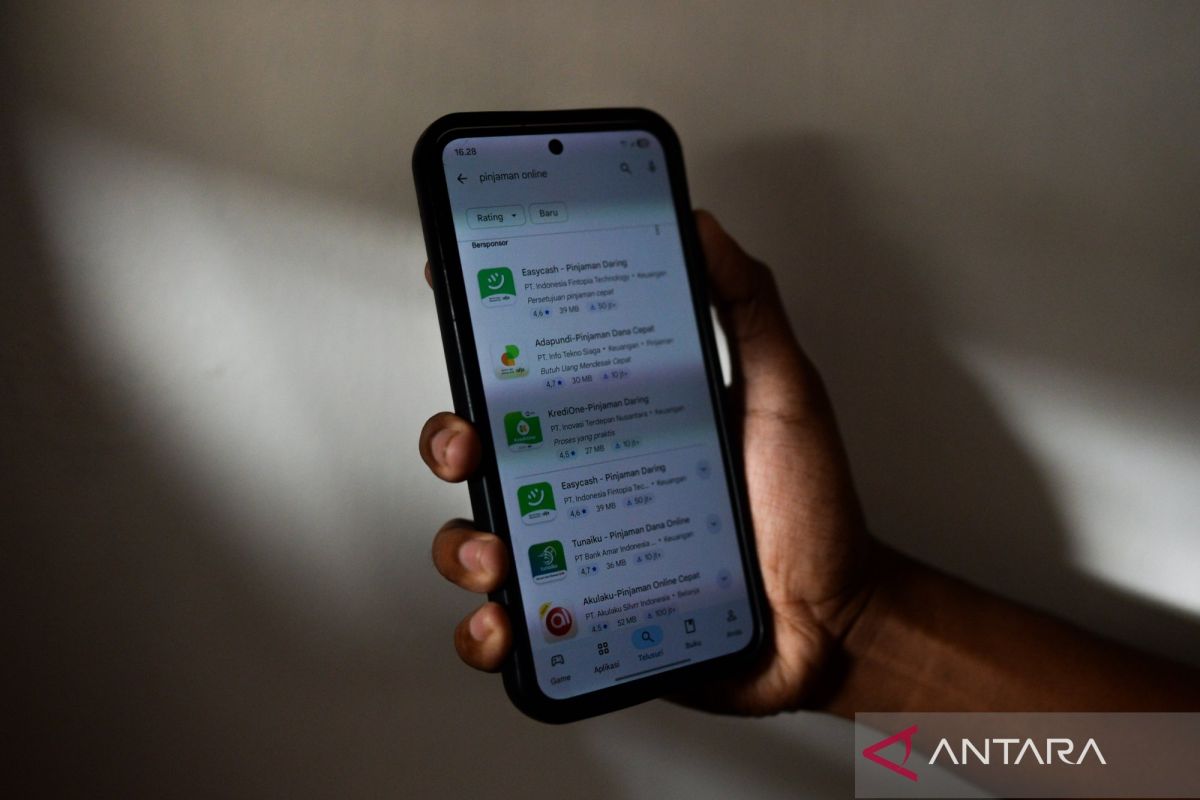
Jakarta (ANTARA) – The ease of accessing financial services by mobile phone has brought online loans closer to everyday life, including for young people. Straightforward applications, relatively quick disbursement and urgent needs are among the reasons these services are used.
Although online loans are often associated with consumerism, borrowing does not always begin with a desire to buy goods in order to follow trends. Some people use them to cover everyday needs, pay bills, buy goods in instalments or cope with unexpected financial circumstances.
However, easy access to loans also carries risks. Without careful consideration of their ability to repay, borrowers may find that what they saw as a short-term solution becomes a prolonged financial burden.
So why do young people use online loans, and what should they consider before applying?
Reasons young people use online loans
Use of online loans among young people is linked to changing habits as financial transactions become increasingly digital. Loans can be accessed through apps, meaning applicants do not always have to visit a financial institution in person.
A Jakpat survey conducted in the second half of 2025 among 2,089 Gen Z, millennial and Gen X respondents found that 11 per cent had used online loans. The survey also found that Gen Z was the group most vulnerable to using digital lending services.
1. Easy and quick applications
Convenience is one of the main attractions of online loans. Prospective borrowers can apply by phone without visiting a provider’s office.
The Jakpat survey found that 61 per cent of respondents chose online loans because the application process was quick and straightforward. Meanwhile, 57 per cent were attracted by what they considered to be easier application requirements.
This makes online loans seem practical, particularly for young people who need money relatively quickly. But an easy application does not mean repayment obligations should be taken lightly.
2. Urgent need for funds
Unexpected expenses are another reason people use online loans. Healthcare, household needs, education costs and other expenses may arise when finances are already tight.
In the Jakpat survey, 55 per cent of Gen Z online-loan users said they used them for urgent needs.
Even so, borrowers need to assess loans against their ability to repay. Taking on debt for an emergency without considering future income can create new financial problems.
3. Covering everyday needs
Some young people use digital loans not only to buy expensive goods, but also to meet regular expenses.
Jakpat found that 56 per cent of Gen Z online-loan users used them for everyday needs. Another 42 per cent used the services to pay bills.
This can happen when monthly spending exceeds income or when someone does not yet have enough in emergency savings.
Repeatedly borrowing to cover routine expenses should be a cause for concern. Debt used again and again to fund everyday spending risks making a person’s finances increasingly difficult to manage.
4. Buying goods without paying the full price upfront
The desire to own the latest mobile phone, clothes, electronic devices or other goods does not always match a person’s financial means.
Online loans and payment services can become an option for young people who want to obtain goods without paying the full price at once.
This is also connected to digital shopping habits. Convenient transactions and instalment offers can make people more likely to buy without considering the total amount they will owe.
5. Enticed by discounts and promotions
Discounts, cashback and instalment offers are other factors that can encourage the use of digital credit.
Some consumers see instalment payments as advantageous because they can spread the cost over several periods. But a discount does not necessarily make a purchase more economical if the item is not needed in the first place.
A May 2026 report by The Straits Times described how instalment-payment promotions can encourage young people to make repeated purchases. In one case reported, a 28-year-old worker initially used buy now, pay later services to buy clothes, then took out loans from several apps to pay previous instalments.
The case illustrates how promotions and convenient transactions can fuel consumerism when they are not accompanied by financial planning.
6. Limited access to conventional credit
Some young people who have only recently entered the workforce have no credit history or lack the supporting documents needed to apply for loans from conventional financial institutions.
In these circumstances, digital lending can appear to be an alternative because applications are made online and requirements are relatively simple.
But this easy access must be balanced with an understanding of interest, administration fees, loan terms, late-payment penalties and the total amount to be repaid.
7. The influence of social circles and digital lifestyles
Keeping up with trends, seeing promotions on social media and the influence of friends can also affect young people’s financial decisions.
Wanting the same goods as friends or to take part in certain activities can lead people to disregard their financial circumstances.
A 2025 study by Women’s World Banking involving more than 1,500 students and over 100 stakeholders in Indonesia found that some young people used digital credit without fully understanding the repayment risks. The study also highlighted the influence of apps, influencers and algorithms on young people’s financial decisions.
The substantial involvement of younger age groups in digital lending is also reflected in figures reported by Channel News Asia (CNA).
According to Financial Services Authority (OJK) statistics for April 2025, borrowers aged 19–34 had outstanding loans – the value of loans still being repaid – of Rp38.34 trillion. This was the largest share of the total outstanding peer-to-peer lending, which reached Rp76.16 trillion in the period.
The 35–54 age group came next, with outstanding loans of Rp34.28 trillion. The figures show the extent of working-age people’s involvement in digital lending.
Meanwhile, a report citing a 2025 survey by the Indonesian Internet Service Providers Association (APJII) said millennials and Gen Z accounted for 86.6 per cent of online borrowers in Indonesia.
That figure should be understood as the composition of borrowers in the survey; it does not mean that 86.6 per cent of all young Indonesians use online loans.
Despite the ease of obtaining funds, online loans come with repayment obligations that must be met under the agreement. If poorly managed, they can become a financial burden.
Risks to consider include:
Interest and additional charges. Borrowers should understand the interest, service and administration fees, and late-payment penalties before agreeing to a loan.
Accumulating debt. Taking out a new loan to pay an old instalment can create a cycle of debt that becomes increasingly difficult to break.
Pressure on cash flow. Instalments that are too large can reduce a borrower’s ability to meet essential needs and other monthly obligations.
Risk of default. Late payment may incur additional charges and affect credit records, in accordance with applicable rules.
Misuse of personal data. Users should be wary of illegal apps that may misuse personal information.
The Straits Times report also highlighted the phenomenon known as a debt treadmill, in which people continually take out new loans to meet earlier obligations. Easy applications and a lack of understanding about the accumulation of interest and fees can make the situation worse.
Online loans do not necessarily have to be avoided, but their use should be matched to the borrower’s needs and financial capacity. Before applying, there are several points to consider.
Check that the provider is legal. Check the lender’s licensing and regulatory status through official OJK channels. Do not readily trust offers that circulate only through text messages or social media.
Calculate your ability to repay. Make sure instalments are affordable against income after essential expenses and other obligations have been deducted.
Understand all charges. Check the interest, administration fees, loan term, penalties and total amount to be repaid.
Avoid borrowing for discretionary spending. It is best not to take on debt just to follow trends, buy non-essential goods or satisfy a passing desire.
Do not pay off debt with new debt. If you begin to struggle with repayments, contact the provider to discuss options for settling your obligations under the applicable terms.
Do not share personal data indiscriminately. Avoid giving one-time passwords, PINs, passwords or sensitive information to parties whose identity cannot be verified.
Young people use online loans for reasons that go beyond lifestyle choices. Urgent needs, everyday expenses, convenient applications and limited access to other financial services all influence these decisions.
The ease of obtaining a loan should be matched by the ability to manage personal finances. The money received today is an obligation that must be repaid in the future.
Source: jawawa.id (https://jawawa.id/newsitem/why-do-young-people-use-online-loans-seven-reasons-and-the-risks-1793839995)
Originally published by Antara (Indonesian) (https://www.antaranews.com/berita/5832875/mengapa-anak-muda-suka-pinjol-ini-7-alasan-dan-risikonya), translated from Indonesian