
Why Do Good People Choose Silence?
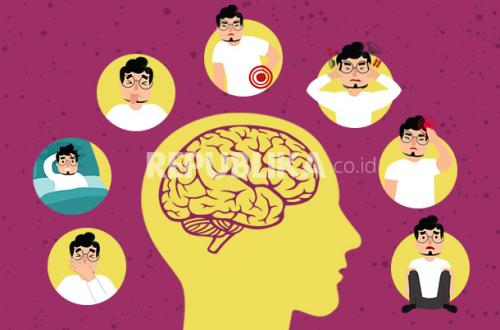
Every day we witness an interesting phenomenon. Many people perform acts of kindness with a light heart: helping a neighbour, donating to disaster victims, comforting a grieving friend, or simply smiling at a stranger. Yet, when faced with injustice, bullying, corruption, lies, or abuse of power, the number of people willing to speak out suddenly dwindles drastically. Some choose silence. Others pretend not to see. The question is simple, but the answer is highly complex: why is doing good so much easier than fighting evil?
Neuroscience offers an interesting explanation. The human brain is not primarily designed to be a moral warrior or hero. Over millions of years of evolution, its main task has been to sustain life. Consequently, our nervous system developed into a highly sensitive threat-detection machine. At the slightest hint of danger—such as social rejection, loss of status, hostility, or conflict—the brain activates its alert system with lightning speed. This response often occurs faster than rational thought. In neuroscientific terms, the threat signal travels directly to the emotional amygdala, bypassing the rational cortex.
This is why courage is not the brain’s natural state. Courage emerges when the part of the brain responsible for executive functions manages to control the threat signal. A person who continues to defend the truth despite facing risks does not lack fear; rather, they are able to manage that fear so it does not dominate their decisions. In other words, fighting evil is a much heavier task than simply doing good.
Social psychology reveals a similar reality through the phenomenon known as the bystander effect. The more people who witness a violation, the less likely any single individual is to act. Each person hopes someone else will take the first step. Responsibility becomes diffused, and as a result, everyone feels they have no direct obligation. Ironically, the presence of many witnesses can produce a collective silence.
This phenomenon explains why many forms of injustice can persist for so long in society. It is not because there are no good people, but because good people often choose to remain spectators. They disagree with the wrongdoing, but they are not brave enough to stop it. In many cases, silence becomes a form of unspoken consent.
However, the bystander effect is only part of the story. Social psychology also recognises a concept called the spiral of silence. This theory explains that a person tends to be reluctant to voice their opinion if they feel they are in the minority or at risk of social rejection. The fear of social isolation is one of the most powerful forces influencing human behaviour.
This spiral explains why, in many organisations, institutions, and even countries, so many people are aware of irregularities but choose to remain silent. It is not because they agree, but because they calculate that the social cost of speaking out far outweighs the benefits. They fear losing their position, relationships, reputation, or sense of security. The silence then spreads from one person to another until it eventually appears as though no one objects to the situation.
From a neuroscientific perspective, the decision to remain silent is not merely a moral issue. The brain performs a rapid calculation regarding potential threats. The danger-detection system, refined over millions of years of evolution, works much faster than rational thought processes. Social threats are treated almost as seriously as physical ones. For the brain, being ostracised from the group during evolutionary times could mean a reduced chance of survival. That biological legacy still influences modern humans.
Interestingly, the same mechanism also explains why criticism leaves a much deeper mark than praise. Almost everyone has experienced this. A person can receive a hundred compliments for their work, but a single sharp criticism can keep them awake all night. Why is this?
The answer again lies in how the brain works. From an evolutionary standpoint, negative information has a much higher survival value than positive information. Human ancestors who failed to notice threats were unlikely to survive. Conversely, those who were highly sensitive to danger had a greater chance of passing on their genes. As a result, the modern brain still carries this biological inheritance. It automatically pays far more attention to negative information than positive information.
In psychology, this tendency is known as negativity bias. The brain treats criticism as a threat signal to self-esteem, social standing, or group acceptance. Because it is deemed important for social survival, criticism receives a higher processing priority. Emotional activity increases, attention becomes more focused, and memory works harder to store the experience.
Imagine a lecturer who finishes a class and receives fifty positive comments from students. However, there is one comment saying that their explanation was boring. It is highly likely that this single comment will linger in their mind well into the night. Not because the fifty compliments are meaningless, but because the brain is wired to prioritise the negative.