
Why Did Trump and the Republicans Suffer Such a Heavy Defeat in the 2026 Midterm Elections?
There is an old lesson in American politics that was proved once again on 3 November 2026: voters can forgive many things, except prices that keep rising without a reasonable explanation.
The Democratic Party retook both the House of Representatives and the Senate, ending the Republicans’ complete control of the White House and Congress (Cox Media Group, 2026). It was not a narrow victory.
Democrats won in areas considered Republican strongholds for decades: James Talarico defeated Ken Paxton to become the first Democrat elected to the Texas Senate since 1988; Kansas sent its first Democratic senator since 1932; Sherrod Brown returned to the Senate from Ohio; and Roy Cooper won a seat in North Carolina (NBC Washington, 2026; Cox Media Group, 2026). More than 124 million votes were cast, surpassing the record for a midterm election set in 2018 (Gray DC, 2026).
More strikingly, amid concerns over radicalism, terrorism and seemingly endless conflict in the Middle East, eight Muslims were elected to the US Congress in the 3 November 2026 midterms: one senator and seven House members, all Democrats.
Abdul El-Sayed (Democrat, Michigan) defeated former Republican congressman Mike Rogers and became the first Muslim elected to the US Senate. Four incumbents were re-elected: André Carson (Indiana’s 7th District), Ilhan Omar (Minnesota’s 5th District), Rashida Tlaib (Michigan’s 12th District) and Lateefah Simon (California’s 12th District). All four are Democrats.
There were also three new faces: Adam Hamawy (New Jersey’s 12th District), the first Muslim and person of Arab descent to represent New Jersey in Congress; Darializa Avila Chevalier (New York’s 13th District), the first Latina Muslim woman elected to Congress; and Aisha Wahab (California’s 14th District).
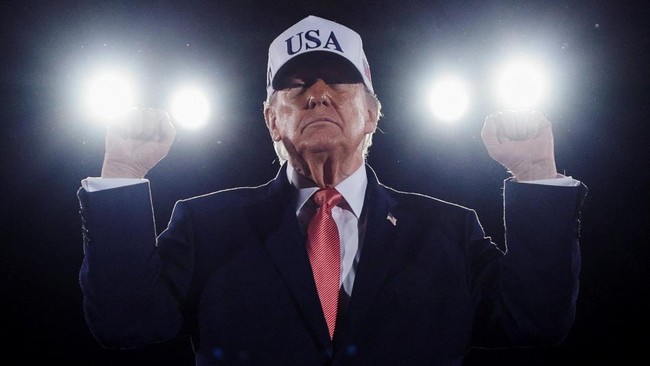
Donald Trump can be seen as the culprit. His name was not on the ballot, but he was effectively the one being judged. A CBS exit poll put his approval rating at about 38 per cent, the lowest for a president on midterm election day and below his rating during his first term (CBS News Exit Poll, 2026). The defeat grew out of five interconnected grievances: the economy, jobs, taxes, immigration and war.
The economy: promises of lower prices, but higher bills
Trump won the 2024 US presidential election with a simple promise: to bring prices down. Two years later, that promise had become his greatest liability. According to exit polls, the economy was the most important issue for 39 per cent of voters, far ahead of other concerns (Hot Air, 2026). About three-quarters of voters were dissatisfied with the country’s direction, while twice as many said their household finances had worsened as said they had improved (CBS News Exit Poll, 2026; Hot Air, 2026).
AP VoteCast captured the heart of the problem: voters were not merely angry about inflation; they blamed Trump directly, citing his tariffs, his war in Iran and his unfulfilled promise to lower prices (AP VoteCast, 2026). Inflation reached 3.8 per cent in April 2026, its highest level since he returned to office (WJLA, 2026).
On election day, the average petrol price was still about $4.15 a gallon (Boston Globe, 2026). Every visit to the pump reminded people that life was becoming more expensive. When Trump campaigned in Iowa claiming prices were falling sharply, many voters experienced the opposite at the supermarket checkout.
Unemployment and taxes
US unemployment figures were not particularly bad. The rate stood at between 4.1 and 4.2 per cent, low by historical standards. But the headline figure concealed anxiety.
A month before the election, the September 2026 report recorded only 29,000 new jobs, roughly a third of economists’ forecasts, and unemployment rose to 4.2 per cent (PBS, 2026). A much stronger October 2026 report was not released until three days after the election, too late to change voters’ mood (KY3, 2026).
Republicans passed a major tax-cut bill in 2025, which should have been an asset on the campaign trail. In reality, many Republican politicians themselves complained that voters had not felt its benefits (Semafor, 2026). The reason was another kind of tax, felt every day: import tariffs.
Tariffs are essentially taxes on imported goods, and most of their cost is passed on to consumers. Exit polls showed that a majority of voters nationwide believed Trump’s tariffs were harming the economy, a view found in states from California to Mississippi (CBS News, 2026; AP VoteCast, 2026).
A July YouGov poll found that 72 per cent of voters blamed tariffs for high prices (Washington Examiner, 2026). This was the paradox: Republicans promoted an abstract tax cut, while voters paid a tangible, hidden tax every time they went shopping. Some of the tariffs had already been struck down by a federal court (Boston Globe, 2026), reinforcing the impression that the policy was not only costly but also reckless.
Immigration policy blunders
Immigration had once been Trump’s most effective issue. In 2026, it took on a different character—not because voters suddenly wanted open borders, but because of how enforcement was carried out. About 57 per cent of voters thought the Trump administration had gone too far in enforcing immigration laws; only 20 per cent felt it had not been tough enough (Hot Air, 2026). Public confidence was further eroded after two US protesters were shot dead by federal officers in Minnesota in January 2026 (FES, 2026).
The impact was visible within Trump’s own coalition. Young and Latino voters, who helped him win in 2024 on the strength of his economic promises, shifted towards the Democrats (WEAR, 2026). White women, who have historically leaned Republican, narrowly favoured Democrats (CBS News, 2026). When raids appeared more like displays of power than law enforcement, moderate voters moved away.
The war in the Middle East
If one decision did most to determine Trump’s political fortunes this year, it was the US-Israeli war against Iran, which began on 28 February 2026. His approval rating fell steadily thereafter (Al Jazeera, 2026). Disruption to traffic through the Strait of Hormuz, a route for about a fifth of the world’s oil and gas, sent energy prices soaring, with the increase spreading across the economy (WJLA, 2026).
Few voters named foreign policy as their top issue. But that is misleading, because they felt the war in their wallets. Seventy-four per cent said the war in Iran was a crucial or major factor in their vote, and about 63 per cent of that group voted Democrat (Hot Air, 2026).
A majority considered the decision to attack Iran a mistake, including about a quarter of Republican voters (CBS News Exit Poll, 2026). Trump himself told Fox News that the Iran war had made election night less than enjoyable (NBC Washington, 2026). Even Florida Governor Ron DeSantis, a Republican, said the war had backfired on his party (WEAR, 2026).
The war may have had a strategic rationale as an effort to prevent Iran from acquiring nuclear weapons. But ordinary voters saw an apparently endless conflict that made petrol a dollar a gallon more expensive than the previous year (WJLA, 2026).
Five grievances, one verdict
What made the defeat so decisive was the way the five factors reinforced one another. The war raised energy prices. Energy costs and tariffs fuelled inflation. Inflation eroded wages, making a statistically healthy labour market feel fragile. Tax cuts went unnoticed because tariff costs cancelled them out. Meanwhile, tough immigration policies lost their appeal because they appeared cruel, just as voters wanted a government focused on household needs.
Above all, there was a problem of trust. About six in ten voters thought Trump put his own interests ahead of the country’s (CBS News Exit Poll, 2026), while government corruption was an important factor for a slim majority of voters (AP VoteCast, 2026). Many who had given him a chance now felt regret. The 2026 midterms were the bill that had finally come due.
There are, of course, counterarguments worth noting. First, history is not on the side of the US president’s party in midterm elections. The party in power has lost House seats in eight of the past ten midterms over the last four decades (TNND, 2026). House Speaker Mike Johnson emphasised this point (Cox Media Group, 2026), meaning some of the losses could be seen as part of a cyclical pattern rather than solely a verdict on Trump.
Second, some conservative polling organisations argue that immigration enforcement, such as co-operation between local police and federal authorities, still has majority support; what voters reject is excess, not the objective itself (Daily Signal, 2026).
Third, the strong October jobs report suggests that the economic foundations were not as weak as public perceptions indicated (KY3, 2026). Trump’s supporters could argue that it was perception, rather than policy, that lost the election.
Trump remains US president, but the Democrats now control both the Senate and the House of Representatives. Will things improve under Democratic control? Can the Democrats bring down the cost of living and unemployment?
Strengthen the economy and tackle unemployment
V.O. Key (1966) described voters as “avenging gods” who punish or reward governments according to their performance. Morris Fiorina (1981) developed this idea into the theory of retrospective voting.
Voters do not need to understand the details of policy. They need only ask: “Am I better off than before?” For voters with limited information, this is a rational and low-cost way to make a decision. Anthony Downs (1957) called this kind of thinking an informational shortcut.
Lewis-Beck and Stegmaier (2000) concluded that research repeatedly finds voters use economic conditions to reward or punish the incumbent party. Studies also find that retrospective assessments are stronger than prospective ones, that findings at both micro and macro levels are consistent, and that unemployment, inflation and growth are the most important indicators.
Nannestad and Paldam (1997) found that voters punish a poor economy more severely than they reward a good one. This is consistent with loss aversion in behavioural economics (Kahneman & Tversky): losses feel more significant than equivalent gains. The result is an asymmetry for incumbents. Growth is taken for granted, while a crisis is seen as the government’s fault.
Arthur Okun (1975) formulated the misery index (inflation plus unemployment) because these are the factors most directly felt in everyday life. GDP growth is abstract, while losing a job and seeing the price of rice rise are concrete.
Unemployment also has a sociotropic effect. Even people who are not unemployed become anxious when neighbours or family members lose their jobs, and then view the national economy negatively. Research shows that sociotropic assessments—the state of the country—usually have more influence than egotropic assessments, or the state of one’s personal finances.
Voters focus on the final year. Achen and Bartels, in Democracy for Realists (2016), show that voters are “myopic”: they judge conditions close to election day rather than performance over an entire term.
Similar findings appear in other studies, which conclude that voters tend to disregard the first three years of a government and base their choice on economic conditions in the final year before an election. This is the basis of the political business cycle theory (Nordhaus, 1975): incumbents have an incentive to stimulate the economy before an election.
In the United States, a county-level study found that every one-percentage-point year-on-year increase in national unemployment reduced support for the incumbent party by 9.2 per cent. The same study found that local economic conditions had almost no effect, because voters believed the president had little influence over their local economy. It was macroeconomic performance, seen as the president’s responsibility, that was punished.
Evidence does not come from the US alone. Research on Chile’s 1989–1999 presidential elections found that unemployment and the output gap both had a significant effect on votes for incumbents. In Hungary, detailed data showed that areas experiencing steeper increases in unemployment punished the party in power.
The post-Covid-19 anti-incumbent wave (2022–2024)
This was the most striking “natural experiment”. A Marketplace analysis of advanced economies found that in more than 70 per cent of the countries examined, incumbents lost the presidency or premiership, and both left- and right-wing incumbents were defeated.
The Financial Times noted that, for the first time, every governing party in an advanced economy holding an election lost votes. Political scientist Michael Miller considered inflation the most plausible explanation for this anti-incumbent wave.
A conditional spectre
A deteriorating economy is a systemic threat to incumbents. Inflation and unemployment are the most dangerous variables because they are felt directly and are easily attributed to “the government”.
But this “spectre” is conditional. Its strength depends on how clearly responsibility can be assigned, the level of political polarisation, which party owns an issue, timing—with conditions close to election day mattering far more—and the incumbent’s ability to manage the narrative and distribute resources.
It is therefore more accurate to describe it not as a spectre that is certain to appear, but as a structural risk that is always looming. An incumbent facing a deteriorating economy is not guaranteed to lose, but enters the contest carrying a heavy burden.
The incumbent must offset that disadvantage with other strengths: a candidate, a narrative, polarisation or state resources. The United States under Trump has experienced this. What about Indonesia?
Source: jawawa.id (https://jawawa.id/newsitem/why-did-trump-and-the-republicans-suffer-such-a-heavy-defeat-in-the-2026-midterm-elections-1794246687)
Originally published by CNBC Indonesia (https://www.cnbcindonesia.com/opini/20261110001023-14-783709/mengapa-trump-dan-partai-republik-terpuruk-di-pemilu-sela-2026), translated from Indonesian