
Why Create an Export-Focused State-Owned Enterprise? Purbaya: Customs Is Prone to Leakage
Jakarta, CNBC Indonesia - President Prabowo Subianto has announced the formation of an export-focused state-owned enterprise, PT Danantara Sumberdaya Indonesia (DSI), to centrally supervise the export activities of coal, palm oil (CPO), and ferro alloys. The trigger for this policy is the finding that many Indonesian exports to overseas markets have not been priced at market value, in order to avoid higher taxes. This practice is known as under-invoicing, compounded by transfer pricing when export prices are set higher by offshore subsidiaries of exporters.
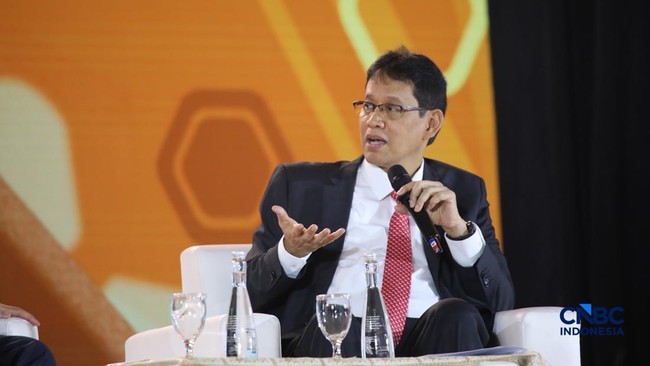
“The step came out when the President received information that there are many cases of under-invoicing,” said Finance Minister Purbaya Yudhi Sadewa at the Jogjakarta Financial Festival held at the Jogja Expo Centre (JEC) on Friday (21 May 2026).
Initially, the head of state had received a proposal from the Finance Minister that the practice could be strengthened by tightening export oversight by the Directorate General of Customs and Excise. However, the problem was that Customs was allegedly involved in the practice, allowing Indonesia’s wealth to leak abroad.
“The Customs authority is also prone to leakage, so the President thought, let’s sort it out at once, and create a single institution, PT DSI, through which all exporters must pass,” emphasised Purbaya.
As is known, President Prabowo Subianto has previously referenced the practice of under-invoicing in his remarks at the 19th Indonesian DPR plenary session, on Wednesday (20 May 2026). The issue arose as Prabowo spoke about national wealth leakage, especially from the trade of natural resources.
In his address, Prabowo noted that one of Indonesia’s major economic problems is that not all profits from exports remain domestically. He cited under-invoicing, under accounting, transfer pricing, and smuggling as loopholes that erode state revenue.
“For 34 years, what has happened is what is called under-invoicing. Under-invoicing is fraud. What is sold by entrepreneurs is not reported as it actually is. Many of them set up companies abroad,” Prabowo said.
In the materials shown during the speech, the cumulative export value attributed to under-invoicing for 1991-2024 is named as US$908 billion, or around Rp15,980.8 trillion (assuming an exchange rate of Rp17,600 per US$1). The figure comes from UN Comtrade 2025 and was processed by NEXT Indonesia Institute.