
Why China and the US Would Think Twice Before Attacking Taiwan
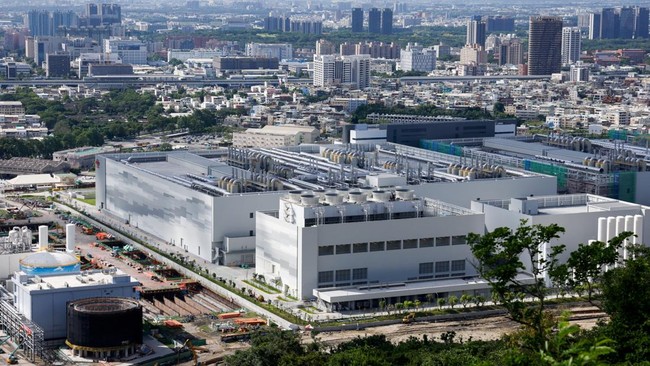
A Taiwanese company occupies a pivotal position in the global chip industry, making the island “guaranteed safe” even amid tensions between China and the United States.
Taiwan Semiconductor Manufacturing Company (TSMC) is behind the chips in the advanced devices used today, from mobile phones and computers to AI data centres.
Without TSMC’s manufacturing capabilities, the most advanced chip innovations developed in the US and China could not be turned into products. Its manufacturing technology makes it irreplaceable in the global semiconductor supply chain, which has become increasingly central to the world economy in recent years as the race to develop AI has intensified.
The global chip supply chain involves several stages:
Chip designers
At the first stage, chip designers such as Nvidia, Apple, AMD, Qualcomm and MediaTek draw up circuit designs. These companies specialise in arranging hundreds of billions of transistors on a single chip: a standard mobile phone chip contains at least 16 billion transistors, while Nvidia’s most advanced GPUs contain 336 billion. However, they do not own their own factories. TSMC takes their designs and technical specifications and works out how to manufacture them at scale. No other facility in the world can produce chips with such complex designs on a scale comparable to TSMC.
Light-based lithography machines
TSMC’s manufacturing process relies on lithography machines made by Dutch company ASML. The machines use ultraviolet light to “draw” circuit patterns, measured in nanometres, onto silicon wafers. ASML developed the machines over several decades in close collaboration with TSMC, and the equipment it supplies is calibrated specifically for TSMC’s production processes.
Other suppliers provide raw materials, including pure silicon wafers and specialised chemicals. TSMC is the largest buyer and a key tester of these materials, so the quality standards it sets serve as a benchmark for the entire industry.
Chip manufacturing
The central stage is fabrication, where digital designs are turned into physical circuits on silicon wafers. TSMC produces about 92 per cent of the world’s advanced chips measuring 3 nanometres or smaller. Rivals such as Samsung still lag in efficiency and quality, while Intel is expected to match TSMC’s capabilities only in the coming years.
Assembly and testing
Once fabrication is complete, wafers containing the chips are sent to assembly and testing partners such as ASE and Amkor. TSMC sets the quality standards they must meet and determines the criteria for passing tests. The output quality of other factories may not be equivalent, making TSMC’s standards an industry benchmark.
Tested chips are then shipped to device manufacturers such as Apple, Dell and Samsung, as well as data-centre server makers and electric-car manufacturers. TSMC ensures that supplies run smoothly so production can continue. Delayed shipments could postpone product launches, halt device factories and disrupt global markets.
Why is TSMC irreplaceable?
TSMC’s strength comes from a combination of capabilities that are exceptionally difficult to replicate.
First, its process technology is far ahead of that of its competitors. Almost all of the most advanced chips, at 3 and 2 nanometres, are currently made in TSMC factories.
Second, its production scale is unmatched. Building a single advanced chip factory costs between US$30 billion and US$40 billion, equivalent to Rp525 trillion to Rp700 trillion, and even then there is no guarantee that its output will match TSMC’s quality. The company has accumulated decades of confidential expertise, manufacturing methods and working relationships that cannot be bought or copied quickly.
Third, the entire industry has adapted to TSMC. Hundreds of companies design their products around its manufacturing processes. Moving production elsewhere would mean redesigning chips from scratch, adapting them to different technologies and spending years on the transition.
This concentration also represents the greatest risk to the global economy. Almost all advanced-chip manufacturing capacity is concentrated on Taiwan, an island that remains politically sensitive. Any disruption, from an earthquake or power cut to political tensions, could halt chip supplies to the entire world within days.