
Why Changan Introduced REEV Technology to Indonesia, Not PHEV: An Explanation
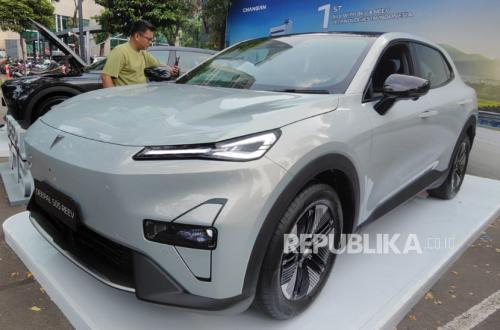
Changan Indonesia has chosen to introduce the Deepal S05 featuring Range Extended Electric Vehicle (REEV) technology as an electrification alternative deemed more suitable for the Indonesian market. Unlike conventional hybrids, the REEV system relies on an electric motor as the primary drive unit, while the petrol engine functions solely to generate electricity for charging the battery.
After Sales Trainer for Changan Indonesia, Dwi Setiyoko, stated that this technology offers a driving sensation akin to a pure electric vehicle, but without the worry of running out of power on long journeys. “With REEV, the main drive is the electric motor. The petrol engine only works as a generator to produce electricity, which is then channelled to the battery and electric motor, not to drive the wheels directly,” Dwi said during a media Q&A session at the Deepal S05 pre-booking announcement in Jakarta on Tuesday.
According to him, this concept differs from the Plug-in Hybrid Electric Vehicle (PHEV) commonly used by several automotive manufacturers. PHEV and REEV both have an electric charging port and a petrol tank, but in a PHEV, the petrol engine and electric motor can both drive the vehicle’s wheels. Dwi explained that the REEV system has a simpler construction because it does not require a connecting mechanism between the engine and the wheels. This makes production costs more efficient while maintaining the driving characteristics typical of an electric vehicle.
“From a technical perspective, the production cost can broadly be more efficient because it does not require a parallel system. In terms of daily use, it is also more optimal because the power still comes from the electric motor,” he said. He assessed that this technology is more suitable for Indonesian consumers who are beginning to switch to electric vehicles but are still considering the availability of charging infrastructure in various regions.
In the Deepal S05 REEV, the 1,500 cc petrol engine will only activate when the battery capacity starts to decline or when the vehicle requires an additional power supply. This system allows the car to continue running on electric motor power, while the engine automatically recharges the battery. Additionally, the vehicle is equipped with an energy recovery feature that converts energy during deceleration into electricity to be stored back in the battery, thereby increasing energy efficiency. Charging is also supported by DC fast charging technology to speed up the battery charging process.