
Why can internet or signals be disrupted during rain and thunderstorms?
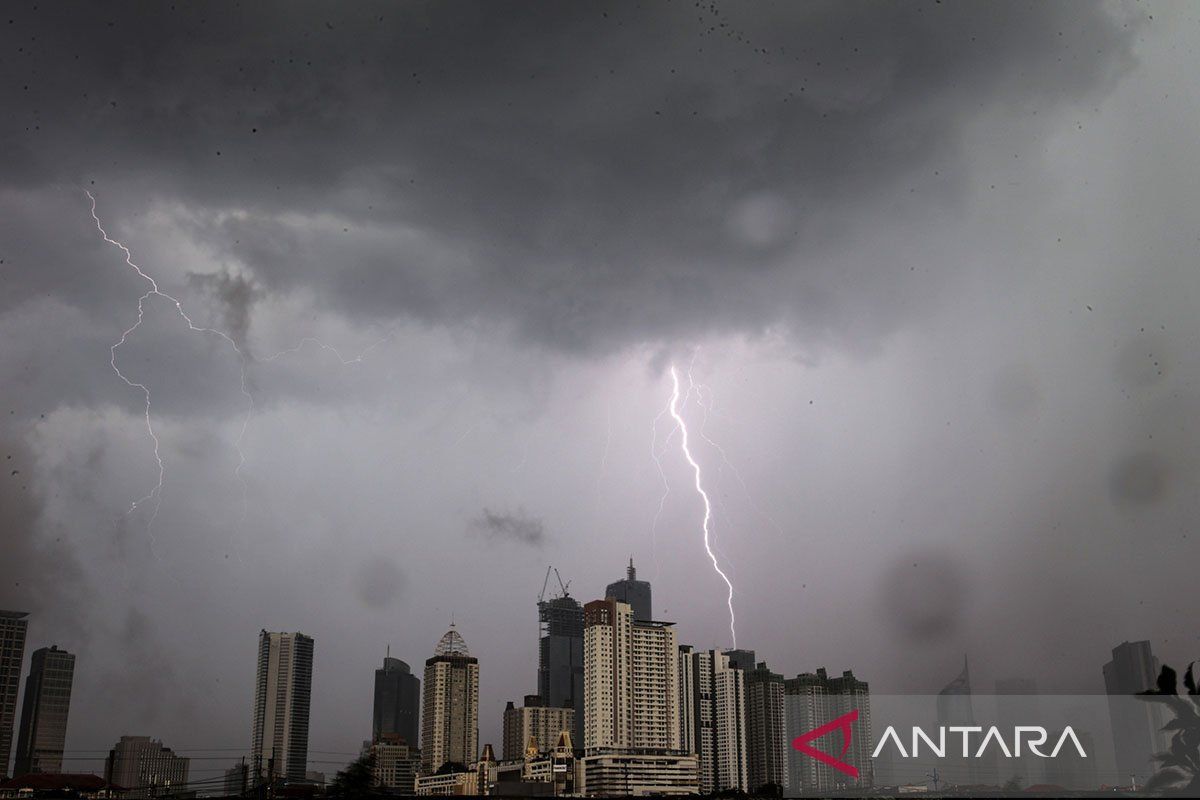
Heavy rain accompanied by lightning does not only cause flooded roads or power outages. Internet connections and mobile phone signals can also feel slower, unstable, or even temporarily disconnected.
When the weather is clear, videos play smoothly. However, as the rain intensifies and thunder begins, connections may suddenly slow down or mobile signals may fluctuate.
So, can rain and lightning truly interfere with signals? The answer is yes, but the cause is not as simple as “lightning disrupting the internet.” There are several different mechanisms that can occur, depending on the type of network and technology used.
Some communication technologies use radio waves at specific frequencies to transmit information. When these waves pass through an atmosphere filled with raindrops, some of their energy can be absorbed or scattered. This phenomenon is known as rain attenuation or rain fade.
The International Telecommunication Union (ITU) explains that rain can cause the weakening of radio waves, particularly at frequencies of several gigahertz and above. This impact is increasingly significant for systems using microwave and millimeter-wave frequencies. This means that the heavier the rain and the higher the frequency used, the greater the likelihood of signal attenuation.
However, this does not mean every cellular network will immediately lose signal when it rains. Cellular networks are influenced by many other factors that determine connection quality, such as the distance of the device from the Base Transceiver Station (BTS), the condition of buildings and trees, user density, network capacity, and the frequencies used.
The type of connection is also a crucial factor. In networks using microwave radio links, for example, data is transmitted via radio waves between one point and another. If that path passes through very heavy rain, the signal can experience attenuation. A similar situation can occur in satellite communications. Signals travelling between antennas on Earth and satellites must pass through the atmosphere. Heavy rain along that path can cause rain fade and reduce connection quality. The ITU even has specific models to estimate signal attenuation due to rain on satellite communication paths and radio networks.
Therefore, if home internet relies on a network that partially depends on radio or satellite connections, heavy rain can be a factor affecting connection quality.
As for the connection to lightning, lightning causes interference through a different mechanism. Lightning strikes generate electromagnetic energy in the form of radio waves. NOAA explains that lightning produces radio waves, and these signals can even be used to detect and locate lightning strikes. This is one reason why certain radios may produce noisy or static sounds when a thunderstorm is nearby.
Modern communication systems are designed to handle various sources of interference. Consequently, the effects felt by users can vary, ranging from being completely unnoticeable to temporary disruptions in certain systems.
There are other issues that may be more tangible. Lightning can cause power surges that have the potential to damage electronic devices. NOAA notes that lightning can enter buildings through cables or conduits connected to the outside and can travel through electrical, telephone, or communication systems.
If network equipment or telecommunications infrastructure is affected by electrical disturbances, connections can certainly become problematic. For instance, if network equipment in a certain location suffers from power outages or voltage surges, the impact can be felt by users connected through that equipment.
Thus, when the internet suddenly malfunctions alongside lightning, the cause is not always because lightning waves “turn off” the signal. The disruption may stem from infrastructure affected by electrical conditions or storm damage.
Bad weather also brings several other factors that can affect networks. Heavy rain usually arrives with thick clouds, strong winds, and changing atmospheric conditions. For radio networks that require specific propagation paths, atmospheric conditions and rain can affect transmission quality. Additionally, strong winds can cause trees to fall or damage telecommunications infrastructure. If cables, poles, network equipment, or power sources for telecommunications facilities are disrupted, users in that area will certainly lose connectivity. Therefore, when the internet suddenly becomes disrupted or slow during rain, the cause could be a combination of the aforementioned factors.