
Why BYD's Myriad Advantages Make It Hard to Rival
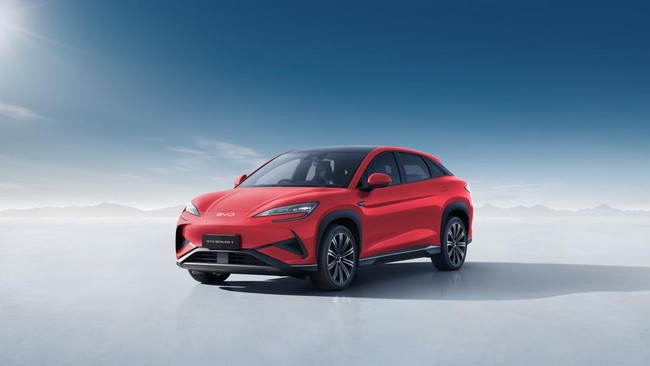
There are two ways to sell electric vehicles to the market: either by purchasing technology from external suppliers or by building it from scratch. BYD has chosen the second path, even though it was not a popular decision two decades ago. However, the results are only now being fully realised.
While the majority of global automotive manufacturers still rely on third-party battery supply chains, BYD has mastered the entire process itself, from battery cell components to vehicle software. This vertical approach is not merely about cost efficiency; it has become a structural advantage for BYD that cannot be replicated within a year or two.
Own Batteries, Own Standards
The existence of the Blade Battery signifies more than just a safer battery. It serves as proof that BYD does not need to wait for innovations from other vendors. The elongated, flat-shaped cells, which directly form the battery structure without intermediate modules, are able to reduce the risk of thermal runaway while simultaneously cutting production costs. In a market where price is a critical factor, this certainly provides a competitive advantage for BYD.
Single Platform, Multiple Characters
As is well known, the e-Platform 3.0 is the infrastructure that allows BYD to present various vehicle models from the same foundation. The motor, battery, and drivetrain are designed as a single ecosystem rather than separate components being assembled. As a result, BYD is able to deliver production efficiency across models, quality consistency, and a faster ability to adapt to local market needs.
Integration that Changes Vehicle Physics
Through Cell-to-Body (CTB) technology, BYD integrates battery cells directly into the vehicle’s body structure. The battery is no longer a component that is simply ‘placed’ inside, but has become an active part of the chassis. The centre of gravity is lowered, body stiffness is increased, and the driving experience is noticeably transformed. Such innovation is only possible for a company that controls its entire production chain.
In Indonesia, where the EV market has grown more than threefold in the past year, proven technological advantages are no longer positioned as mere added value, but have become a requirement for long-term competition.