
Why Beaufort Castle is Significant in the Israel-Hezbollah Conflict
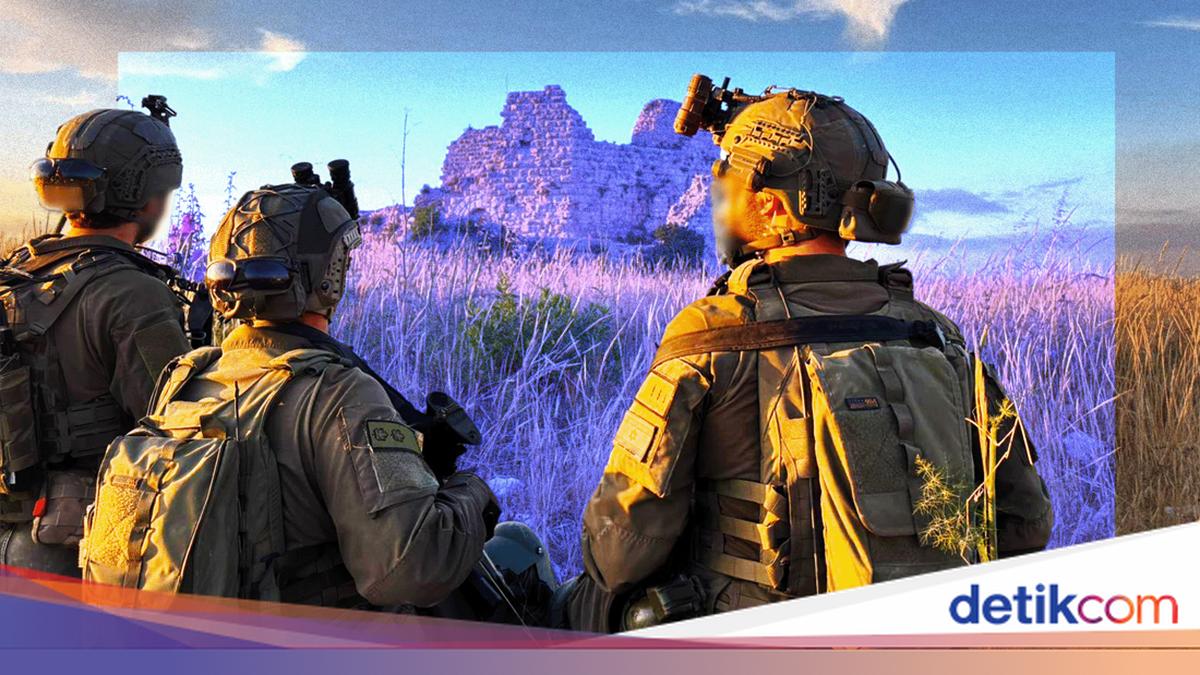
Body camera footage from Israeli soldiers shows troops moving through the ruins of a medieval fortress atop a hill, where they subsequently raised the Israeli flag. Israel has announced the capture of the strategic Beaufort Castle, located in southern Lebanon.
Following the event, Israeli Prime Minister Benjamin Netanyahu described the move as a ‘decisive stage and a decisive shift in our policy.’ ‘We have broken the wall of fear,’ Netanyahu stated. ‘We are taking the initiative. We are operating on all fronts in Syria, Gaza, and Lebanon.’
This development occurs as Israeli ground forces advance further into Lebanese territory, moving beyond their initial demarcation line at the Litani River. While the UK, France, and Germany have criticised Israel’s latest move, the Israel Defense Forces (IDF) have warned more residents to evacuate from southern Lebanon.
Lebanese Prime Minister Nawaf Salam has accused Israel of engaging in ‘collective punishment.’ However, this is not the first time Israel has controlled Beaufort Castle; Israeli forces captured it 44 years ago during what Israel refers to as the First Lebanon War.
To understand why this location is so fiercely contested, one must look at the long history of the castle and the strategic value of the hill upon which it stands. While some historians believe the hilltop was first fortified during the Phoenician or Roman eras, the current structure dates back to the Crusades in the 12th century. During this era, European forces built a series of fortresses across the Levant to protect routes between the coast and inland cities.
Beaufort became one of the most vital strongholds. Around 1190, the fortress was captured by Saladin, the Muslim leader who defeated the Crusader forces and reshaped the region. According to medieval European sources, the location was known as ‘Beaufort,’ derived from Old French meaning ‘beautiful fortress.’ Its Arabic name, Qal’at al-Shaqif, or Shaqif Arnoun, translates to the ‘Castle of the High Rock.’
The history of Beaufort Castle is reflected in its unique architecture, which blends Crusader design with Eastern Islamic elements. Since 2024, Beaufort has been one of the archaeological and cultural heritage sites protected under the Hague Convention for the Protection of Cultural Property in the Event of Armed Conflict.
Beaufort Castle returned to the spotlight during the latter half of the 20th century as Arab-Israeli conflicts intensified and southern Lebanon became a frontline. ‘Given its position, which allows for the monitoring of vast areas, from the 1970s until June 1982, it was used as a base for Palestinian guerrillas to resist Israel,’ said Professor Asher Kaufman of the University of Notre Dame. One of the most documented clashes, the Battle of Shaqif, remains a significant memory for both the Israeli and Lebanese militaries.
After finally seizing Beaufort on 6 June 1982, Israel utilised it as a fortified observation post within the southern Lebanese ‘security zone’ until their withdrawal in 2000. Situated on a rocky hill near the town of Arnoun in the Nabatieh Governorate, the fortress provides a strategic view over the Litani River, northern Israel, and the plains of southern Lebanon. Historically, whoever controlled the castle could monitor vital roads leading south. The narrow stone corridors, fortified rooms, water tanks, and wells allowed defenders to withstand prolonged sieges.
According to Dr Lina Khatib from the Middle East and North Africa Programme at Chatham House, the re-occupation of Beaufort by Israel represents a blow to the morale of Hezbollah and its supporters. ‘The seizure of Beaufort Castle demonstrates that Hezbollah is unable to prevent Israel from expanding its presence within Lebanese territory,’ she noted.
As a protected heritage site that has been restored and reopened to visitors in recent years, Beaufort is widely regarded as a part of Lebanon’s historical and cultural identity. Local officials in Arnoun have condemned the recent attacks on the site. On Monday, European Union spokesperson Anouar El Anouni stated: ‘We call on Israel to halt its military escalation in Lebanon and to respect the sovereignty and territorial integrity of Lebanon.’