
Why Ayatollah Ali Khamenei Is Only Being Buried Four Months After His Death
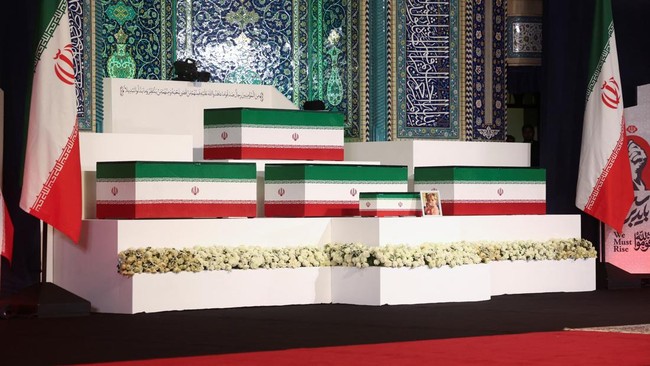
Iran is holding a large-scale funeral procession for its former Supreme Leader, Ayatollah Ali Khamenei, more than four months after he was killed in US and Israeli attacks on 28 February.
According to NDTV, the series of ceremonies began in Tehran on Friday local time and will continue through several cities in Iran and Iraq before the burial is scheduled to take place on 9 July in Mashhad, his birthplace.
The Iranian government estimates that tens of millions of people will attend the procession. Several heads of state, foreign officials, and political figures from various countries are also scheduled to attend. Pakistan is sending Prime Minister Shehbaz Sharif, while India will be represented by Bihar Governor Syed Ata Hasnain and Minister of State for Foreign Affairs Pabitra Margherita. Representatives from China, Afghanistan, and Caucasus nations have also confirmed their attendance.
Khamenei’s remains are lying in state for three days at the Grand Mosalla, one of Tehran’s largest ceremonial complexes. Iranian media has shown the coffin draped in the Iranian national flag, accompanied by thousands of mourners dressed in black. The remains of several family members who also perished are included in the procession, making it the largest state ceremony in the history of the Islamic Republic of Iran.
This funeral holds significant political meaning for the Iranian government. Amidst a fragile ceasefire between Iran and the US following an initial agreement to halt conflict, the government is attempting to demonstrate that public support for the Islamic Republic remains strong. The Friday prayer leader in Qom, Ayatollah Mohammad Saidi, even described the public’s presence in the funeral procession as a ‘referendum’ for the Islamic Republic.
The Iranian government is reportedly targeting the mobilisation of approximately 15-20 million supporters by providing transport, accommodation, and free food to ensure public attendance. Similar calls have been made by the Speaker of the Iranian Parliament, Mohammad Bagher Ghalibaf, and President Masoud Pezeshkian, who have invited all citizens, regardless of political or ethnic background, to fill the city streets during the procession.
Conversely, some analysts believe the government faces significant challenges in maintaining its political legitimacy. Public trust in the Islamic Republic has continued to decline following years of economic pressure caused by international sanctions and repressive actions against demonstrations. During protests triggered by surging inflation months before the war broke out, some demonstrators even shouted demands for Khamenei’s ousting. When news of his death began to circulate at the start of the conflict, some residents in Tehran were reportedly heard cheering from within their homes.
Nevertheless, Khamenei’s influence extends beyond Iran. As a Shia cleric with the status of ‘marja’, his religious views serve as a reference for many Shia adherents in Iraq, Pakistan, Lebanon, and several other countries. During his leadership of Iran, he also wielded immense political influence through a network of Shia groups in the region, including close ties with the Islamic Revolutionary Guard Corps (IRGC) and allies such as Hezbollah in Lebanon.
One of the most notable points of interest is the long delay between his death and his burial. In Islamic tradition, the deceased are generally buried as soon as possible. The Iranian government has denied rumours that Khamenei’s body was temporarily buried. Authorities insist the delay occurred because the ongoing war situation made a large-scale public procession impossible.
Counter-terrorism expert Dr Mohammed Omar told Fox News Digital that Khamenei’s body was almost certainly kept in cold storage, rather than being embalmed with chemicals, as embalming practices conflict with Islamic teachings. According to him, Shia law permits delays in burial under extraordinary circumstances, and cold storage is commonly used in Iranian forensic facilities to preserve remains for months if necessary.