
Why Australia, Not Arabia, Has the World's Largest Wild Camel Population
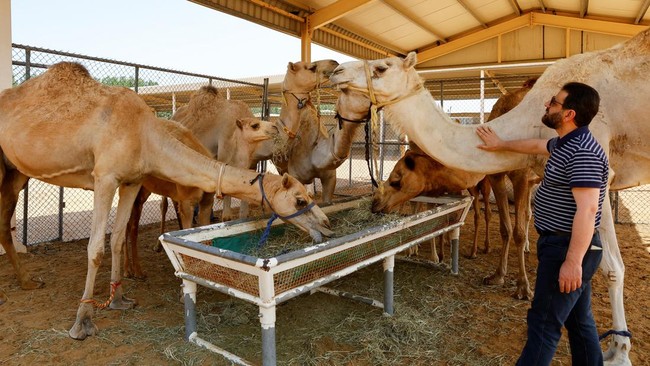
Camels are mammals capable of surviving in harsh, dry environments, including deserts, grasslands, and steppes. As a result, the animal is often associated with the Arabian Peninsula, a region with many deserts. However, the fact is that the largest population of camels in the world is not in Arab lands, but in Australia. How can that be? Australia’s status as a haven for the largest wild camel population on Earth has been officially confirmed by the Guinness Book of Records. In total, the number of camels in Australia is not as high as in countries on the Arabian Peninsula or East Africa such as Somalia, Chad, and Sudan. But the difference is that in those countries, camels have long been domesticated and are part of the local culture and economic fabric—whether as livestock, a food source, or a means of transport. Meanwhile, in the Land of the Kangaroo, these camels live entirely in the wild. According to an IFLScience report, the growth of the wild camel population in Australia has surged so high that it has triggered alarm from the local government. Camels are not actually endemic or native to Australia. The animal first set foot on the continent because it was brought by humans. Historically, the ancestors of camels actually originated from the northern region of the Americas. Around 6 to 7 million years ago, they migrated across the Bering Strait land bridge into Asia, then spread to Africa. It was in Asia and Africa that they evolved into the camels we know today, while those that remained in the Americas evolved into other species like the llama. Separated by deep geographical barriers—including the Wallace Line—ancient camels could never cross to Australia naturally. Their jumbo body size also made it impossible for them to ‘sneak’ into the hulls of ancient trading ships the way rats or cats did. The presence of camels in Australia only began during the era of British colonialism. In the 19th century, the colonial government brought camels to assist in the construction of a telegraph line that cut through Australia’s arid desert. To operate them, they even brought in camel handlers and riders from the regions that are now Afghanistan and Pakistan. Disaster struck when the era of transport shifted to motor vehicles. These camels were simply released into the wild because they were deemed no longer needed. Without natural predators and with minimal competitors in the dry Australian outback, these camels successfully adapted extremely well. As a result, a massive population explosion occurred within a century. This population boom was eventually recognised as a serious threat to the local ecosystem. Before the arrival of camels, the largest mammal on the continent was merely the kangaroo. The camels’ voracious consumption of local vegetation causes native Australian plants to be depleted rapidly. This triggers a food crisis for other endemic species, including endangered animals. Not only do they damage the food chain, but camels are also known to be able to guzzle massive amounts of water after days of enduring thirst. The impact is that many natural water sources in the Australian outback are drying up, triggering a clean water crisis for other wildlife and for human communities living around the area. Although the Australian government once launched a mass culling programme and successfully eliminated around 100,000 camels, that figure is deemed insufficient to curb the growth of the wild camel population, which is now estimated to have reached hundreds of thousands to millions in central Australia. Nevertheless, their presence does not bring entirely negative impacts. On the positive side, the camels’ activity of eating scrub grass in the outback is considered to slightly help limit the spread of weeds, which indirectly helps suppress the potential spread of bushfires that frequently haunt Australia.