
Why asking 'have you eaten?' is a form of care for Indonesians
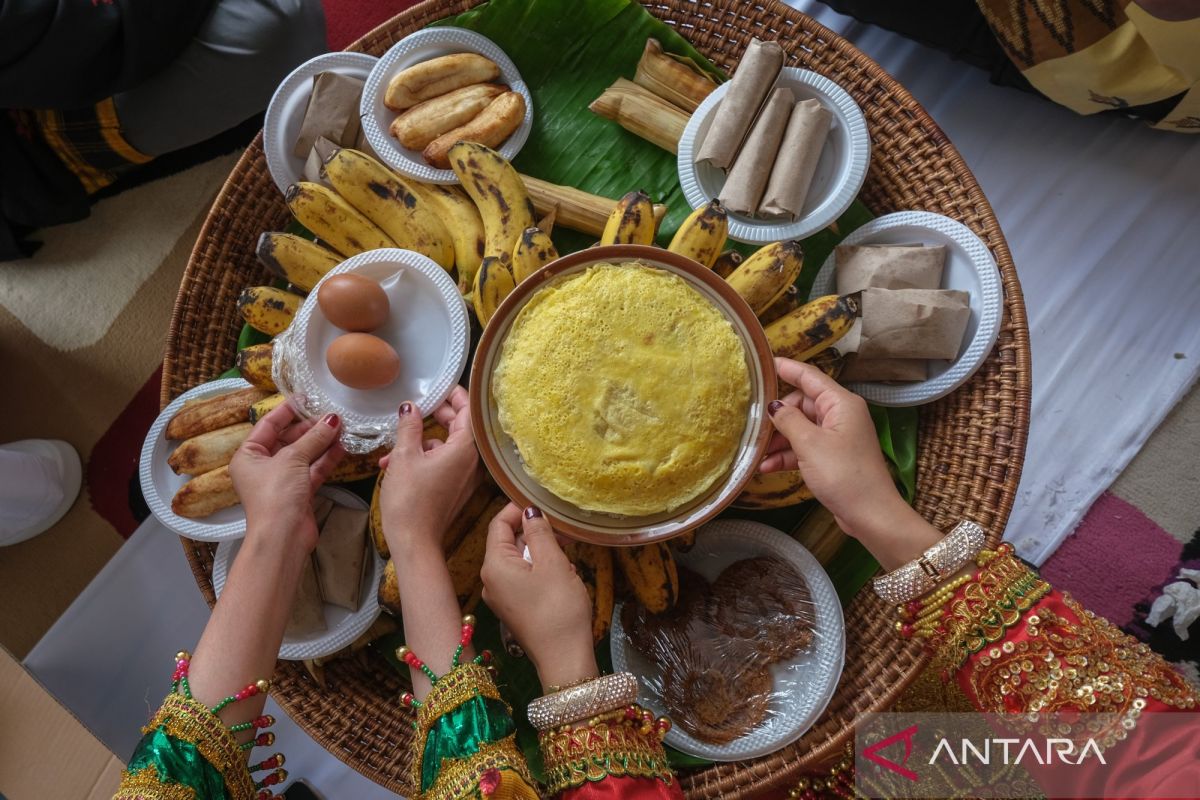
For many Indonesians, the question ‘sudah makan?’ (have you eaten?) may sound very simple. However, the phrase turns out to have a broader meaning than merely wanting to know whether someone has filled their stomach or not. This question appears quite often in various situations. When meeting friends, contacting family, chatting with colleagues, even when someone wants to open a conversation with a person they have not seen for a long time. Interestingly, ‘sudah makan?’ also does not always require a long answer. Often, the question becomes a simple way to show that someone cares about another person’s condition.
One of the reasons the question ‘sudah makan?’ is easily accepted in daily conversation is because food indeed holds an important position in the social life of Indonesian society. Eating is not only an activity to fulfil the body’s needs, but also often becomes part of togetherness and culture. Families gather at the dining table, friends invite each other to eat together, or someone offers food to guests as a form of hospitality. Because of this, asking about eating can be a natural way to find out someone’s condition. This is also visible in various communication habits in Indonesia. The Language Development and Fostering Agency of the Ministry of Primary and Secondary Education records examples in Javanese, such as ‘Kowe wis mangan durung?’ which means ‘Have you eaten yet?’. The expression shows that questions about eating have long been present in daily communication in society.
When someone asks ‘sudah makan?’, the intention is often not really to know the menu that was just consumed. Behind the question there can be a simple message such as ‘don’t forget to eat’, ‘take care of your health’, or ‘are you okay?’. In other words, the question becomes an indirect way to show care. This kind of meaning can also be seen in the family environment. Parents, for example, may more often ask whether their child has eaten than directly say that they are worried or want to check on their child’s condition. Besides being a form of care, ‘sudah makan?’ also functions as a conversation opener. From that short exchange, someone can eventually find out that their friend is busy, exhausted, or perhaps having a problem. This means the simple question can become a gateway to a deeper conversation.
Interestingly, this habit can also be seen from the experience of foreigners living in Indonesia. In a BINUS University article in June 2026, a learner of Indonesian for Foreign Speakers (BIPA) from Ireland recounted that he found the question ‘sudah makan?’ quite unique because it differs from the habit of opening conversations in his country. For him, the habit actually shows the care and friendliness of Indonesian society. This shows that something that feels ordinary to Indonesians can turn out to be an interesting communication trait for people from other cultures. In fact, in some regional contexts, questions about eating have a deeper social meaning. BINUS University notes that the Karo people recognise the greeting ‘Enggo kam man?’ or ‘Have you eaten?’ which can be part of interaction when someone meets or visits.
Even so, it does not mean that everyone who asks ‘sudah makan?’ is actually offering food. In many situations, the question is indeed just a greeting or small talk to open a conversation. Because it is so commonly used, its meaning depends greatly on the context and the relationship between the people speaking. If asked by a parent, there may be concern that the child does not eat late. If it comes from a friend, it could simply be a way to break the ice. Meanwhile, from a colleague, the question may be a conversation opener during a break. So, the same sentence can have different intentions. In the end, ‘sudah makan?’ becomes one example that care does not always have to be conveyed with grand or sentimental words. In Indonesia, concern often emerges through small things done repeatedly in daily life. One of them is making sure others do not forget to eat. Therefore, when someone asks ‘sudah makan?’, perhaps they really just want to know about food. But it could also be that they are actually saying in a simple way, ‘I care about you.’