
Why Artificial Intelligence is the Key to Business Transformation for Indonesian Companies
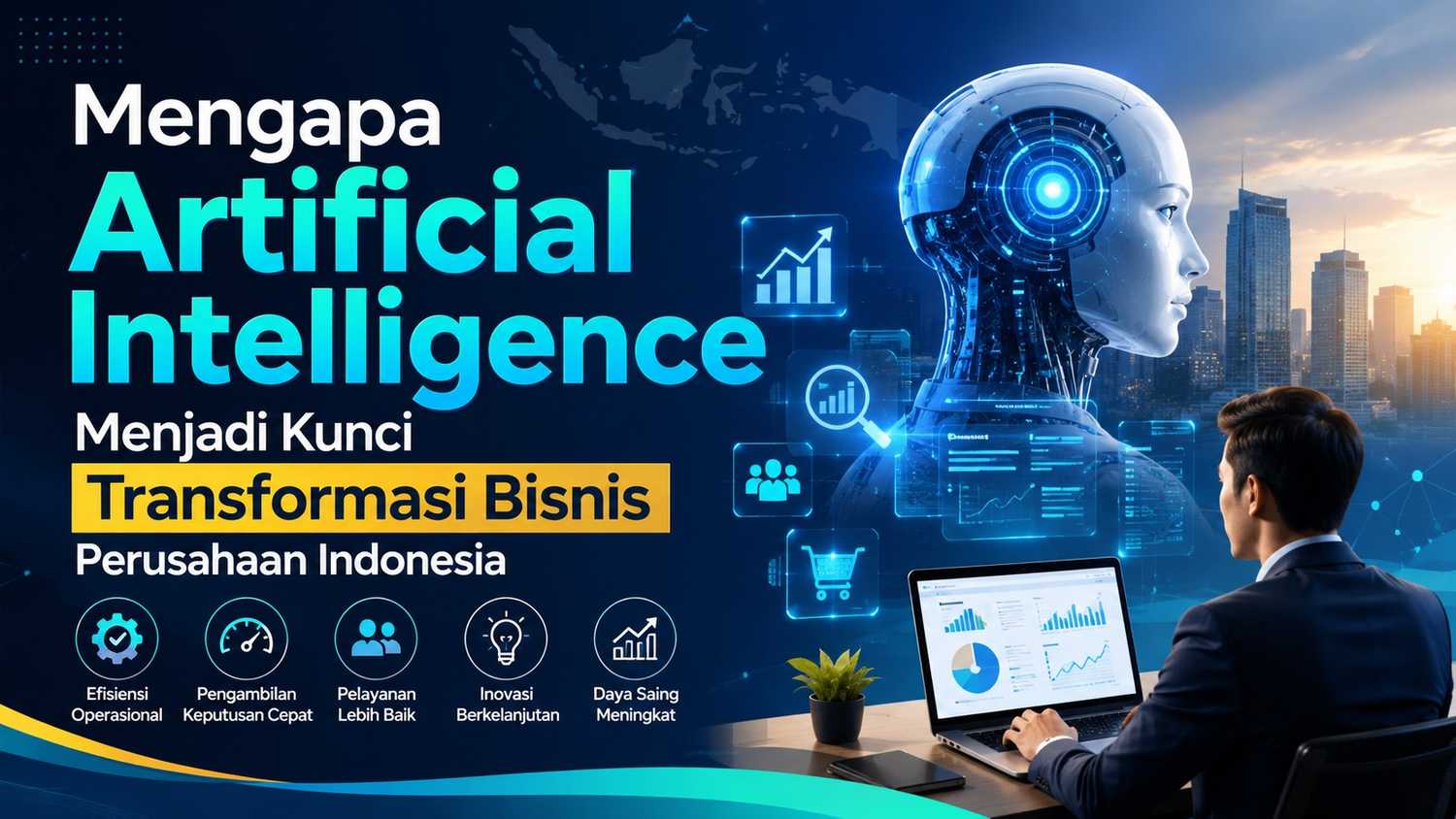
Artificial Intelligence (AI) has evolved into one of the most influential technologies in the modern business world. Various companies in Indonesia are beginning to utilise artificial intelligence to improve operational efficiency, accelerate business processes, and create better customer experiences. As digital transformation accelerates, AI is no longer viewed merely as a technology of the future, but has become a vital component of business strategies to face increasingly competitive competition. AI’s ability to process data rapidly and produce accurate analyses makes this technology increasingly sought after across various industrial sectors.
The implementation of Artificial Intelligence is also becoming easier thanks to the development of cloud computing services, increased data storage capacity, and the presence of various digital platforms that support AI implementation without requiring excessive investment. Not only large-scale national companies, but small and medium enterprises are also beginning to utilise this technology to increase productivity, accelerate services, and expand business growth opportunities. Therefore, AI is now a crucial factor helping companies adapt to changing market needs and digital technological developments.
BENEFITS OF ARTIFICENTIAL INTELLIGENCE FOR COMPANIES IN INDONESIA
Increasing operational efficiency
Artificial Intelligence is capable of automating various tasks previously performed manually, such as data processing, administrative recording, report preparation, and operational process monitoring. This automation not only accelerates task completion but also reduces the likelihood of errors caused by human factors. With more efficient workflows, companies can save operational costs while simultaneously increasing the productivity of the entire team.
Accelerating decision-making
Companies generate vast amounts of data every day. AI helps transform this data into easily understandable information through rapid and accurate analytical processes. The results of these analyses can be used to determine marketing strategies, manage inventory, understand consumer behaviour, and predict business opportunities, ensuring that decisions made are more precise and data-driven.
Improving service quality
The use of AI in customer service is expanding through automated conversational services, recommendation systems, and twenty-four-hour digital service support. This technology allows customers to obtain answers more quickly without having to wait in long queues. In addition to increasing customer satisfaction, companies are also able to provide more personalised services based on interaction history or user preferences.
Driving business innovation
Artificial Intelligence helps companies discover innovation opportunities through the analysis of market trends, consumer needs, and changes in customer behaviour. This information serves as a foundation for developing new products, improving existing services, or creating more adaptive business models. AI-supported innovation allows companies to respond to market changes faster than their competitors.
Strengthening corporate competitiveness
Higher efficiency, better service, and the ability to make decisions based on data provide a competitive advantage for companies. AI helps organisations work faster without compromising the quality of results, enabling them to meet customer needs consistently. This situation is one of the reasons why more Indonesian companies are making AI a part of their long-term business development strategy.
CHALLENGES AND STEPS TO OPTIMISE AI IMPLEMENTATION
Enhancing workforce capabilities
Sophisticated technology requires human resources capable of operating and utilising it optimally. Therefore, companies need to provide continuous training so that employees possess digital skills, understand how AI works, and are able to utilise analytical results to support decision-making processes.
Maintaining data security
AI operates by utilising large amounts of data, making the protection of both corporate and customer information a vital aspect. Companies must implement robust security systems, practice responsible data management, and ensure all processes comply with applicable data protection policies.
Managing technology investment
The implementation of Artificial Intelligence requires investment in software, digital infrastructure, system integration, and human resource competency development. To ensure that investments yield optimal results, companies need to devise planned implementation strategies so that the benefits obtained are proportionate to the costs incurred.
Prioritising human collaboration
Artificial Intelligence should be used as a supporting tool to enhance the quality of work, rather than as a complete replacement for humans. Experience, creativity, ethical considerations, and strategic thinking capabilities remain human advantages that cannot be fully replaced by technology. The collaboration of both produces more accurate and valuable decisions.
Preparing for future developments
The development of Artificial Intelligence is expected to continue, introducing increasingly sophisticated capabilities across various sectors. Companies need to continuously follow the latest innovations, evaluate the systems in use, and build an adaptive work culture to maximise technological opportunities and ensure long-term business sustainability.
Source: jawawa.id (https://jawawa.id/newsitem/why-artificial-intelligence-is-the-key-to-business-transformation-for-indonesian-companies-1791244253)
Originally published by stekom.ac.id (https://stekom.ac.id/artikel/mengapa-artificial-intelligence-menjadi-kunci-transformasi-bisnis-perusahaan-indonesia-20260710104446), translated from Indonesian