
Why Are Wealthy Chinese Moving Their Money to the US en Masse?
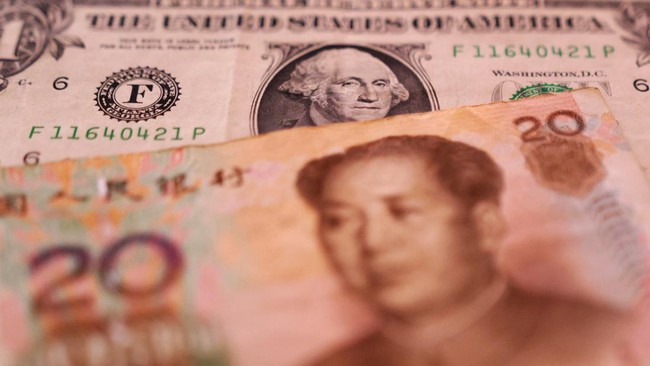
Wealthy Chinese people are increasingly moving their assets from Singapore and Hong Kong to the United States, as the Beijing government steps up efforts to track wealth held abroad, including through taxes on offshore assets.
Private bankers and lawyers serving Chinese clients have reported a rise in requests to open US bank accounts in recent months, CNBC International reported on Friday, 23 October 2026.
The shift follows China’s introduction in July of a retroactive tax on income and gains from offshore trusts owned by individuals considered Chinese tax residents.
Chinese authorities set the tax rate at 20% on income and gains from these offshore trusts. The policy has prompted some wealth owners to recalculate their tax liabilities, dismantle trust structures, sell shares or seek loans to pay their tax bills.
Keith Tan, chief executive of Singapore-based Golden Acacia Capital, said some of his clients began planning to move assets to the US in July. Some managed to open accounts in less than two months.
“This has become relatively common,” Tan said.
He said wealthy clients tended to choose large US private banks, while those with smaller sums generally used regional banks or online brokerages.
The US is seen as harder for Beijing to monitor
One reason the US has become a destination for asset transfers is the difference between countries’ financial information-sharing systems. The US is not part of the Common Reporting Standard (CRS), a framework developed by the Organisation for Economic Co-operation and Development (OECD) for the automatic exchange of financial account information across borders. More than 100 jurisdictions participate in the system.
Banks in Singapore and Hong Kong are required to report accounts connected to China under applicable rules, while US banks do not have the same CRS-based automatic reporting obligation to Beijing. Some wealth owners therefore believe that US accounts could make their assets less visible to Chinese tax authorities.
James Wang, chief executive of Blue Brick Consulting Group, said some non-resident clients could also find US investment instruments subject to more limited reporting requirements to US tax authorities.
However, the wealth-management tax adviser added, this does not mean asset owners are automatically exempt from their tax obligations in China.
Moving money does not mean avoiding tax
Lawyers have warned that transferring money to a US account does not automatically remove tax obligations in the country of origin. People classified as Chinese tax residents must continue to report their worldwide income to the authorities, including income from assets held overseas.
Clifford Ng, a partner at Hong Kong law firm Zhong Lun, said transferring funds from Singapore or Hong Kong to the US could also leave a transaction trail. Chinese authorities may already know about account information previously reported through the CRS.
“Moving funds to a US bank does not, by itself, eliminate tax liabilities that have already arisen,” he said.
“Hiding is not tax planning,” Ng said.
Cris Cao, a partner at W&H Law Firm, also stressed that moving all funds into a US account does not in itself remove the tax authorities’ right to levy taxes or the account holder’s obligation to pay them. Records of transfers out of previously reported accounts could even provide clues for authorities tracing the assets.
Meanwhile, wealth advisers in New York said US banks were seeing a surge in enquiries from Chinese clients. Some banks have reportedly shortened the period clients are given to meet minimum capital requirements before their accounts are closed.
Some Chinese families with members who hold US green cards are also considering foreign grantor trust structures to manage their tax exposure. According to Tan, states with relatively low taxes, such as Nevada and Florida, are also being considered.
Taking money out of China is becoming harder
There are limits to the prospect of moving assets to the US. Transferring funds already held outside China is relatively easier than taking large amounts of capital out of mainland China.
Jingkuan Lin, a private banker at Bank of Singapore, said it would become increasingly difficult to send large sums from China to overseas destinations. He expects the offshore banking industry to rely more heavily on pools of assets already located outside China.
The movement of assets to the US reflects some wealth owners’ efforts to find a place to hold their money amid Beijing’s expanding scrutiny. But overseas accounts do not automatically release them from tax obligations, and existing transaction records may still enable Chinese authorities to trace the funds.
Source: jawawa.id (https://jawawa.id/newsitem/why-are-wealthy-chinese-moving-their-money-to-the-us-en-masse-1792738330)
Originally published by CNBC Indonesia (https://www.cnbcindonesia.com/news/20261023124456-4-778887/orang-kaya-china-ramai-ramai-pindahkan-uang-ke-as-ada-apa), translated from Indonesian