
Why are the T. rex's arms small? It’s linked to the jaw.
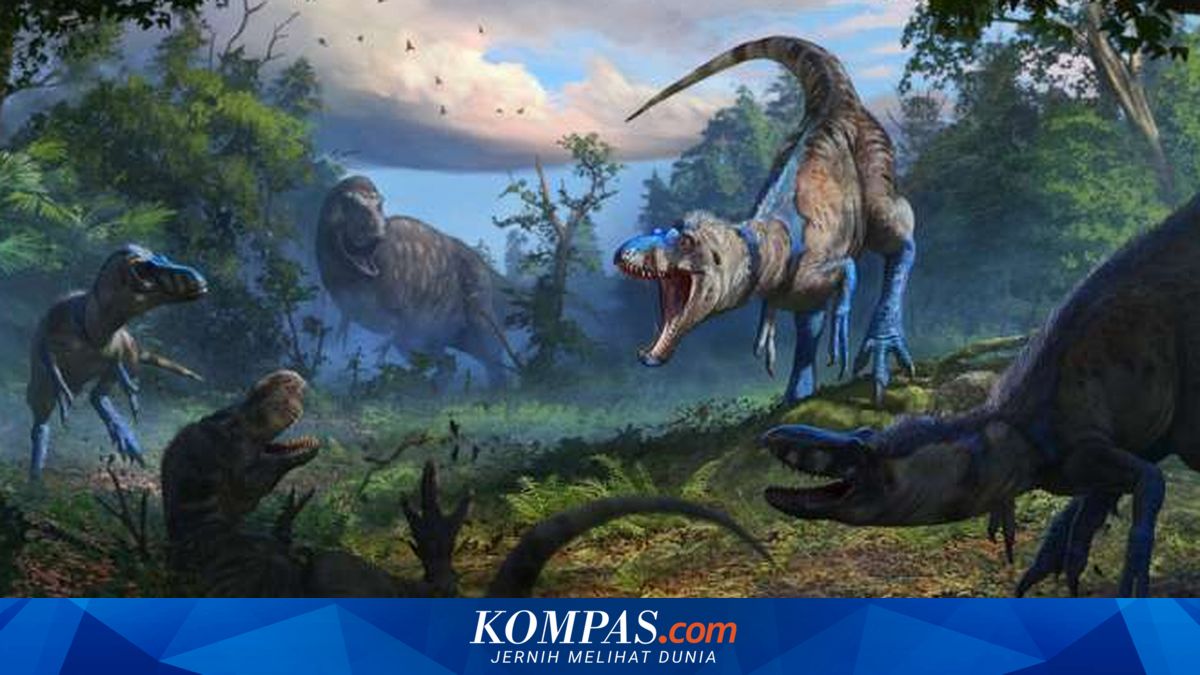
Tyrannosaurus rex, or T. rex, has long been depicted as a terrifying giant predator, yet possesses a pair of very small forelimbs. The evolutionary mystery has now been resolved by researchers.
A new study reveals that the diminutive forelimbs of T. rex and several other giant predators shrank because their primary function as hunting tools had been taken over by the massive skull size and supremely powerful jaws.
The study, published in the scientific journal Proceedings of the Royal Society B, was led by a team of scientists from UCL (University College London) and the University of Cambridge.
They analysed 82 species of theropods — two-legged dinosaurs that were largely carnivorous.
The findings show that the reduction of dinosaur arms was not merely an incidental side-effect of their increasing body size, but an evolutionary adaptation tightly linked to bite strength.
The researchers believe that the appearance of gigantic prey animals, such as sauropods (long-necked herbivorous dinosaurs), forced predators to alter their hunting strategies.
Rather than grasping prey with their forelimbs and claws, these predators shifted to rely on jaw power to subdue their targets.
“Everyone knows T. rex has small forelimbs, but other giant theropods also evolved relatively small forelimbs. Carnotaurus even has a very small arm, smaller than that of T. rex,” said Charlie Roger Scherer, the study’s lead author and a PhD student in UCL Earth Sciences.
Scherer explained that his team found a very strong link between short forelimbs and a large, robust head.
“The head takes over the role of the arm as the method of attack. This is a case of ‘use it or lose it’ — arms are no longer useful and their size declines over time,” added Scherer.
According to Scherer, attempting to pull and grip a 30-metre-long sauropod with claws is not an ideal strategy. Attacking and restraining prey directly with the jaws has proven far more effective.
The research data also show that the evolution of a reinforced skull occurred earlier than their arms began to shrink. Based on evolutionary logic, it would be unlikely for predators to relinquish the main defensive or offensive mechanism (the arms) without a ready substitute weapon (the strong jaws).
To test the hypothesis, the researchers devised a new method to measure the sturdiness of dinosaur skulls. The system accounts for bite force, skull shape, and how strongly the bones of the skull fuse together.
A dense and compact skull is considered stronger than a long and narrow skull.