
Why are so many new cars now equipped with ADAS technology?
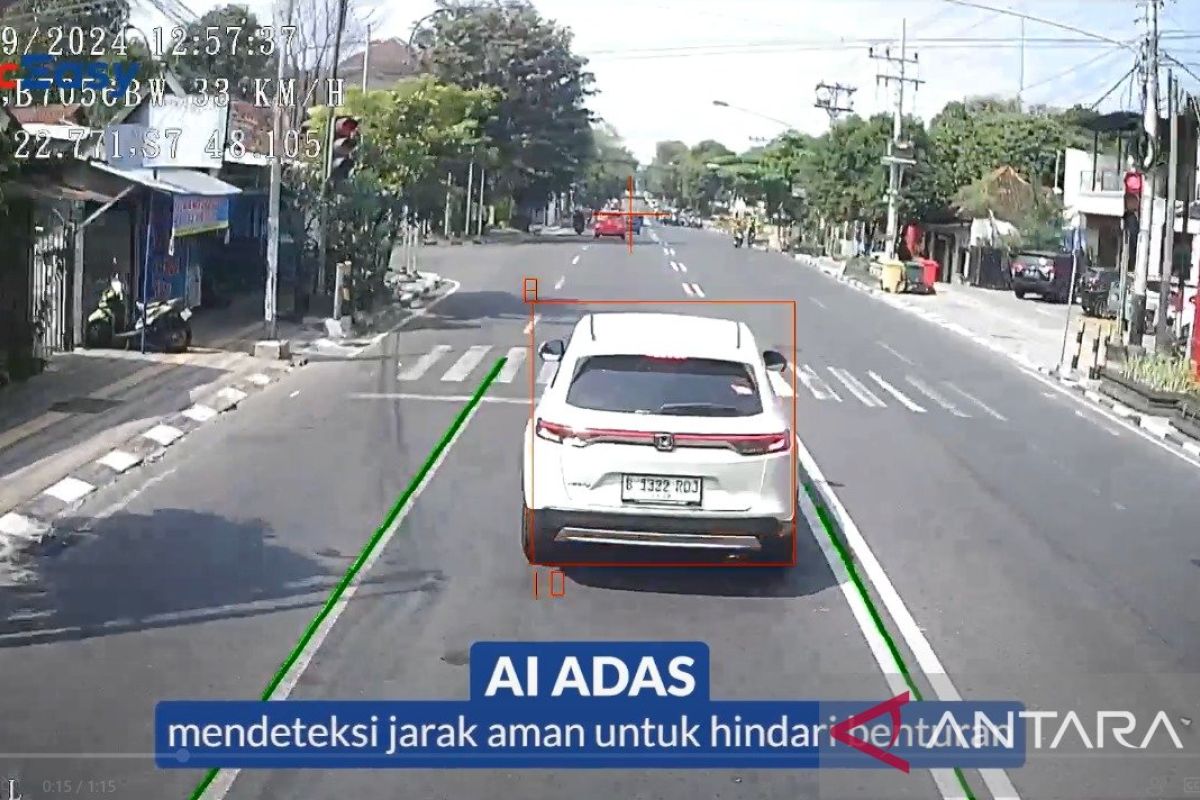
Jakarta (ANTARA) - New cars today offer not only more efficient engines, more comfortable cabins or ever-larger entertainment screens. Safety features have also become an increasingly important consideration, one example being Advanced Driver Assistance Systems (ADAS) technology.
This technology is increasingly easy to find in new cars, ranging from automatic braking when a potential collision is detected, lane departure warnings, blind spot monitoring, through to adaptive cruise control. This development also aligns with changes in vehicle safety testing standards in a number of countries.
In 2026, Euro NCAP updated its car testing methods by giving greater weight to driver assistance technology and a vehicle’s ability to prevent accidents. Testing no longer looks only at how well a car protects occupants when a crash occurs, but also at how technology helps prevent accidents from the outset.
So why is ADAS increasingly used in new cars?
Simply put, ADAS is a collection of technologies designed to assist the driver while driving.
These systems use various sensors, cameras, radar and, in certain vehicles, other sensor technologies to read the conditions around the car. That data is then used to issue warnings or carry out certain interventions.
Some fairly common ADAS features include Forward Collision Warning, Automatic Emergency Braking, Lane Keeping Assist, Adaptive Cruise Control and Blind Spot Monitoring.
However, ADAS does not mean a car can be driven entirely without a driver. The National Highway Traffic Safety Administration (NHTSA) stresses that driver assistance technology still requires the driver to pay attention to road conditions and remain responsible for control of the vehicle.
One of the main reasons ADAS is increasingly adopted is its ability to help drivers handle situations that could potentially cause accidents.
For example, Automatic Emergency Braking can detect a potential collision and apply the brakes when the system judges a crash is imminent. Meanwhile, Forward Collision Warning can alert the driver when the vehicle approaches an object ahead.
Technology of this kind is not a replacement for driver vigilance. However, the system can serve as an additional layer of protection when human response is too slow.
- Helping drivers on long journeys
Driving for extended periods can cause concentration to decline. This is where a number of ADAS features can help reduce the driver’s workload.
Adaptive Cruise Control, for instance, can adjust the vehicle’s speed to maintain a set distance from the car in front. There is also Lane Centering Assistance, which helps keep the vehicle positioned in the middle of its lane.
Even so, the driver must still monitor the road and be ready to take over control at any time.
Blind spots are one of the challenges when changing lanes. Drivers cannot always see vehicles located in certain areas to the side or rear of the car.
Blind Spot Warning can issue an alert when another vehicle is detected in those areas. In more sophisticated systems, Blind Spot Intervention can even apply braking or steering input to help prevent the vehicle from changing lanes when there is a collision risk.
This feature is increasingly relevant on congested roads, particularly when vehicles must change lanes repeatedly.
- Car safety standards are evolving
The development of ADAS is also inseparable from changes in vehicle safety standards.
Euro NCAP began implementing a new protocol in 2026 that gives a broader assessment of active safety technology. Systems such as Autonomous Emergency Braking and Lane Support are tested in more scenarios that approximate real road conditions, including interactions with cyclists, pedestrians and other road users.
This means car manufacturers have a greater incentive to fit and develop technologies that can help prevent accidents.
- Sensor technology continues to advance
ADAS can work because modern cars are increasingly equipped with sensors capable of reading the environment around them.
Cameras can be used to recognise road markings or specific objects, while radar can help detect vehicles and measure distance. Some vehicles also use a combination of multiple sensors to improve system capability.
For its 2026 testing, Euro NCAP itself used a combination of cameras, radar and LiDAR as part of the process of obtaining benchmark data to test speed assistance systems on real roads.
These sensor developments make driver assistance features increasingly capable of recognising conditions around the vehicle.
ADAS is also becoming part of product competition. Consumers now look not only at design and performance, but also at the safety features a vehicle offers.
Recent developments show a number of manufacturers continue to improve driver assistance technology. In September 2026, Euro NCAP released the results of tests on four new cars using the stricter 2026 safety protocol. Three cars from China — the AION UT, Geely E2 and Leapmotor B05 — achieved five-star ratings.
This shows that active safety features are increasingly becoming an important part of new car development, not merely an optional extra for upper-class vehicles.
ADAS does not mean a car can drive itself
However sophisticated ADAS technology becomes, the driver still plays the primary role.
Driver assistance systems have limits. Cameras or sensors may struggle to read certain conditions, while road markings, weather, lighting and unexpected objects can all affect system performance.
NHTSA divides several driver assistance technologies into levels. At Level 1, for example, the system can assist with steering or acceleration and braking, but the driver must still monitor the vehicle. At Level 2, the system can assist with steering as well as acceleration and braking, but the driver must remain fully engaged in driving.
For this reason, terms such as “semi-autonomous” or “the car can steer itself” still need to be understood with care.
The growing use of ADAS in new cars is essentially part of the automotive industry’s shift towards vehicles that are not only comfortable but increasingly active in helping to prevent accidents.
Technologies such as automatic emergency braking, blind spot monitoring, lane keeping assistance and adaptive cruise control can help reduce the driver’s burden in certain situations.
However, technological sophistication does not eliminate the need to drive safely. Drivers must still pay attention to the road, understand how each feature works, and know the limits of the system’s capabilities.
In other words, ADAS should be seen as an “assistant” behind the wheel, not a replacement for the driver.