
Why Are Protests Escalating in France Despite Its Generous Education Budget?
Rat infestations in toilets, leaking roofs and broken heating systems. Videos widely shared on social media by school pupils were not filmed in just any country, but in France, one of Europe’s wealthiest nations.
At Lycée Paul Éluard in Saint-Denis, a suburb of Paris and one of the centres of the protest movement, pupils have complained about the increasingly poor condition of educational facilities. In neighbouring Pantin, students have reported classroom windows that cannot be opened, even when summer temperatures reach 40 degrees Celsius.
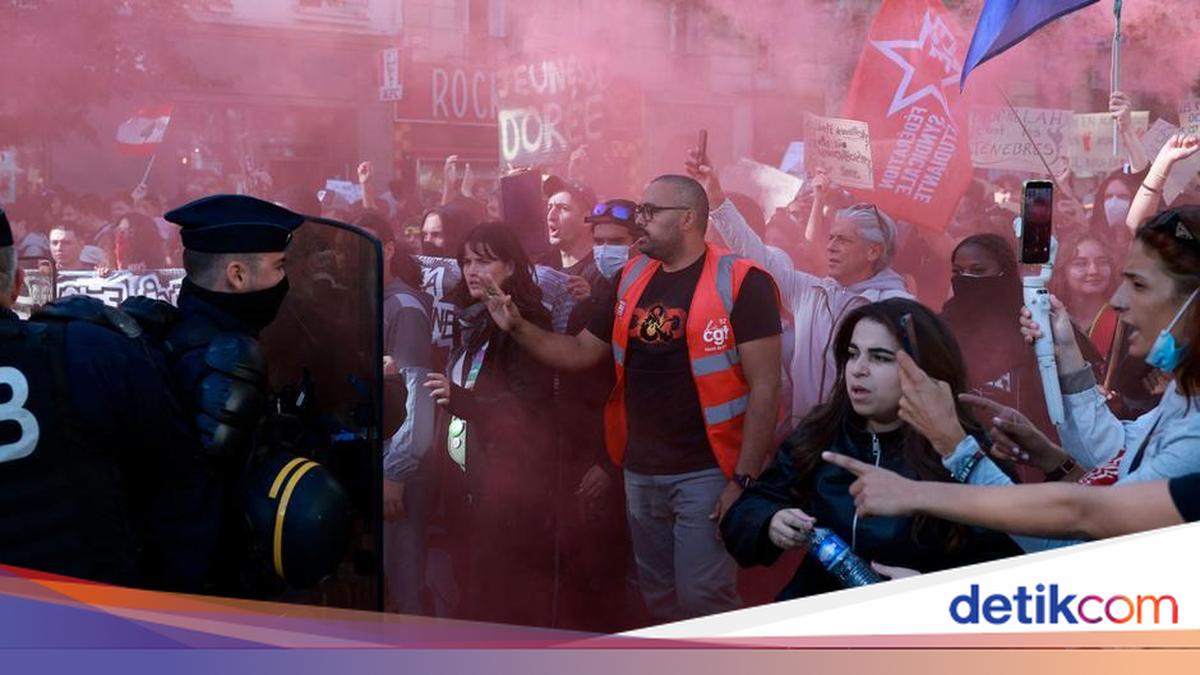
The shaky footage circulating on social media has become a symbol of school protests spreading across the country, with no sign of abating. Pupils’ dissatisfaction is not limited to school buildings. At demonstrations, they have also protested about overcrowded classrooms and the high number of lessons lost when teachers are absent.
A centralised system with complex responsibilities
France allocates relatively large sums to education compared with many other European countries. The country’s education spending amounts to 6.7 per cent of gross domestic product. But this substantial investment does not necessarily translate into better learning conditions. One reason is the complicated division of responsibilities.
The central government in Paris pays teachers’ salaries and sets the national curriculum at every level of education. Maintenance of school buildings, meanwhile, is the responsibility of local authorities: communes for primary schools, départements for collèges (roughly equivalent to lower secondary schools), and regions for lycées (upper secondary schools).
The financial capacity of each area varies. Local authorities must also plan school renovation projects themselves, which often makes improvements slow. More than two-thirds of public spending is already absorbed by staff costs and pension payments, leaving relatively little fiscal room for investment.
Ageing infrastructure
More than 80 per cent of France’s primary school buildings are over 50 years old. An estimated 10 to 20 per cent of school buildings require major renovation.
The government is aware of the problem. The Île-de-France region, which includes Paris and its surroundings, has approved a €6.6 billion programme to renovate and build schools between 2017 and 2027.
According to the regional government, two-thirds of upper-secondary pupils now study in new or renovated buildings. But even where mould has been removed and roofs repaired, protection against summer heatwaves remains inadequate.
Ironically, some school buildings that were newly built or renovated only a few years ago have also been damaged in the recent unrest.
Macron promises improvements
Inequalities are also evident in the allocation of education spending. Upper-secondary pupils receive relatively generous funding, but OECD calculations show that spending per primary pupil in France remains below the average for industrialised countries.
Education researchers argue that primary school is precisely where the foundations for future academic success are laid.
President Emmanuel Macron’s government has sought to improve the situation. Since 2017, class sizes in the first years of primary school in poorer areas have been cut by half. Around 16,000 new teaching posts were created to achieve this.
After the protests continued, the government promised to provide more than 3,000 supply teachers in the short term. Education Minister Édouard Geffray said software would be used to identify schools facing the most serious problems.
The announcement was the government’s first concrete response to demands from pupils, who have taken to the streets for nearly two weeks seeking better school facilities, more supply teachers and greater investment in education.
Education shortfalls become increasingly visible
The scale of the problems in France’s education system is reflected in the latest results of the Programme for International Student Assessment (PISA), released in September 2026. More than a third of 15-year-olds now fail to reach basic proficiency in mathematics.
Macron’s reform of upper-secondary education has also drawn criticism. The previous system, based on specialised tracks, was abolished and replaced with more flexible optional subjects. The aim was to give pupils greater freedom.
But the wide range of subject combinations has made timetabling difficult. Pupils complain of more free periods and longer school days.
Similar problems have been reported at universities. A lecturer at a Paris university described teaching a class of 50 students. Some had to bring chairs in from other rooms or even sit on the floor because of a lack of facilities. The lecturer said the administration had yet to take meaningful action.
Lessons lost
On paper, French pupils have more classroom hours than students in many other European Union countries. In practice, however, the picture is different.
A report by France’s Court of Auditors found that around 9 per cent of lessons at state collèges did not take place in the 2023/24 school year. Research examining the 2024/25 school year also found that only about 12 per cent of lessons cancelled at short notice were successfully covered by another teacher.
Low teacher salaries are also considered one of the root causes. OECD data show that after 15 years of service, collège teachers in France earn only about half as much as their counterparts in Germany.
A fading promise of equality
France has long taken pride in its republican school model, which promises every child equal opportunities regardless of family background.
In reality, educational success in France is now strongly influenced by parents’ social status. One indication is that children from disadvantaged families are more likely to be affected by cancelled lessons.
The government’s fiscal capacity to address the situation is also limited by strained public finances. The 2027 draft budget does add around €1.2 billion for the Education Ministry. At the same time, however, the government plans to reduce the number of teachers, citing a decline in pupil numbers.
Protests ahead of the presidential election
Social media is now awash not only with videos of dilapidated school buildings, but also footage of demonstrations featuring Palestinian flags and political slogans only loosely connected to education. Other videos show burning barricades and clashes with police.
The radical-left party La France insoumise (LFI) has been the most active in seeking to engage with the student protest movement. Its MPs have attended school blockades and helped circulate videos of the demonstrations.
The government has accused LFI of deliberately exploiting pupils’ anger for political gain. The party denies the accusation.
Six months before France’s presidential election, protests over poor education conditions have become a political battleground, with rival camps vying for influence.
Source: jawawa.id (https://jawawa.id/newsitem/why-are-protests-escalating-in-france-despite-its-generous-education-budget-1791615095)
Originally published by detikcom (https://news.detik.com/dw/d-8700793/kenapa-protes-memuncak-di-prancis-meski-berlimpah-anggaran-pendidikan), translated from Indonesian