
Why Anak Krakatau Can Produce So Much Volcanic Ash
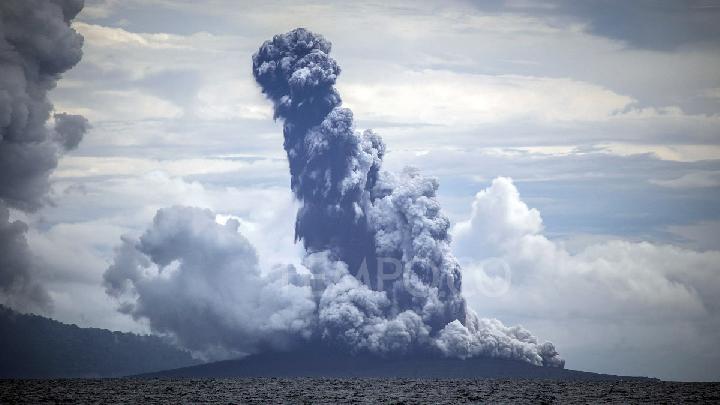
Why Anak Krakatau Can Produce So Much Volcanic Ash
Reporter
September 10, 2026 | 02:08 pm
TEMPO.CO, Jakarta - Why can Mount Anak Krakatau produce large amounts of volcanic ash during an eruption?
The answer may lie in what happens when its hot magma meets the surrounding seawater. According to a volcanology expert from the Bandung Institute of Technology (ITB), the interaction can increase the amount of volcanic ash produced during an eruption.
Asep Saepuloh, a professor at ITB’s Faculty of Earth Sciences and Technology (FITB), said magma temperatures can exceed 1,000 degrees Celsius. When the extremely hot magma comes into contact with water, it transfers a large amount of energy in a very short time.
“The water turns into steam explosively and breaks the magma into much finer fragments,” Asep said on the official FITB ITB website on Sunday, September 6, 2026.
This process can produce significantly more volcanic ash than an eruption involving dry magma. Therefore, a rise in ash production does not necessarily mean that the magma is becoming more viscous or that the volcano is building toward a major Plinian eruption.
Why Does Seawater Matter?
Volcanoes surrounded by water can behave differently from those located on land. Asep said the Anak Krakatau eruption shows that volcanic hazards in tropical volcanoes are not determined solely by the amount of magma released or its viscosity.
In some cases, he said, a more important factor is what happens when extremely hot volcanic material comes into contact with water.
“This simple interaction can turn an initially moderate eruption into a much more explosive and difficult-to-predict event,” Asep said.
Anak Krakatau Eruption Update
According to the Geological Agency’s report as of 6 a.m. local time on Wednesday, September 9, the air temperature around Anak Krakatau ranged from 26 to 31 degrees Celsius.
During the previous 24 hours, monitoring recorded six eruption earthquakes, one emission earthquake, 50 low-frequency earthquakes and 77 hybrid earthquakes. Authorities also recorded continuous tremors, as well as one shallow volcanic earthquake and one deep volcanic earthquake.
Geological Agency Head Lana Saria said Anak Krakatau remains at Alert Level III, or Siaga. She urged the public and visitors to stay at least 3 kilometers from the center of volcanic activity.
“Also be alert to the threat of hot clouds, lava, glowing rock ejections, and heavy ashfall,” Lana said in a written statement.
A continuous eruption at the volcano in the Sunda Strait occurred from 11:07 p.m. on September 4 to 12:04 a.m. on September 6, lasting about 25 hours without interruption.
Anak Krakatau has since returned to a Strombolian eruption pattern, which is characterized by intermittent explosive activity and the ejection of volcanic material.
“The development of Anak Krakatau’s volcanic dynamics continues to be monitored and evaluated,” Lana said.
Read: Police Widen Search for Missing Journalists to Lampung Waters
Click here to get the latest news updates from Tempo on Google News