
Why 12-Car KRL Trains Cannot Enter the Green Line
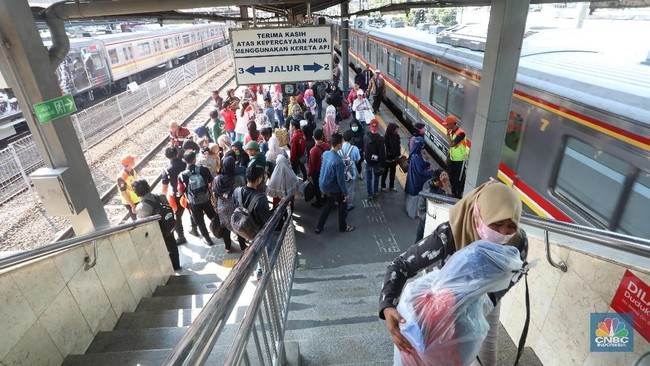
PT Kereta Api Indonesia (Persero) has disclosed the reasons why 12-car electric train (KRL) sets cannot yet be operated on the Tanah Abang-Rangkasbitung (Green Line) route, despite it being one of the most congested routes in the Greater Jakarta area.
The President Director of PT KAI, Bobby Rasyundian, stated that modernising and increasing the capacity of the Jabodetabek KRL network is a primary focus to manage the continuous surge in passenger numbers. Speaking during a Hearing with Commission VI of the Indonesian Parliament in Jakarta, he noted that occupancy rates on several major routes have reached critical levels, with the Rangkasbitung line peaking at 161% during rush hours.
To illustrate the severity, Rasyundian explained that a 161% occupancy rate equates to approximately eight people per square metre. In comparison, occupancy rates for the Bekasi line are around 140%, while the Bogor line stands at approximately 130%. Currently, the Jabodetabek KRL network serves about 1.3 million passengers daily, a figure expected to rise to at least 1.4 million by 2030.
While KAI intends to deploy longer train sets to alleviate congestion, the plan is currently hindered by limited electrical supply on the Rangkasbitung route. While the Bogor and Bekasi lines can support 4,000 volts, the Rangkasbitung line is limited to 3,000 volts, making it impossible to run 12-car sets (SF12) which require higher power.
To resolve this, KAI will undertake two major infrastructure projects. First, they will increase the capacity of the Overhead Catenary System (LAA) by adding 11 traction substations to ensure sufficient power for 12-car trains. Second, the company will modernise the signalling system, transitioning from the outdated ‘closed block’ system to an ‘open block’ system. The current system limits the number of trains that can traverse a single track segment, resulting in a 10-minute headway on the Rangkasbitung line, compared to just 3-4 minutes on the Bekasi and Bogor lines. Through these upgrades, KAI aims to significantly increase capacity and reduce passenger density during peak hours.