
WHV Process Slowed, Australian Farmers and Businesses Concerned
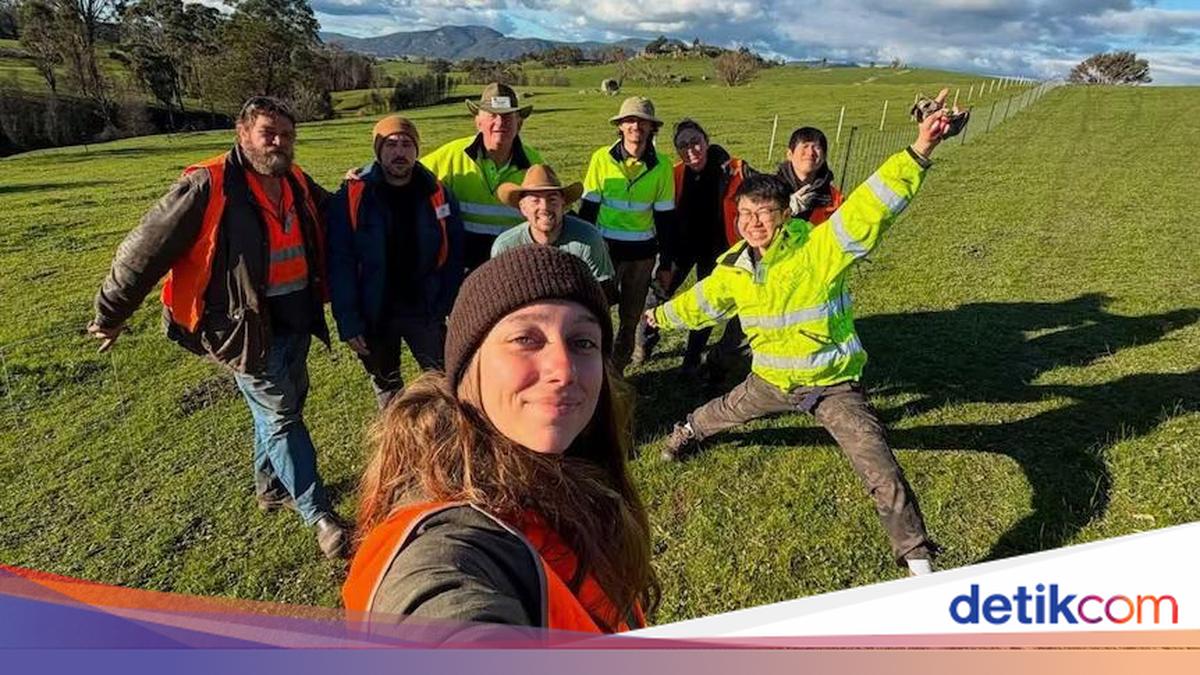
Australian farmers are worried that the government’s decision to suspend visa applications for young people wanting to work while holidaying in Australia will reduce the labour force and endanger Australia’s food security.
Australia’s Working Holiday Maker (WHM) programme began in 1975 and is considered mutually beneficial for farmers and rural communities, while overseas backpackers can travel around Australia while working.
The National Farmers’ Federation (NFF) estimates that WHV participants, often called backpackers, make up around half of Australia’s casual workforce during harvest season.
They say the disruption to labour supply is deeply concerning.
“[Backpackers] are absolutely critical to our industry and the nation’s food security,” said NFF horticulture spokesperson Richard Shannon.
Applications from Indonesia were temporarily suspended
Registration for the WHV will be processed “more slowly than before”, as confirmed by Australian Home Affairs Minister Tony Burke on Sunday (16/08).
The official website of Australia’s Department of Home Affairs, which tracks WHV developments, shows applications from 23 countries have been temporarily halted.
Indonesia was previously on the temporarily halted or “Paused” list, then changed to “Check Ballot Status”, meaning visa applications will go through a ballot.
The visa application suspension comes amid fierce debate over the future of Australia’s migration policy.
Opposition Leader Angus Taylor has not guaranteed that WHV participants will be exempted from the Coalition’s planned efforts to reduce migration numbers.
However, Nationals leader Matt Canavan has previously promised his party would not allow any changes, arguing that WHV participants are vital for Australia’s inland communities.
Backpackers in times of crisis
BlazeAid is a charity organisation that manages volunteers to clean up and rebuild farms after fires, floods and cyclones.
Most participants in their programme are WHV holders.
“I just worry that if the suspension [of WHV] happens, our communities and particularly in rural areas will suffer,” said BlazeAid chief executive Melissa Jones.
“At our base camp in Euroa [in Victoria] at the moment, where we are working after the Longwood fires, 75 per cent of those in camp are backpackers.”
Melissa said the benefits of having WHV participants extend beyond the areas “we are rebuilding.”
“They shop in local stores, live in local communities, and build relationships with people,” she said.
“They don’t buy our houses, they don’t take up space that we need.
“They are actually very beneficial to our country, and should remain so.”
South Australian potato farmer Terry Buckley said backpackers are also vital to his business.
“We usually have a few backpackers when we are cutting potato seed for planting and … when we harvest in autumn.”
Terry said that without WHV participants, he would have to buy more machinery.
“There is a lot of machinery that costs AU$1 million [more than Rp12 billion] per unit now, so all of that has to be recovered somehow,” he said.
Pacific workers ‘not a replacement’
The Home Affairs Minister argued that the Pacific Australia Labour Mobility (PALM) scheme would be the “primary visa for the agricultural industry.”
But Richard from the National Farmers’ Federation said there is plenty of work for both PALM participants and WHV participants.
“They are not a replacement. They hold different roles and purposes, both in a practical sense on farms and in terms of the labour needs they meet,” he said.
Manbulloo, the largest grower of Kensington Pride and R2E2 mangoes in Australia, located in the Northern Territory, uses both PALM workers and backpackers.
“Most of our seasonal workers come from the Pacific, but if we need extra people in the team, we employ backpackers,” said managing director Marie Piccone.
She said the PALM scheme is more expensive and the process takes longer.
“The administration costs are about 10 times higher and far more expensive than simply employing Australians at the same rates and conditions, or employing WHV participants,” Marie said.
“We need labour to harvest our mangoes, because that is the only time of year when we earn income.”
‘Cost price pressures’
Agricultural groups, including BlazeAid, have written to Minister Tony Burke urging him to consider the importance of backpackers.
“I think ministers and the federal government need to understand that the horticulture sector is experiencing cost price pressures,” Marie said.
Richard said Australian farming groups will take “every possible step” to ensure the government considers the risk of reduced WHV participant numbers to food security.
“And the upward price pressure that is likely to occur on fresh produce prices on supermarket shelves,” he said.
ABC has contacted the government for comment.