
Who Will Lead Bank Indonesia? Markets Put Independence Above Politics
Who Will Lead Bank Indonesia? Markets Put Independence Above Politics
Jakarta. The search for Indonesia’s next central bank governor has become one of the country’s most closely watched policy questions after Perry Warjiyo unexpectedly resigned on Monday.
Investors are now focused on who will steer monetary policy at a time when the rupiah has fallen to a record low against the US dollar and global financial conditions remain highly uncertain.
President Prabowo Subianto has yet to nominate a permanent successor. Under Indonesian law, the president’s nominee must be approved by parliament. Until then, Senior Deputy Governor Destry Damayanti is serving as acting governor, assuring markets that the central bank’s policy stance will remain unchanged during the transition.
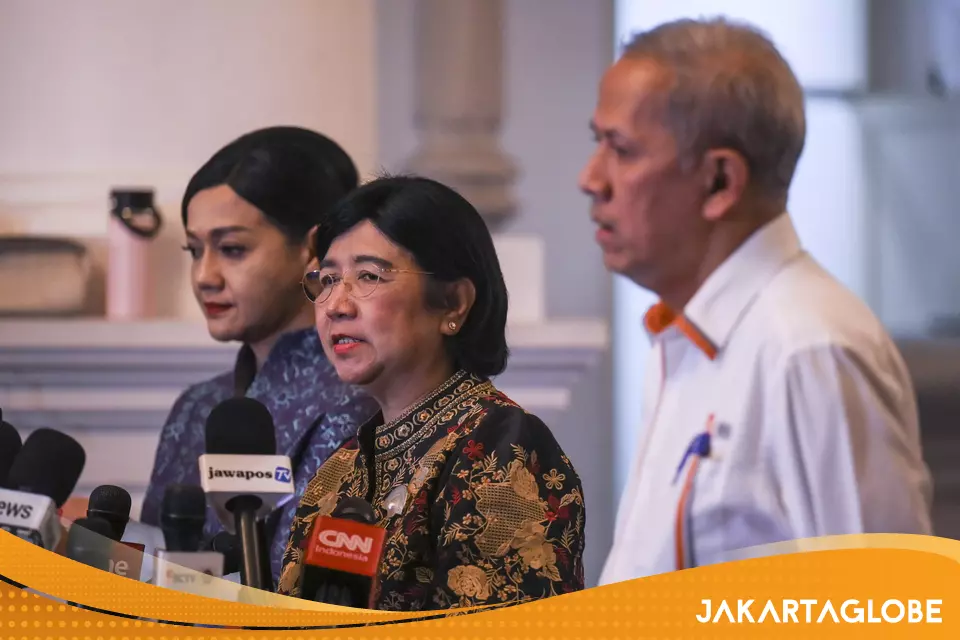
“The market should not panic,” Destry said after meeting President Prabowo earlier this week. “Bank Indonesia will continue implementing the same policy mix as before to maintain financial stability, safeguard the rupiah and support economic growth.”
Several names have emerged in market speculation, including Destry, Deputy Governors Thomas A.M. Djiwandono, Finance Minister Purbaya Yudhi Sadewa, former BI governor Burhanuddin Abdullah, and former finance minister Chatib Basri. None has been officially nominated.
Continuity Versus Change
Among the potential candidates, Destry is widely viewed by economists and business groups as the continuity choice. Having served on BI’s Board of Governors since 2019, she is regarded as the natural successor to Perry and the least disruptive option for financial markets.
“With Destry, we already know her track record. She is continuing the policies that have been implemented so far, so there is no reason to worry,” said Shinta Widjaja Kamdani, chairwoman of the Indonesian Employers Association (Apindo). “What businesses need now is certainty, and preferably as soon as possible.”
Yet the debate extends beyond continuity. Investors are ultimately asking a broader question: how independent will Bank Indonesia remain under its next leader?
According to Liza Camelia Suryanata, head of research at Kiwoom Sekuritas Indonesia, appointing Thomas Djiwandono—President Prabowo Subianto’s nephew, who joined BI’s Board of Governors only months ago—could prove more controversial than promoting Destry, despite being legally permissible.
“A legal appointment does not automatically create credibility,” she said.
Given Thomas’s limited central banking experience and family ties to the president, investors could view such a move as signalling greater political influence over Bank Indonesia, particularly if it bypasses the institution’s established succession process.
What Markets Want
Many economists share the view that credibility matters more than personalities.
University of Indonesia economist Telisa A. Falianty said markets are looking for a governor with integrity, monetary expertise, extensive experience and, above all, the ability to preserve Bank Indonesia’s independence.
“The most important consideration is competence and credibility, not the individual’s name,” she said, arguing that central bank leadership should remain in the hands of technocrats with internationally recognized expertise.
Teuku Riefky, an economist at the University of Indonesia’s Institute for Economic and Social Research (LPEM), said appointing a technocrat would send the strongest signal that BI’s independence remains intact.
Yusuf Rendy Manilet, an economist at CORE Indonesia, said investors generally favour continuity because it reduces policy uncertainty. Candidates from outside the central bank could still gain market acceptance, he added, provided they possess strong monetary credentials and demonstrate a clear commitment to independent policymaking.
“Markets are not judging personalities,” Yusuf said. “They are judging whether policy will remain predictable, insulated from political intervention and communicated consistently.”
He warned that appointing someone perceived as politically connected but lacking sufficient monetary experience could make investors more cautious, particularly while the rupiah remains under pressure.
“The biggest risk is not limited experience itself,” Yusuf said. “It is the perception that the appointment was driven more by political considerations than by merit.”
Banking analyst Paul Sutaryono likewise argued that the selection process should adhere to meritocratic principles, prioritizing candidates with proven integrity, strong leadership and extensive experience in economics, finance or banking.
Tags: Keywords:
Source: jawawa.id (https://jawawa.id/newsitem/who-will-lead-bank-indonesia-markets-put-independence-above-politics-1785513065)
Originally published by jakartaglobe.id (https://jakartaglobe.id/business/who-will-lead-bank-indonesia-markets-put-independence-above-politics)