
Who Was K’tut Tantri, and What Was Her Connection to Bali and the Battle of Surabaya?
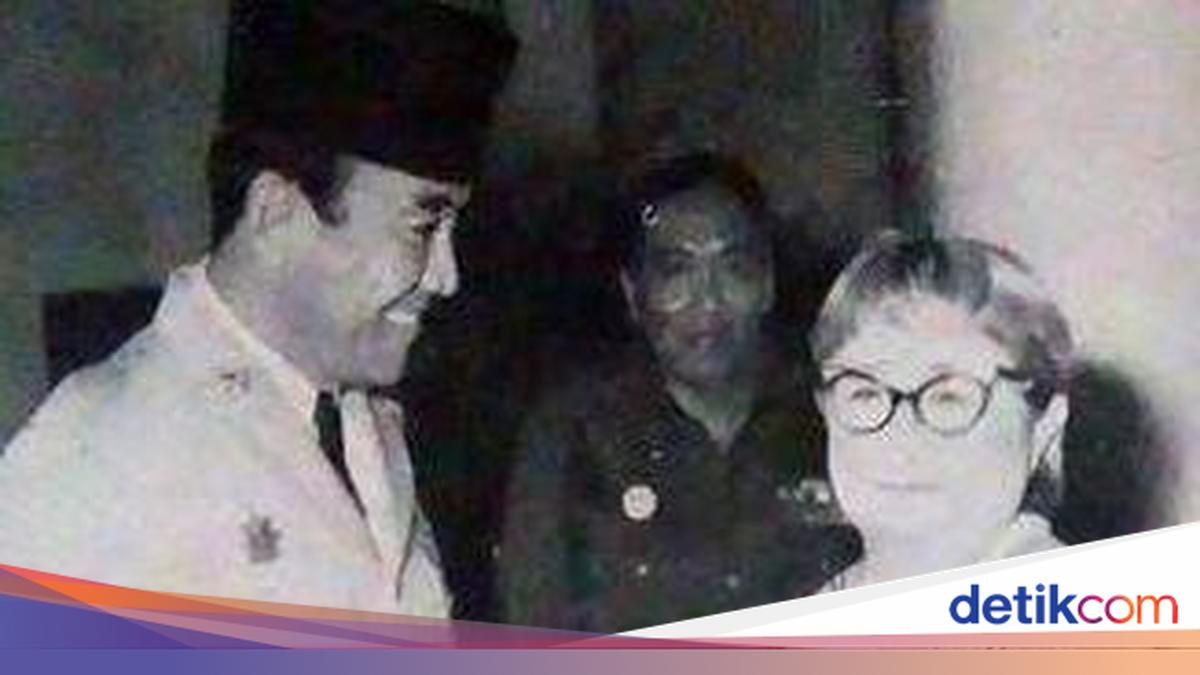
K’tut Tantri may not be as well known as Bung Tomo or Soekarno in the history of Indonesia’s independence struggle. However, the Scottish-born woman played an important role during the Battle of Surabaya on 10 November 1945, and had close ties to Bali.
K’tut Tantri was known by the nickname “Surabaya Sue”. The foreign press gave her the name because of her courage in broadcasting the Indonesian people’s resistance in English to an international audience.
Who was K’tut Tantri?
According to various sources, K’tut Tantri was born Muriel Stuart Walker in Glasgow, Scotland, on 19 February 1898. She later became a United States citizen and settled in Bali in either 1932 or 1934, depending on the historical source.
While living on the island, Tantri formed close relationships with local people. A Balinese royal family even adopted her and gave her the name K’tut Tantri. In Balinese naming tradition, K’tut refers to the fourth child.
Her life in Bali involved more than its culture and society. When Japan occupied Indonesia, Tantri moved to Surabaya and became involved in the underground movement, helping to gather information, provide logistics for fighters and connect groups supporting independence.
K’tut Tantri’s connection to Bali
Bali was an important part of K’tut Tantri’s identity and life story. She was not simply a foreign visitor to the island: she developed a personal relationship with a Balinese noble family and acquired a Balinese name and identity.
Her connection to Bali also helps explain her close involvement in Indonesia’s struggle. Her experiences on the island, her interactions with local people and her links to the world of work there shaped her commitment to Indonesia’s independence.
In her memoir, Revolt in Paradise, Tantri wrote about her experiences in Bali and her role in the independence struggle. The book is one source recounting how a foreign woman came to side with Indonesia.
Her role in the Battle of Surabaya
On 10 November 1945, as the Battle of Surabaya reached its height, K’tut Tantri broadcast for Voice of Free Indonesia, an autonomous division under Radio Republik Indonesia. She spoke in English so that the world could learn about the people’s struggle in Surabaya.
Tantri worked with Bung Tomo and the resistance radio team. She was asked to broadcast twice each night, reporting on developments in the battle and condemning the Allied bombing and attacks on Surabaya.
Although bombs and mortar shells fell near the transmitter, she continued to read her speeches in English. The broadcasts were aimed at representatives of countries including Denmark, Switzerland, the Soviet Union and Sweden, urging them to protest against British actions in Surabaya.
Why was she nicknamed “Surabaya Sue”?
Tantri’s nickname arose from her role as a radio broadcaster protesting Allied actions during the Battle of Surabaya. She became a voice for the Indonesian people before the world, particularly for English-speaking listeners in Europe and elsewhere.
Through underground radio broadcasts, Tantri continued to describe what she saw as the brutality of Allied forces in their bombardment of Surabaya. Her work made her widely known, both in Indonesia and among international audiences following events there.
Legacy and honours
K’tut Tantri’s role extended beyond the Battle of Surabaya. After the war, she also worked as a journalist and as an employee of the Ministry of Information in 1950. Her service was later recognised with one of Indonesia’s highest honours.
Her story is a reminder that Indonesia’s independence struggle involved many different people, including foreign nationals who chose to support the country. Her connection to Bali and her role in Surabaya make her a distinctive figure in the nation’s history.
The Indonesian Government awarded her the Bintang Mahaputra Nararya in 1998 in recognition of her service and dedication. K’tut Tantri died in Sydney, Australia, on 27 July 1997.
Source: jawawa.id (https://jawawa.id/newsitem/who-was-ktut-tantri-and-what-was-her-connection-to-bali-and-the-battle-of-surabaya-1794275428)
Originally published by detikBali (https://www.detik.com/bali/berita/d-8745978/siapa-ktut-tantri-dan-apa-kaitannya-dengan-bali-serta-pertempuran-surabaya), translated from Indonesian