
WHO Warns of Global Ebola Outbreak Emergency: Highly Contagious and Deadly
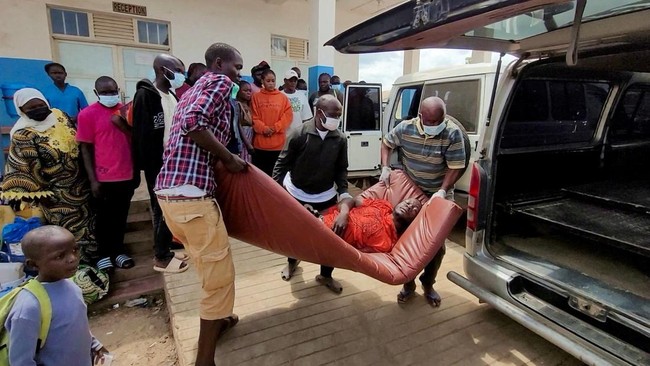
The World Health Organisation (WHO) has officially expressed deep concern regarding the scale and speed of the deadly Ebola virus outbreak in the Democratic Republic of Congo (DRC). The UN-affiliated health agency warned that managing this health crisis could potentially take a very long time.
Reporting on Tuesday (19/05/2026), the WHO stated that the surge in these highly contagious cases has been designated as an international health emergency. In response, the UN body has called for an urgent meeting to discuss crisis mitigation measures.
WHO Director-General Tedros Adhenom Ghebreyesus expressed profound anxiety regarding the massive spread of the virus on the ground, noting that the transmission characteristics this time appear far more aggressive than previous outbreaks. “I am very concerned about the scale and speed of this epidemic,” Ghebreyesus stated in an official speech.
The situation on the ground is increasingly dire as there are currently no vaccines or therapeutic treatments available for the Bundibugyo strain, the specific type of Ebola virus responsible for the outbreak declared last weekend. Historically, the Ebola virus has claimed more than 15,000 lives across the African continent over the last half-century.
As recent cases are largely concentrated in remote, hard-to-reach areas plagued by prolonged conflict, laboratory testing can only be performed on a limited number of samples. Consequently, the statistics released so far are largely based on estimated suspected cases.
Congo’s Minister of Health, Samuel Roger Kamba, detailed the fatality figures via national television. The local government is continuing active tracking efforts despite limited medical facilities. “We have recorded approximately 131 total deaths and have around 513 suspected cases,” Kamba stated.
Kamba added that the reported death toll includes all fatalities identified directly within community settings. He emphasised that it has not yet been confirmed whether all these deaths are purely related to Ebola exposure or involve other factors.
Speaking from the DRC, WHO Representative Anne Ancia informed journalists in Geneva that the vaccine candidate known as Ervebo is currently undergoing intensive research. However, the availability of the vaccine in the field is predicted to take considerable time. “It is likely to take at least two months for the vaccine to be available on the ground,” Ancia noted, adding that the fight against the outbreak will not be resolved quickly.
Conflict is exacerbating the situation. The most deadly Ebola outbreak in the DRC occurred between 2018 and 2020, claiming nearly 2,300 lives out of 3,500 cases. Currently, the epicentre of new cases is in the north-eastern Ituri province, bordering Uganda and South Sudan. As a major gold mining hub, this region sees high population mobility across borders. This is further complicated by years of bloody clashes between local militias, which hinder medical interventions.
The virus has now reportedly spread to neighbouring provinces and has crossed the DRC border into Uganda. Kamba revealed that delays in early detection were triggered by sociological factors, as local communities misidentified the disease. “Unfortunately, early warnings spread slowly within the community because people believed it was a mystical disease, and as a result, the sick were not brought to hospitals,” Kamba explained.
This marks the 17th Ebola outbreak to hit the Central African nation. A major hurdle for medical teams is that existing vaccines are only effective against the Zaire strain. The Bundibugyo strain previously caused outbreaks in Uganda in 2007 and the DRC in 2012, with mortality rates ranging between 30% and 50%.
In response to the crisis, Congolese President Felix Tshisekedi has urged citizens not to panic. The presidency stated via social media that the head of state has instructed the government to accelerate and strengthen the emergency response on the ground. Recent data shows suspected cases have reached the trading hub of Butembo in North Kivu Province, approximately 200 kilometres from the initial outbreak point. Another case has been confirmed in the city of Goma, which has been under the control of the M23 rebel group since January last year. Congolese doctor and 2018 Nobel Peace Prize laureate Denis Mukwege has issued an open appeal to the Rwanda-backed group to reopen air access, noting that the closure of Goma airport is a critical barrier to medical aid.