
Who Is Behind the Fake Bomb Threats Targeting Airlines and Airports Across Europe?
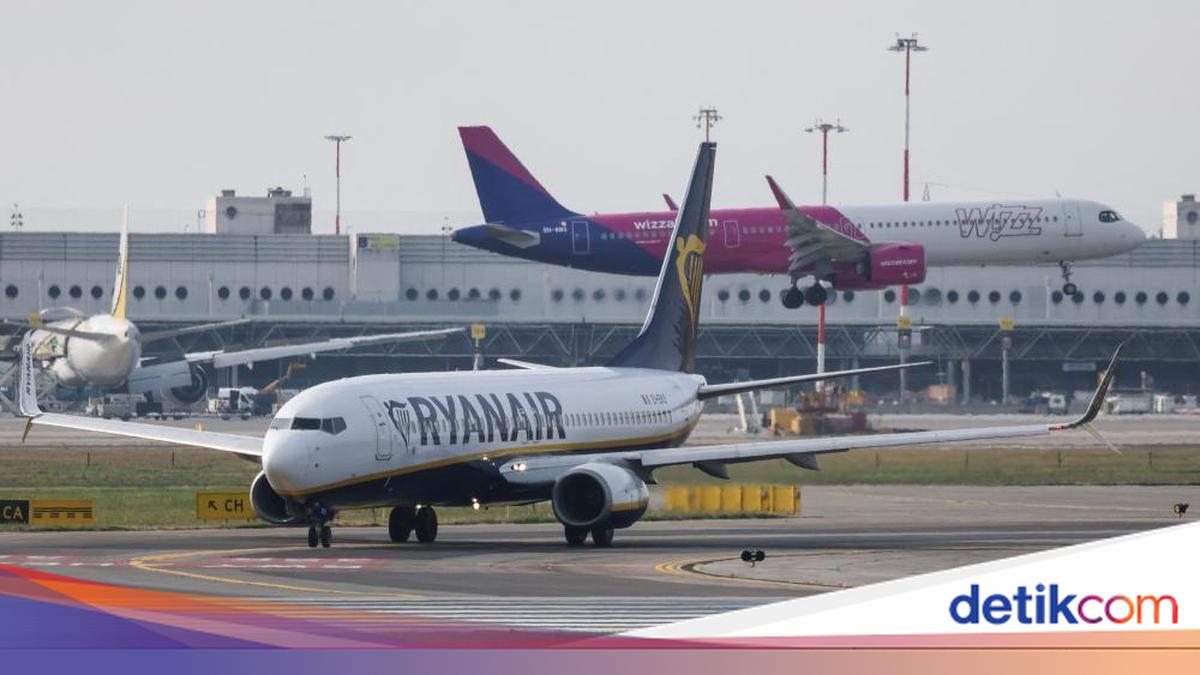
At least 21 aircraft and several airports across Europe were targeted by bomb threats this week.
Flights to Austria, Belgium, Bulgaria, the Czech Republic, France, Italy, Poland and Romania were affected.
An Aer Lingus flight from Dublin to Rome was diverted to an airbase in France, while Italian fighter jets escorted a Finnair flight from Helsinki to Rome.
EasyJet said police met flights from Newcastle and Glasgow in Prague as a precaution. Heathrow and Birmingham airports in the UK also received threats, which were later deemed not credible.
No explosives were found during searches, and it remains unclear whether the incidents are connected.
All the threats ultimately proved to be false. That, of course, does not mean the next one will be.
Some have consequently pointed suspicion towards Russia.
Could Russia really be behind all this?
Airport authorities in the Italian capital, Rome, said threats against two flights due to land on Thursday (5 November) had been sent by email.
The warning was signed in the name of a group or individual calling themselves “Fighters of the Male State”, who claimed to be targeting a “feminist regime” and wanted to “leave a mark on history”.
They threatened to “turn the sky red” with explosions.
The name “Fighters of the Male State” is thought to refer to the Russian group Muzhskoi Legion, or “Male Legion”, an ultra-right-wing organisation with extremist views that was banned by a Moscow court in 2021.
Nevertheless, the group still has tens of thousands of followers on Telegram and openly supported Russia’s full-scale invasion of Ukraine the following year.
Moscow is known to be deeply angered by NATO’s support for Ukraine.
In the Kremlin’s view, NATO support has thwarted Russia’s plans to conquer Ukraine.
Some Russian bloggers have also argued that if Ukrainian drone attacks are now making Russian airports unsafe, and Western sanctions prevent Russian airlines from entering European airspace, Western countries should experience similar disruption.
However, the email sent to Rome, even if genuine, may not provide investigators with the clues they need.
There is also no guarantee that its sender really belonged to the group.
For national police forces, airport authorities and transport ministries seeking to investigate these false threats and work out how to minimise their impact if they recur, the main task is not to guess who is responsible.
Instead, they must follow every available lead and concrete piece of evidence, if any can be found.
The UK Transport Secretary, Heidi Alexander, described Thursday’s incidents as “malicious hoax threats”.
She said the government was “taking these threats seriously”, adding that the authorities had “well-established procedures for dealing with false and malicious threats”.
Airlines and airports targeted
Flights targeted by threats on Thursday included:
Aer Lingus said its flight from Dublin to Rome was diverted to Normandy, France, and landed safely. The airline added that it was working to “get passengers to their final destination as soon as possible”.
Finnair said two of its flights from Helsinki landed at their respective destinations as scheduled. One was escorted by Italian Air Force fighter jets as it approached Rome’s Fiumicino Airport, according to Aeroporti di Roma, while the other landed in Vienna, Austria.
Wizz Air said two flights departing from Milan were affected by the threats. One aircraft, bound for Warsaw, was diverted to Vienna, while the other landed safely in Bucharest. Security teams subsequently inspected the aircraft.
Poland’s LOT said its flight from Warsaw to Brussels landed as planned and that “no suspicious items were found”. Another LOT flight from Warsaw to Paris was held before take-off for security checks on the aircraft and luggage. No hazardous items were found.
Bulgarian media reported that three Ryanair flights landed in Bulgaria after receiving threats. One flight from Copenhagen and another from Madrid landed in the capital, Sofia, while a third, travelling from London to Sofia, was diverted to Plovdiv. All three were escorted by Bulgarian Air Force fighter jets.
Czech police said no explosives were found on four flights that landed in Prague. EasyJet later confirmed that its flights from Newcastle and Glasgow were among those affected. The airline said: “Passengers on both flights disembarked as normal.”
Aegean Airlines said it had “received information about bomb threats” against two flights: one from Thessaloniki in Greece to Milan and another from Athens to Vienna. The airline said the threats were “unfounded” and both flights were able to depart from their origin airports.
A Ryanair flight from Porto, Portugal, landed safely in Milan as scheduled. Italian news agency Ansa reported that a bomb-disposal team inspected the aircraft after it arrived.
Spanish airport authorities said they had received a bomb threat affecting three flights at Madrid Airport. Checks found no real threat. Iberia later said two of its flights, from Milan to Madrid and Rome to Madrid, were among those affected. It is unclear whether the third aircraft was the Ryanair flight from Madrid to Sofia that had previously been reported.
Air Serbia said its flight from Belgrade to Bucharest “landed safely at its destination airport”. After an inspection, the reported bomb threat against the flight was “deemed unfounded”.
‘We didn’t know what was happening’ – a passenger’s account
Emily Noble, who was aboard the Aer Lingus flight diverted from Dublin to Rome, said she had been about an hour into the journey to the Italian capital, where she was due to attend a friend’s wedding, when the cabin crew told passengers there was a “technical” problem.
But as the Aer Lingus aircraft began circling before an unscheduled landing in France, the pilot announced that there was a “security” issue, the 26-year-old from Dublin told BBC Verify.
The situation on board felt “strange”, Ms Noble said.
“It was worrying because we didn’t know what was actually happening. But everyone was trying to stay as calm as possible,” she said.
Ms Noble said she could hear fighter jets as the aircraft landed and saw one touch down behind their plane.
After landing at Évreux-Fauville Air Base in Normandy, passengers were eventually told that their flight had been targeted by a bomb threat.
Ms Noble said passengers had to remain on board for about two and a half hours while police and military personnel carried out security checks, including searches with sniffer dogs.
Passengers were later told they would be taken to an airport in Paris before continuing to Rome on another aircraft.
What do the experts say?
Philip Baum, a professor of aviation security at Coventry University, said the aviation industry “faces many bomb threats every day”, but he was “surprised” by this week’s series of incidents.
Mr Baum said an aircraft would usually be diverted to another airport “only if the threat is deemed credible and the authorities believe there is a possibility that there may be explosives on board”.
His main concern, he said, was that “if large numbers of false threats continue to be made, there could be a sense of complacency, so that a genuine threat is ignored. The threats could also be used as a diversion”.
‘Even if they are hoaxes, they are treated as real threats’
Marco Chan, an aviation expert at Kingston University, told the BBC that the threats were “likely to be hoaxes, but the security system was right to treat them as real threats”.
He said some experts viewed the incidents as “possibly part of a pattern of disruption to air travel that is cheap to carry out and difficult to trace”.
Such false threats could also be prompted by copycat offenders, Mr Chan said.
However, he added that “three days of incidents is still too little to establish whether this is a coordinated campaign or simply a contagion effect encouraging others to do the same”.
Two days earlier, seven flights in Europe, including two departing from the UK, were checked after receiving bomb threats.
Searches found no explosives on any of the aircraft.
Source: jawawa.id (https://jawawa.id/newsitem/who-is-behind-the-fake-bomb-threats-targeting-airlines-and-airports-across-europe-1794196267)
Originally published by detikcom (https://news.detik.com/bbc-world/d-8744442/siapa-dalang-di-balik-ancaman-bom-palsu-terhadap-maskapai-bandara-di-eropa), translated from Indonesian