
WHO Expresses Concern Over Deteriorating Water Quality in Gaza
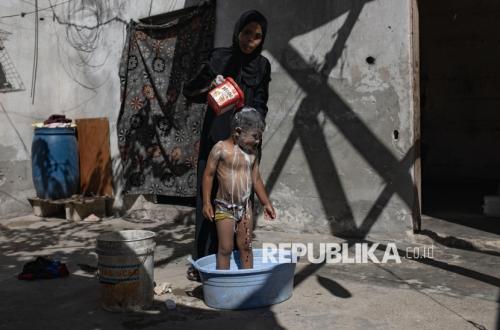
The World Health Organisation (WHO) is concerned about the deteriorating water quality in the Gaza Strip, highlighting the rising risk of disease among residents ahead of the winter season.
“What is very worrying for us is that the water quality is worsening,” stated Reinhilde Van de Weert, WHO Representative for the Occupied Palestinian Territory, on Tuesday (1/9/2026), as reported by Anadolu Agency.
She noted that microbiological contamination has increased almost threefold this year, while laboratory capacity remains limited. This situation means that local health authorities can only detect and track essential microbiological contaminants in the water and environment.
“From more than 6,500 samples tested, we have gone from just under 6 per cent contamination in January to almost 20 per cent last month, in August alone,” said Van de Weert.
She revealed that there has been a surge in acute watery diarrhoea cases, rising from 30,000 cases in March to 58,000 cases in August 2026. This represents an increase of nearly 100 per cent over the last five months.
Van de Weert explained that Gaza, much of whose infrastructure has been reduced to rubble, is also filled with rubbish and overflowing sewage. As residents congregate in urban areas, the approaching rainy season and winter pose further threats. “Flooding in these highly crowded areas will spread waste, excrement, and contaminated water to places where people sleep, cook, and care for their loved ones,” she warned.
She added that stagnant water could breed mosquitoes and pests, while damp and mouldy tents could increase the risk of diseases, particularly respiratory illnesses among young children.
“What we truly need to do now is protect the most vulnerable in terms of health, and that means preventing disease outbreaks in the Gaza Strip by all means. To stay ahead of this curve, we must be able to quickly confirm the causes of potential outbreaks,” said Van de Weert.
Van de Weert also highlighted the lack of access to essential services for amputees. She noted that more than 6,600 people in Gaza are estimated to require long-term care following limb amputations, as they struggle to obtain necessary prosthetic aids.
“In fact, none of these items, which would allow people—including many children—to walk and live with a certain level of dignity, have entered Gaza since May 2024,” said Van de Weert.
She urged that access to humanitarian aid to Gaza must not be obstructed and should be accelerated. The required aid primarily includes medical supplies, reliable access to clean water, and proper waste management.
Since launching the aggression against Gaza in October 2023, Israel has conducted widespread attacks, bombing various civilian facilities and infrastructure, including hospitals. This has paralysed the capacity of the medical sector, leaving residents struggling to access healthcare.
While Israel and Hamas agreed to a ceasefire in October 2025, Israel continues to launch sporadic attacks on Gaza. The Israeli aggression, which has persisted since October 2023, has killed more than 73,000 Gazans, while the number of injured has exceeded 174,000.