
WHO Declares Ebola Outbreak a Global Health Emergency, 80 Dead
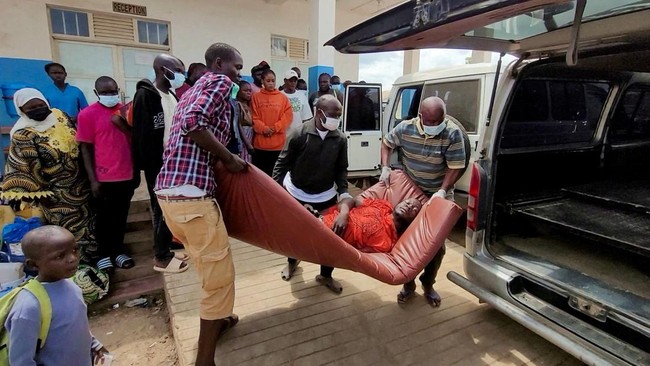
An image shows a man being carried out of an ambulance on arrival at Bunia General Reference Hospital in Bunia, Ituri Province, Democratic Republic of the Congo, on Saturday 16 May 2026. The World Health Organization has designated the Ebola outbreak in the Democratic Republic of the Congo and Uganda as a public health emergency of international concern after 80 deaths were linked to the disease. The outbreak is triggered by the Bundibugyo strain of Ebola, which currently has no approved vaccine or specific therapy. WHO reported eight laboratory-confirmed cases and 246 suspected cases in Ituri Province, DRC, with cases in Bunia, Rwampara, and Mongbwalu; one case confirmed in Goma, in the eastern part of the country. In Uganda, two laboratory-confirmed cases, including one death, were reported in Kampala among people who had travelled from DRC. WHO warned the outbreak risks spreading to neighbouring countries due to documented cross-border transmission. The US CDC activated its Emergency Operations Center to bolster response in DRC and Uganda. Media reports said at least six Americans in the DRC have been exposed to Ebola, with three categorised as high risk. The U.S. Embassy in the DRC issued a health alert for Americans not to travel to Ituri Province. The U.S. government is also said to have limited capacity to provide emergency services in the area because of security and outbreak conditions. WHO urged countries to strengthen cross-border screening, isolate confirmed cases, and monitor close contacts for 21 days. However, WHO stressed that countries do not need to close borders or restrict trade, as such measures could drive illegal cross-border movement.