
Who Controls AI in Indonesia?
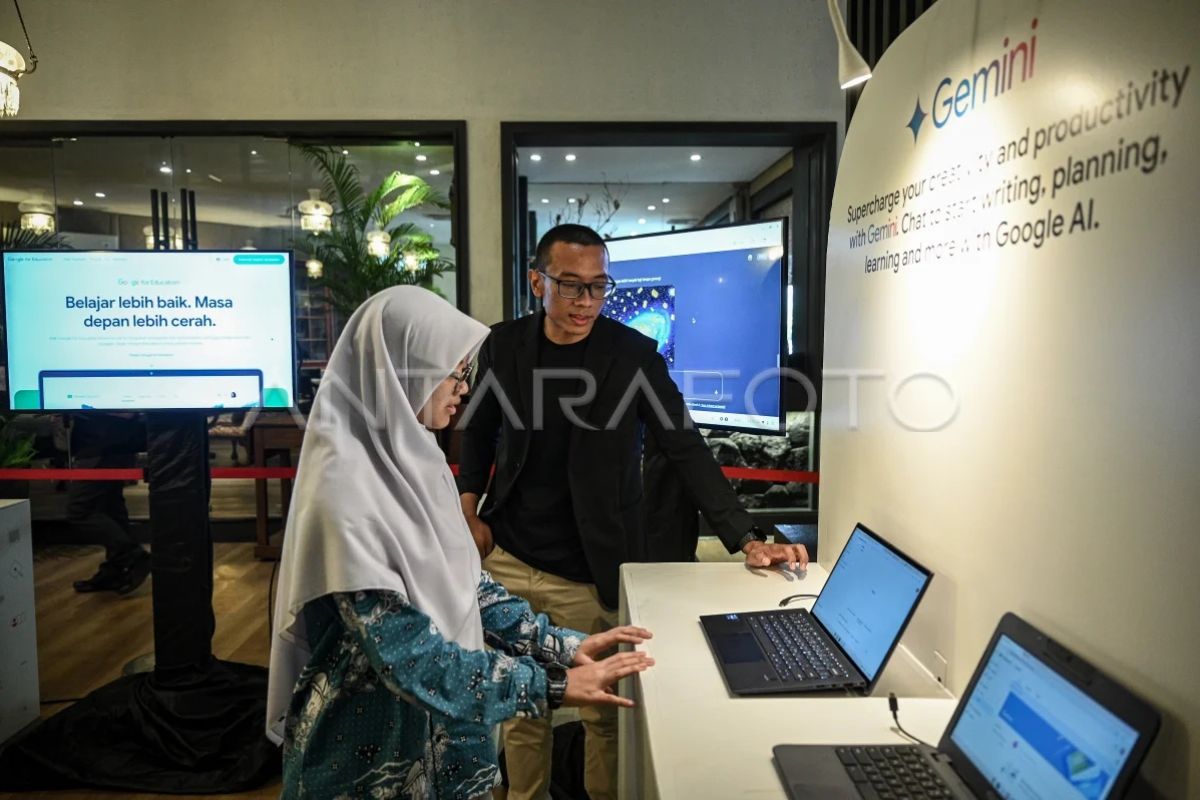
Jakarta (ANTARA) - Indonesia is falling in love with Artificial Intelligence (AI). Data centres are being constructed, investments are flowing in, and the government is discussing the implementation of AI across public services, education, healthcare, food security, industry, and even defence.
Companies are racing to integrate AI into their products, and the public is moving even faster. The e-Conomy SEA 2025 report notes that 51 per cent of Indonesian respondents interact with AI devices or features daily. Furthermore, revenue from applications offering AI features grew by 127 per cent in the first half of 2025 compared to the same period the previous year.
Infrastructure is also expanding. The Ministry of Communication and Digital notes that Indonesia possesses 185 data centres with a capacity of approximately 274 megawatts. The government aims to increase this capacity to over 2,000 megawatts by 2029. Microsoft has also launched its first cloud region in Indonesia following the announcement of a US$1.7 billion investment over four years for cloud and AI infrastructure.
However, another figure is noteworthy. The same e-Conomy SEA report shows that Indonesia captured only about 4 per cent of private AI investment within the ASEAN-10 region during the period from the second half of 2024 to the first half of 2025.
A paradox is beginning to emerge. Indonesia could become a society that adopts AI very rapidly without automatically becoming a nation with a strong position in the AI economy. Therefore, the urgent question is no longer how fast we adopt AI, but rather: who will control the AI used in Indonesia?
Imagine a government hospital using AI to assist in reading patient examination results. The system works well, and services become faster. The data is even stored in a data centre within Indonesia. However, one day, a technology provider might change the terms of service, raise prices, discontinue a feature, or restrict access to certain technologies.