
Who Benefits from Expensive Rice?
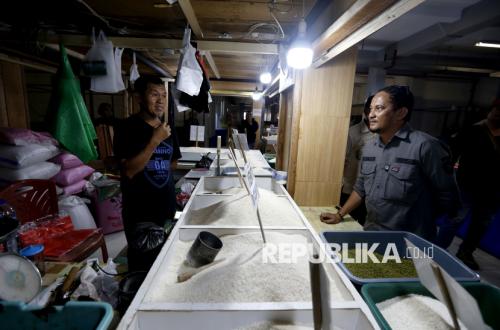
In this country, citizens’ perceptions of the price of one kilogramme of rice can indeed vary. The oligarchs who ride in Toyota Alphards daily differ from primary school teachers who use rural transport. For the oligarchs, the current highest retail price (HET) for rice is not a problem. However, for those on tight budgets, the HET needs to be regulated with careful consideration. On the other hand, President Prabowo’s sarcastic remark about parties protesting the high price of rice truly has diverse interpretations, especially when followed by the statement, ‘If you don’t agree with the price of expensive rice, please grow your own.’ That is rice for you; many meanings are attached and ascribed to it. Generally, everyone agrees rice is a political and strategic commodity. The critical question is, do farmers profit from the high price of rice on the market? The answer is not automatic. Expensive rice does not necessarily mean farmers make a lot of profit. It depends on who the farmer is, when they harvest, and to whom they sell. This is the fact in 2026: from a price perspective, there is indeed an effort to ensure farmers profit. In this case, the government uses two benchmarks: the Government Purchase Price (HPP) and the Highest Retail Price (HET). The HPP for unhusked rice was raised to Rp 6,500 per kilogramme in January 2025. By May 2026, the national average price for dry unhusked paddy was Rp 6,925 per kilogramme, aiming to ensure farmers ‘must not lose’. The HET is used to protect consumer prices. The National Food Agency even stated that the index of prices received by paddy farmers rose from 136.78 in January 2025 to 146.24 in October 2025, meaning the welfare of paddy farmers increased. Production in 2025 had a surplus of 3.8 million tonnes, and Bulog’s government rice reserves reached 3.7 to 4 million tonnes. However, on the ground, many farmers have yet to feel the benefits. Middlemen often cut prices. There are reports of farmers in Kulonprogo having their unhusked rice priced at only Rp 5,100 per kilogramme by middlemen, even though the 2025 HPP was already Rp 6,500. Various problems related to the field phenomenon show that costs are rising faster than selling prices. In March 2026, rice prices rose at all levels, but the farmers’ terms of trade (NTP) actually fell by 0.08 per cent. The cause was that the prices farmers had to pay for petrol, cooking oil, rice, and chicken meat rose by 0.41 per cent. So even though the selling price of unhusked rice increased, the costs of fertiliser, fuel, and other items rose even higher. Furthermore, not all farmers sell to Bulog. Bulog only buys during harvest and for government rice reserves. When it is not the peak harvest or outside Bulog’s absorption areas, farmers often sell to traders at prices below the HPP. In this situation, government policies that side with farmers are needed. Another frequently discussed matter is why rice remains expensive despite a reported surplus. The Ombudsman found a paradox: mathematically, Indonesia has a surplus of 3.6 million tonnes of rice, but it remains scarce and expensive on the market. The causes are slow distribution, quality issues, and supply constraints. Retail prices in May 2026 were Rp 15,758 per kilogramme for premium rice and Rp 13,444 for medium rice, still 10 to 14 per cent above the HET. So, the conclusions that can be drawn include: first, farmers who harvest when prices are high and sell directly to Bulog or official institutions are indeed more advantaged. The increase in HPP and production raises their income. Second, small farmers who sell to middlemen and face rising production costs are not necessarily better off. The price of rice may be high, but they can still lose out because their NTP falls. The most advantaged are the middle chain: millers, traders, and distributors, because the retail price rises but not all of that increase reaches the farmers. Responding to the current reality, the government remains focused on ‘fairness for both sides’: farmers must not lose, and consumers must not be burdened. The government continues to ensure that farmers, as rice producers, receive a reasonable income commensurate with their hard work. That is why it is reasonable for the government to provide optimal protection and defence to paddy farmers. Alongside this, the government must also protect consumers. The government is obliged to regulate and control rice prices so that the public obtains a reasonable price level. The rice price stabilisation policy is a concrete form of government intervention in regulating market prices. Ultimately, the debate over expensive and cheap rice continues, but facts cannot lie. When the price of medium rice on the market reaches Rp 15,000 per kilogramme, low-income groups complain. They often ask why, amidst abundant rice production, the price of rice is expensive. This question should prod the government to provide a smart answer. If rice is abundant and in surplus, shouldn’t the price be cheaper? Generally, rice prices tend to soar only when there is a deficit.