
Who Bears the Cost of Railway Tracks? Between the Ambition of 12,000 Km and the Fiscal Burden
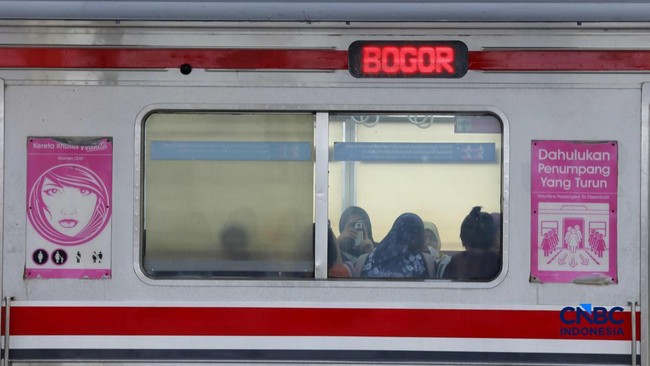
Amid the government’s ambition to build and reactivate 12,000 kilometres of railway network across Indonesia, a fundamental question remains unanswered: who will actually bear the costs of constructing, operating, and maintaining this infrastructure?
This question is far from rhetorical; it determines the project’s very success. The desire to expand the railway network promises to shift logistics burdens from roads to rails, improve energy efficiency, and enhance resilience against fuel supply disruptions.
However, if poorly managed, the project risks adding to the national debt without equivalent benefits. Rails may be built but underutilised, resulting in expensive, underused assets that still demand maintenance costs.
Before proceeding, it is important to clarify key terms. In the railway industry, two main terms are used: infrastructure (prasarana) and facilities (sarana). Infrastructure encompasses all elements enabling train operations, such as tracks, stations, bridges, signalling systems, and telecommunications networks.
Facilities, on the other hand, refer to the vehicles running on the rails, from locomotives and passenger carriages to freight wagons. This separation is not merely technical but crucial for determining cost responsibilities.
Regarding railway infrastructure financing, at least three overlapping—and often conflicting—perspectives can be identified: those of the railway operators, the government, and the public as service users.
From the operators’ viewpoint, it is reasonable to expect the government to handle infrastructure construction and maintenance burdens. Operators are fundamentally business entities pursuing efficiency for profit.
The lower the cost burden, the greater the scope to reduce ticket prices or boost profit margins. In a competitive landscape against other transport modes, particularly road haulage, a lighter cost structure provides a clear advantage.
The government’s perspective often opposes this. As the infrastructure owner, the government seeks revenue from rail usage, such as through leasing schemes. It frequently pushes for operators to share maintenance costs.
The argument is straightforward: the government’s fiscal capacity is limited, while rail network investment and maintenance needs are vast. Meanwhile, dominant operators are seen as having room to contribute to financing.
Meanwhile, the public as service users has a simpler yet equally vital interest: affordable ticket prices. This expectation is entirely rational and humane.
In reality, however, train fares on several routes tend to be more expensive than other land transport options like buses for equivalent distances. This is where the conflicting interests converge; unclear cost burdens ultimately reflect in prices paid by the public.
The root of this tension lies in the unclear boundaries between the government as infrastructure owner and operators as service providers. Although the current operator is a single state-owned enterprise, in practice, the lines between public functions and business affairs blur.
Consequently, when problems arise—such as natural disasters, accidents, or infrastructure damage—it is not always clear who bears full responsibility. This opens the door to finger-pointing, ultimately harming the system as a whole.
In light of this, at least three alternative railway infrastructure financing models can be considered. The first places full responsibility on the railway operator, from construction to maintenance.
Under this option, the operator manages and owns both infrastructure and facilities. Its advantages include streamlined coordination and potential efficiency, as the entire business chain falls under one entity. Additionally, this model naturally creates entry barriers for competitors, given the high costs of building rail networks.
However, past experience shows serious flaws in this model. Rail maintenance costs are enormous and not always matched by revenues, especially on low-utilisation lines. Many routes have ceased operations due to uneconomical viability. Thus, placing the full burden on operators risks limiting the network to profitable routes, neglecting other regions.
The second alternative assigns construction and maintenance responsibilities entirely to the government, while operators pay rent for rail usage. Conceptually, this appears ideal, creating clear separation of roles. The government acts as owner and manager of infrastructure, while operators focus on service provision.
For operators, this scheme allows lower operational costs, potentially making ticket prices more affordable. For the government, there is revenue potential from leasing fees. Yet in practice, reality often diverges from the initial design.
Maintenance costs borne by the government frequently far exceed leasing revenues.
Source: jawawa.id (https://jawawa.id/newsitem/who-bears-the-cost-of-railway-tracks-between-the-ambition-of-12-000-km-and-the-fiscal-burden-1777552246)
Originally published by CNBC Indonesia (https://www.cnbcindonesia.com/opini/20260430170522-14-731369/siapa-menanggung-rel-kereta-antara-ambisi-12000-km-dan-beban-fiskal), translated from Indonesian