
Who Are the ‘Ukrainian Battalion’ on the Front Line for Russian Forces?
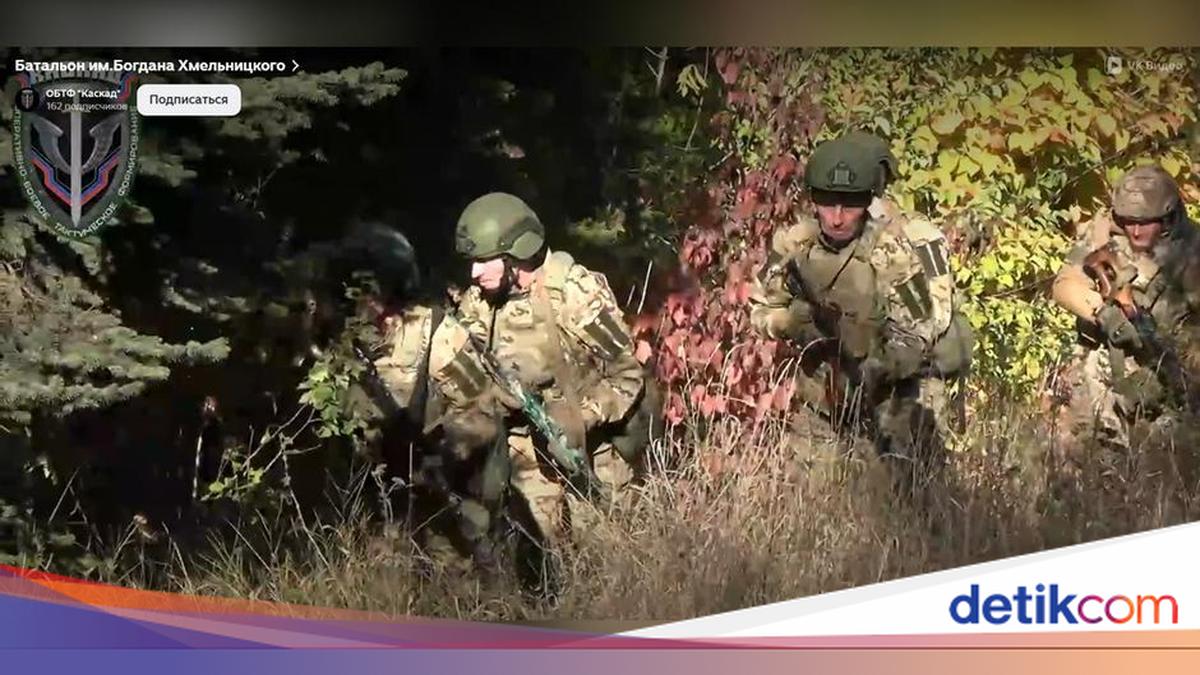
Pavlo Oliynyk, 25, says he joined the enemy’s forces to escape Russian detention. Before he was captured in the Donbas region in 2024, he was a senior lieutenant in the Ukrainian armed forces.
As a prisoner of war (POW), he says he was subjected to electric shocks, beatings and psychological torture. So when he was offered the chance to join the Maksym Kryvonis Battalion, named after a famous 17th-century Cossack commander, he accepted.
Oliynyk says he intended to use the opportunity to reach the front line and escape to Ukrainian-controlled territory. DW contacted him through his lawyer.
‘Ukrainian volunteers’ are mostly prisoners of war
Reports of Russian combat units made up of Ukrainian POWs and former Ukrainian military personnel began to emerge in late 2022. Several detachments were initially formed separately, then brought together in August 2026 as what was called the ‘Ukrainian Volunteer Special Forces Brigade’.
Of the various units, the Maksym Kryvonis Battalion has probably attracted the most public attention because it is known to have taken part in combat. Its actual size is unknown. Russian media put its strength at around 200 fighters, while available information points to only several dozen.
An investigative team from Ukraine’s public broadcaster Suspilne has identified more than 30 members of the battalion and confirmed that all were former Ukrainian soldiers captured by Russian forces between 2023 and 2024.
A ‘copy’ of Russian legions fighting for Ukraine
Pavel Luzin, a Russian foreign and defence policy expert at the Centre for European Policy Analysis, considers the units ‘copies’ of the Russian Volunteer Corps and the Freedom of Russia Legion—units within the Ukrainian armed forces whose members are Russian citizens. He says their creation is also an attempt by Moscow to divert attention from the existence of those groups. Ukrainian intelligence agencies appear to share that view.
‘What bothers them is that there are Russian citizens fighting on Ukraine’s side, while Ukrainians do not want to fight on Russia’s side,’ Ukrainian war veteran and author Yevhen Shybalov told DW.
He added that Russian forces had never tried to conceal the fact that the presence of Russian volunteer units on Ukraine’s side was a major reason for wanting to establish Ukrainian units on Russia’s side.
How voluntary are these combat units?
In 2025, the Office of the UN High Commissioner for Human Rights (OHCHR) reported that 95 per cent of released Ukrainian POWs it had interviewed said they had experienced torture or ill-treatment while in Russian captivity.
Bill Wiley, executive director of the Commission for International Justice and Accountability, says the physical and psychological condition of returning combatants raises serious doubts about whether their recruitment was voluntary.
Meanwhile, Mykhailo Savva of the Kyiv-based human rights organisation Center for Civil Liberties points to ongoing criminal proceedings against several battalion members. In his view, this indicates that the combatants may have switched sides voluntarily.
But where is the line between voluntary and involuntary recruitment?
War veteran and human rights activist Maksym Butkevych, who spent 28 months as a POW, says conditions in Russian detention make that line difficult to distinguish. On the one hand, there is constant pressure. On the other, he says it is possible that some prisoners changed sides because of ideological affinity.
How are Ukrainian prisoners recruited into Russian forces?
Butkevych told DW that from 2022 to 2023, all Ukrainian POWs were offered the chance to join the Russian army, ‘more or less continuously’. In his case, the offer came after he had suffered severe ill-treatment.
‘They showed us that they could do anything they wanted to us,’ he said. ‘So we were supposed to agree to anything they asked.’
Veteran Shybalov reported similar experiences. He described attempts to force prisoners to confess to war crimes or recruit them for Russian intelligence agencies. According to him, all prisoners were first interrogated, then presented with various offers under pressure.
‘You can torture someone into confessing, but there is a difficult moment when you have to give them a weapon,’ he said. ‘That is why psychological pressure and attempts to make them comply “voluntarily” are used more often.’
Butkevych corroborated these accounts from his own experience. However, both veterans said they had never met anyone who was genuinely willing to join a Russian unit.
What happens after joining?
Oliynyk says he initially turned down several offers to join Russian forces. He claims he accepted the fourth offer because he wanted to escape.
He says he did not sign official documents from Russia’s Ministry of Defence, but instead entered into a private contract with someone offering military services. He was then taken to a room to listen to a lecture and watch videos and photographs, which he was subsequently asked to describe.
Surveillance and ill-treatment
Oliynyk says members of the Maksym Kryvonis Battalion fell into two groups: those who switched sides of their own accord and those who were forced to do so.
In a video circulating online that appears to be from a Ukrainian court hearing, he also says that former Ukrainian POWs in the unit were monitored and guarded by mercenaries from the Russian private military company Redut.
In the same video, he speaks about beatings and torture, and says he received his monthly pay in an envelope distributed by a member of Russian military intelligence.
Oliynyk told DW that he was given a mobile phone but was too afraid to contact anyone in Ukraine because all his communications were monitored.
He denies ever fighting against Ukraine. He says he managed to escape in March 2025, before his first deployment in Donetsk Region. After running across a field, he spent two days hiding from drones in basements and houses before finally managing to contact Ukrainian forces.
Oliynyk has now been held in Ukraine for nearly two years while authorities investigate possible treason. He has not been formally charged.
Source: jawawa.id (https://jawawa.id/newsitem/who-are-the-ukrainian-battalion-on-the-front-line-for-russian-forces-1791863496)
Originally published by detikcom (https://news.detik.com/dw/d-8704425/siapa-batalion-ukraina-yang-berada-di-garis-depan-pasukan-rusia), translated from Indonesian