
Who are the Players in the Oil and Gas Industry Ecosystem?
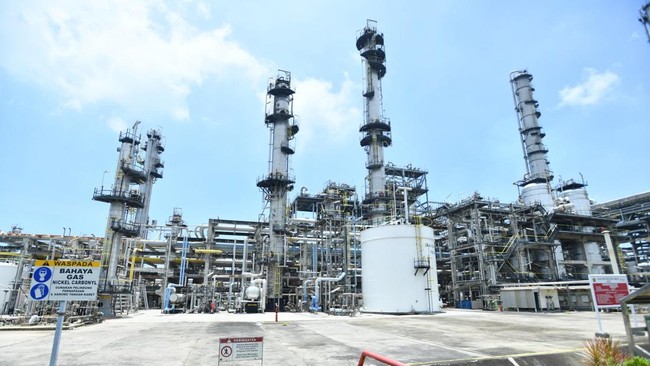
The oil and gas industry is often viewed solely in terms of reserves and production. However, there is a vast ecosystem working behind the scenes. There are regulators, financiers, drillers, transporters, and buyers. Therefore, understanding this map is crucial, as this is where true value is created.
In the oil and gas ecosystem, the government and regulators act as the rule-makers. Based on Oil and Gas Law Number 22 of 2011, Government Regulation Number 35 of 2004 regarding Upstream Oil and Gas Business Activities, and Government Regulation Number 36 of 2004 regarding Downstream Oil and Gas Business Activities, the involved parties include the Ministry of Energy and Mineral Resources (ESDM), SKK Migas, BHS Migas, the Ministry of Environment and Forestry (KLH), and OSS, regulating everything from licensing to environmental aspects.
Currently, a new Oil and Gas Bill is being drafted, which mentions the delegation of upstream oil and gas business management to a Special Oil and Gas Business Entity, implying changes for industry players. If the rules of the game remain unclear, the entire business chain will tend to wait and withhold investment.
Who Plays Where?
Once the rules are clear, the question arises: who provides the financing? In the next layer, there are investors and lenders. These can include equity, banks, development finance institutions, and bond issuances. They provide the capital that allows projects to proceed.
Without them, underground reserves would remain merely figures in geological reports. The core of this ecosystem consists of operators, including National Oil Companies (NOC), International Oil Companies (IOC), and other forms of partnerships. Operators are responsible for managing assets, making capital expenditure decisions, and managing production.
They are the ones who transform reserves into cash flow. Surrounding the operators are contractors and Oilfield Service (OFS) providers: drilling, EPC (Engineering, Procurement, and Construction), marine, logistics, and maintenance. Their role is crucial, as the smooth operation of an operator depends heavily on the readiness of these service providers.
On the downstream side, there are off-takers and traders who purchase the final products, which can include refineries, power plants, industries, or exporters; this is where the final product finds its market. Equally important are local suppliers providing materials, services, and domestic labour.
There are also communities and ESG (Environmental, Social, and Governance) aspects that ensure operations maintain their social licence, as well as midstream and utility players providing pipelines, terminals, LNG, electricity, and storage. The essence of this ecosystem is simple: operators manage capital, licences, technology, contractors, infrastructure, and markets to convert reserves into cash flow.
Markets are Starting to Evaluate Differently
In the past, the market only valued volume, meaning whoever had the largest production was considered the strongest. This is no longer the case; the market is beginning to value cost position, reliability, access to market, and speed of execution. This means having large reserves is insufficient if production costs are high, delivery is unreliable, or market access is unclear.
This shift is changing how all parties operate. Operators can no longer focus solely on drilling; they must ensure that the cost per barrel remains competitive, the supply chain runs smoothly, and their products are absorbed by the market.
Contractors and service providers are also required to be more efficient, while local suppliers must prove their capabilities rather than merely relying on Local Content Requirement (TKDN) status. For Indonesia, reading this map is vital, as our position within this ecosystem determines how much value can be retained within the country.
Source: jawawa.id (https://jawawa.id/newsitem/who-are-the-players-in-the-oil-and-gas-industry-ecosystem-1790769197)
Originally published by CNBC Indonesia (https://www.cnbcindonesia.com/opini/20260930172449-14-772254/siapa-saja-pemain-ekosistem-industri-migas), translated from Indonesian