
Who Are the Leaders Behind Iran’s Allied Militias That Unnerve the US and Israel?
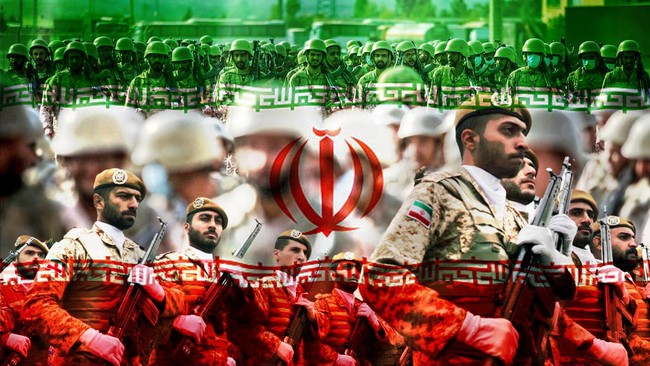
The war involving the United States, Israel and Iran is spreading across the Middle East. The fighting involves not only the armed forces of those countries, but also armed groups that have long-standing ties to Tehran.
One of the latest developments took place in Saudi Arabia. A Houthi attack from Yemen struck King Khalid International Airport in Riyadh on Saturday (10 October 2026).
The attack reportedly killed at least 13 people and injured more than 300. Tensions then continued with attacks on key Saudi facilities, including the area around oil company Saudi Aramco.
The series of attacks has once again highlighted Iran’s network of armed groups across the Middle East. For decades, Tehran has built ties with groups that each have their own forces, weapons and areas of operation.
The network is known as the Axis of Resistance. Its members share opposition to Israel and US influence in the region.
The groups are based not only in Yemen, Lebanon and Palestine, but also in Iraq. Some have considerable political influence in their respective countries.
CNBC Indonesia has identified at least nine armed groups known to have ties to Iran.
The Houthis, Hezbollah and Hamas are among the most prominent groups in the Middle East conflict. All three have long-standing ties to Iran, but their military strength and leadership differ considerably. So who are the figures leading them?
Houthis: Abdul-Malik al-Houthi
Among the leaders of Iran-allied armed groups, Abdul-Malik al-Houthi is one of the longest-serving.
The 47-year-old is from Saada in northern Yemen. He was born into a family of religious scholars with influence in the Zaydi Shia Muslim community.
His rise to leadership began in 2004, when his elder brother, Hussein al-Houthi, who founded the movement, was killed fighting the Yemeni government.
Abdul-Malik was about 25 at the time. He nevertheless took over the leadership and expanded the group’s influence.
Under his leadership, the Houthis captured Yemen’s capital, Sanaa, in 2014. The group, which once relied on small arms, has since developed into a military force equipped with ballistic and cruise missiles, as well as drones.
Despite his considerable influence, Abdul-Malik is known for being highly secretive.
Reuters reported on 16 September 2026 that foreign officials who have dealt with him are not known to have met him in person. At some meetings, he has appeared only on a television screen from an undisclosed location.
The group’s military operations are run by Major General Yusuf Hassan al-Madani, appointed chief of staff in October 2025 after his predecessor, Muhammad Abdul Karim al-Ghamari, was killed in an Israeli attack.
A Reuters report citing estimates by a UN panel of experts said the Houthis had about 350,000 forces, according to a 2025 assessment. The figure includes members recruited while underage.
Hezbollah: Naim Qassem
Unlike Abdul-Malik, who grew up in a family connected to the armed movement’s leadership, Naim Qassem followed a long path through political and religious organisations.
Qassem was born in Beirut, Lebanon, in 1953. Before becoming Hezbollah’s leader, he worked as a chemistry teacher.
His political career began when he joined the Shia Amal Movement. He left in 1979, however, after Iran’s Islamic Revolution brought Ayatollah Ruhollah Khomeini to power.
Qassem then took part in the formation of Hezbollah in 1982, with support from Iran’s Islamic Revolutionary Guard Corps (IRGC).
He rose through the ranks and became Hezbollah’s deputy secretary-general in 1991, a position he held for more than three decades.
He also played a role in organising Hezbollah’s election campaigns from 1992, when the group began taking part in Lebanese politics.
A major change came in September 2024, when Hassan Nasrallah, Hezbollah’s leader for decades, was killed in an Israeli air strike.
Another figure seen as a possible successor, Hashem Safieddine, was also killed. This cleared the way for Qassem to become secretary-general on 29 October 2024.
Qassem now leads Hezbollah after the organisation lost many of its military figures.
Among them was Haytham Ali Tabatabai, Hezbollah’s chief of staff, who was killed in an Israeli attack in November 2025. His successor has not been independently confirmed.
Before suffering heavy losses in the war, Hezbollah was estimated to have between 40,000 and 50,000 fighters, according to a 2024 Congressional Research Service report. Its current number of active forces is uncertain.
Hamas: Khalil al-Hayya
Hamas is now led by Khalil al-Hayya, a senior figure who has been with the organisation since its founding in 1987.
Al-Hayya was born in the Gaza Strip in 1960. Before joining Hamas, he was active in the Muslim Brotherhood and later completed a doctorate in Islamic studies.
His career advanced alongside prominent Hamas figures including Ismail Haniyeh and Yahya Sinwar. He served as Sinwar’s deputy for Gaza.
In 2021, al-Hayya left Gaza and settled in Doha, Qatar, with several other Hamas leaders.
From there, he became one of the group’s principal figures in dealings with Arab countries and led several ceasefire negotiations with Israel.
Al-Hayya is also known to have close ties with Iran, which has provided Hamas with financial and military support for many years.
His life has been marked by Israeli attacks. Several members of his family, including his children, have been killed in attacks. He himself survived an Israeli attack in Doha in September 2025.
After Ismail Haniyeh was killed in Iran and Yahya Sinwar was killed in Gaza in 2024, al-Hayya’s influence within the organisation grew.
On 20 July 2026, he was formally elected Hamas’s top leader in an internal vote.
Hamas has also lost many of its military commanders, including Mohammed Deif, Mohammed Sinwar, Izz al-Din al-Haddad and Mohammed Odeh.
Before the Gaza war in 2023, Israel estimated that Hamas had around 30,000 forces. An Israeli estimate in October 2025 put the figure at around 20,000, although the current number is unknown.
Although the Houthis, Hezbollah and Hamas all have ties to Iran, they are not all under a single chain of command.
Each has its own leaders, interests and military decision-making.
Source: jawawa.id (https://jawawa.id/newsitem/who-are-the-leaders-behind-irans-allied-militias-that-unnerve-the-us-and-israel-1791985916)
Originally published by CNBC Indonesia (https://www.cnbcindonesia.com/research/20261014131702-128-776098/ini-sosok-di-balik-milisi-sekutu-iran-yang-bikin-as-israel-ketir-ketir), translated from Indonesian